
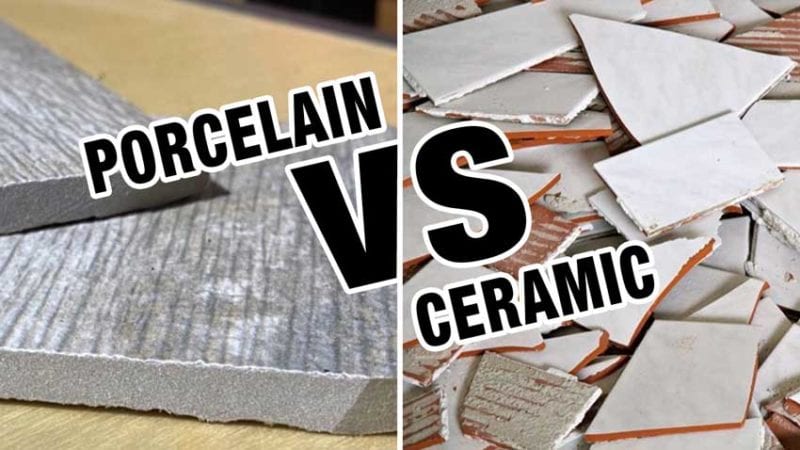
You can argue all you want about whether or not to go with porcelain vs ceramic tile. In the end, it probably doesn’t matter all that much if it hangs on a wall. If you simplify it down to basics, porcelain is really just very dense ceramic tile. Seriously.
Porcelain vs Ceramic Tile Material Comparison
All ceramic tiles are made up of the same stuff: clay, quartz (ferrous sand) materials, and water. Manufacturers form and “fire” tiles to high temperatures in a kiln (oven). The clay used in porcelain tile is more refined. Additionally, manufacturers fire porcelain tiles at a higher temperature. This gives porcelain its added density. The advantage of this extra density makes it harder to permeate. As a result, porcelain tile works better when used outdoors. It also does better than ceramic where dirt and moisture may cause staining over time.
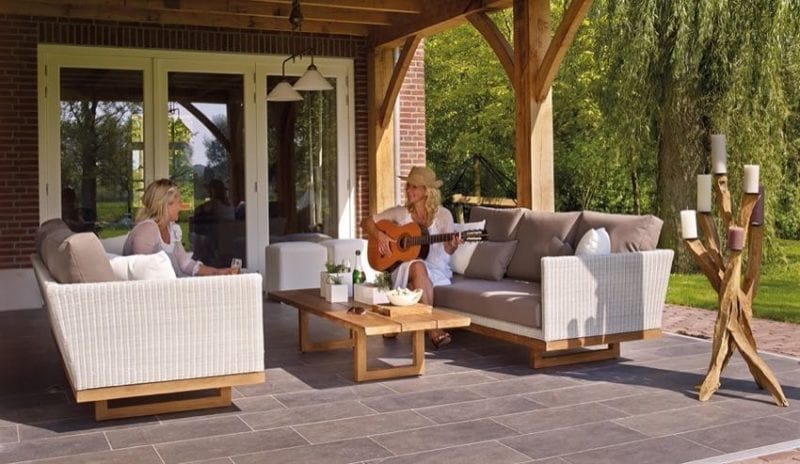
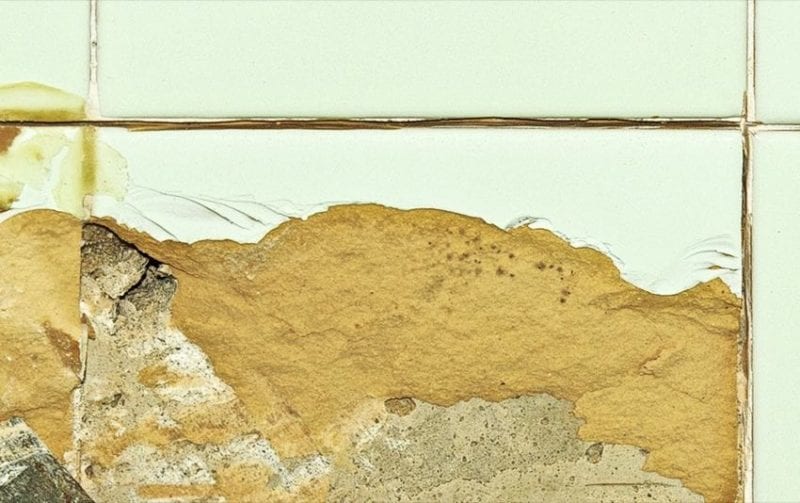
Most ceramic tile is glazed with a baked-on surface coating. Glazed tiles can be high-gloss or matte. They can even come in an abrasive slip-resistant finish. You can buy ceramic tiles with decorative styles, patterns, or a custom-painted design. It’s important to note that the glaze only exists as a top layer coating. If a ceramic tile chips, you’ll see the natural ceramic or porcelain color underneath.
How to Tell Porcelain from Ceramic Tile and Vice Versa
You can always read the packaging to tell ceramic from porcelain tile, but what about if you find it “in the wild”? For one thing, porcelain tile has the same color throughout (see below). That’s a big way to tell right off the bat. If you have unglazed porcelain tile, a chip will reveal the same color underneath. Contrast that to ceramic tile (see above) which almost always has a colored glaze on the surface.
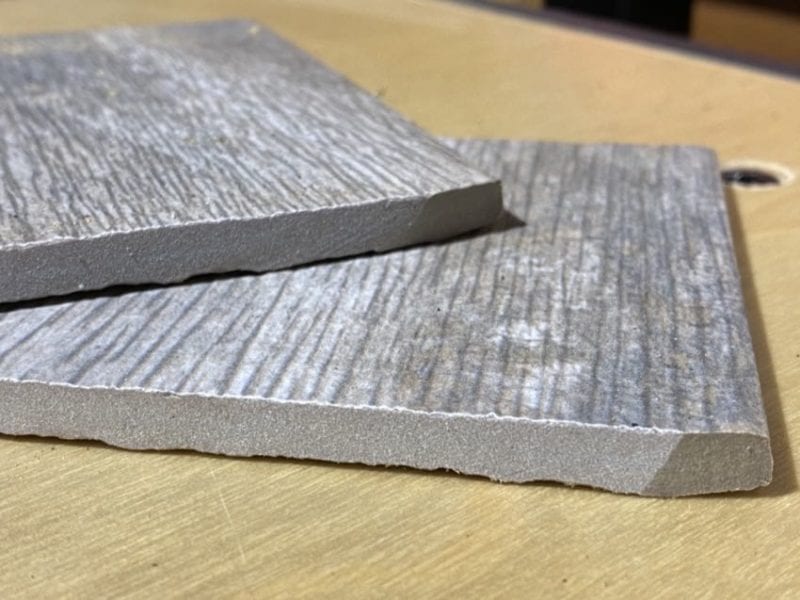
Porcelain tile has the same color throughout the material. A broken or chipped piece of unglazed porcelain will have a uniform color throughout its thickness. Ceramic tile often has a glazed surface coloring, so chips may reveal a different color underneath.
You can also detect porcelain from “below”. The bottom unfinished texture of porcelain has a smoother texture than ceramic tile. Ceramic tile typically feels quite coarse. Finally, porcelain tiles weigh more than ceramic due to their higher density.
Porcelain vs Ceramic Tile Hardness
While all this may seem confusing, if you’re tiling indoors then you actually should care more about the general PEI (or hardness) factor of the tile than anything else (excepting, perhaps the color or style of the tile). Porcelain tile also makes a lot more noise when you cut it with a tile saw. While there are indeed other factors to consider, let’s take a quick look at PEI.
PEI (Porcelain Enamel Institute) ratings range from 0 to 5 and reflect the intended use for the tile. You could simplify it and say that the higher the number, the more scratch-resistant and shatter-resistant the tile. For example, you would never put a wall tile with a PEI rating of 0 on the floor. It will likely scratch and/or crack very quickly.
PEI 2 tile can be used on floors, but only where there is a low amount of foot traffic. Most residential floor tile sold in stores is rated PEI 3 or 4. If you’re going commercial, then PEI 5 tile is the way to go as it is designed for abusive and extra heavy foot traffic, including using hand trucks with reasonable loads.
Breaking Down the PEI Scale of Tile Hardness
Here is a quick run-down of the PEI scale. In the issue of porcelain vs ceramic tile, this matters more than the material itself:
| PEI Rating | Summary | Suitable for | Ceramic or Porcelain |
|---|---|---|---|
| 0 | No foot traffic | Wall tile only and should not be used on floors | Ceramic |
| 1 | Very light traffic | Very low foot traffic, bare or stocking feet only (Master bath, spa bathroom) | Ceramic/Porcelain |
| 2 | Light Traffic | Slipper or soft-soled shoes. Second level main bathroom areas, bedrooms | Ceramic/Porcelain |
| 3 | Light to Moderate Traffic | Any residential area with the possible exception of some entries and kitchens if extremely heavy or abrasive traffic is anticipated | Ceramic/Porcelain |
| 4 | Moderate to Heavy Traffic | High foot traffic, areas where abrasive or outside dirt could be tracked. Residential entry, kitchen, balcony, and countertop | Ceramic/Porcelain |
| 5 | Heavy Traffic | Suggested for residential, commercial, and institutional floors subjected to heavy traffic | Porcelain |
Cutting Ceramic vs Porcelain Tile
As we mentioned above, ceramic tile cuts much more easily than porcelain. Porcelain tile also makes a lot more noise when you cut it with a grinder or tile saw. We’ve even confirmed this using the iQ Power Tools iQTS244 dry cut tile saw. Porcelain more or less “screams” when you cut through it. You definitely want to wear some ear-protection.
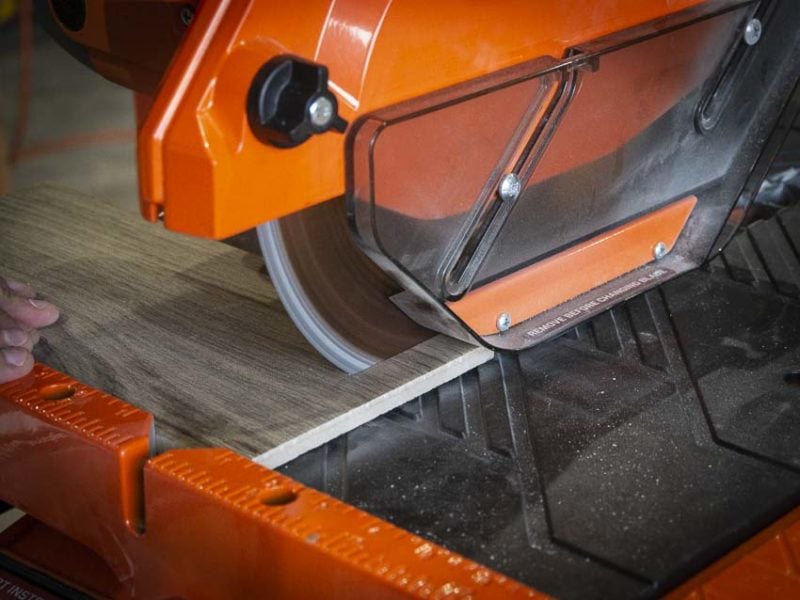
Mostly, this has to do with the greater density you find in porcelain tile. It takes more energy and time to cut. Both also cut easily using a diamond wheel on a grinder. This helps to quickly cut around necessary objects like pipes and drains. In either case, the added density of porcelain really shows its face when you bring a tile saw around to make your cuts.
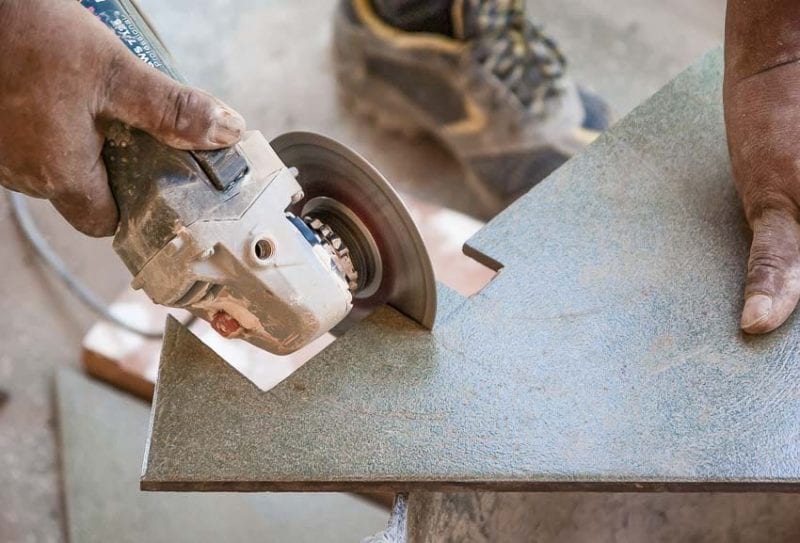
In the end, however, the cutting noise and time aren’t really a consideration we place a heavy emphasis on when choosing between ceramic vs porcelain tile. Texture, durability, and the overall look take top priority.
Porcelain vs Ceramic Tile Color
One advantage we see with ceramic tile includes the use of glazing and advanced colors and patterns. While you can get colors and patterns with porcelain tile, it’s hard to beat the value you can find in ceramic tile for wall tile applications. Some ceramic tiles can also include a textured surface, giving the tile more depth. You can pick up pretty inexpensive ceramic tiles with waves or even raised areas and patterns.
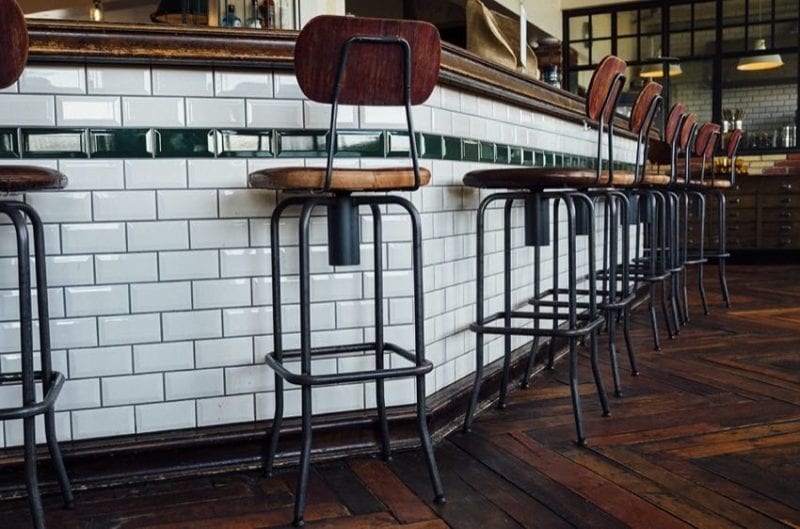
Unglazed ceramic tile only really comes in a few colors, so nearly all ceramic tile includes a glazed top surface. This also matters because unglazed ceramic tile absorbs water—not the best thing for a backsplash or bathroom! Porcelain tile doesn’t absorb water and has more natural body color options.

Ceramic wood plank tile 
Porcelain wood plank tile
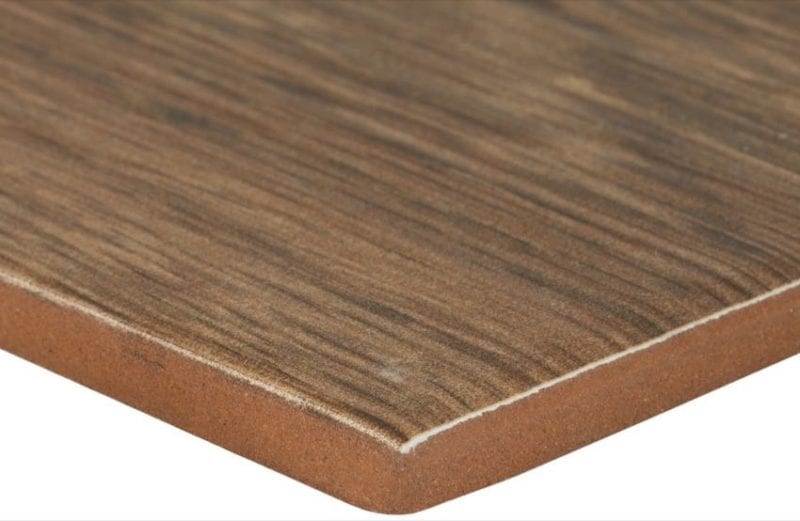
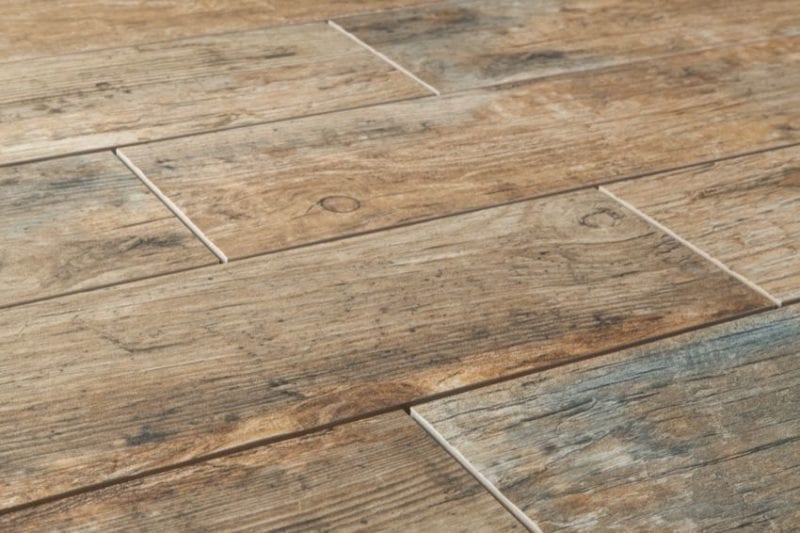
If you want the look of wood, a ceramic tile will have to be “painted” with a wood-looking glaze. Porcelain tile tends to look more natural because the base tile can start with the wood tone or color you’re after.
Conclusion
When considering porcelain vs ceramic tile, glazed or unglazed, you’ll find that both offer almost limitless sizes and shapes to meet your needs in nearly any circumstance or application. Just match the tile to the application and then select the look that’s perfect for your home or office project. Enjoy!