
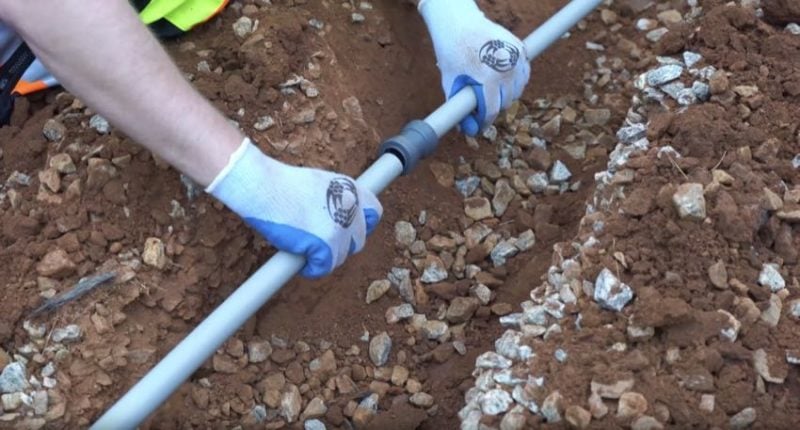
It’s not uncommon to want to run 120V electrical wiring underground. You may want to send power to your shed, workshop, or garage. Another common use is running power to a lamp post or an electric gate motor. In either case, you should be aware of a few underground wiring requirements in order to meet most current building codes. We show you how to install underground electrical wiring from one location to another.
How to Install Underground Electrical Wiring – How Deep Do I Bury the Wire?
The first question we always get asked is “How deep do we bury the wiring or cable?” That’s a great question. And the answer is that it depends on what wire you use and whether you run it within a conduit or not. Since most people ask the question so that they can meet a particular desire for maximum burial depth, let’s start there. Breaking it down by how deep you bury the underground electrical wiring when you install it, we have the following options:
24-inches Deep Burial Depth
- Use direct-burial underground feeder cable at 24-inches deep (or more). You don’t need to use conduit at this depth with UF cable, however, you do need to provide PVC conduit on your vertical feeds starting at 18-inches.
18-inches Deep Burial Depth
- You can run THWN-2 conductors inside of PVC conduit at just 18-inches deep in the ground. This protects the wire from damage in the event someone digs overtop of the cable. THWN-2 is basically water-resistant THHN (Thermoplastic High Heat-resistant Nylon-coated wire)
12-inches Deep Burial Depth
- At 12-inches deep, you can run direct-burial feeder cable wire that is GFCI-protected. Protect it with PVC where it pops up at the house, garage, or shop.
6-inches Deep Burial Depth
- If you use galvanized EMT (metal electrical conduit) with individual conductors inside, you can bury it just 6-inches deep. The idea here is that the EMT can withstand a shovel or other significant potential cause of shorting the wiring.
How to Install Underground Electrical Wiring: General Notes on Burying Wire
If you ever want to use rigid metal conduit or even EMT in place of PVC, you can. Typically, we use gray 3/4-inch PVC for a single line. In addition, while the required burial depths listed above should be generally accurate—check local building codes first. You want to be absolutely certain you’re in compliance before you get started. We typically prefer using PVC conduit when running power to a remote location underground. That gives you a lot more protection over direct burial cable in the long run.
In the end, just understand your options and take the safest or simplest route depending on your situation. If you can get away without conduit and the wiring is in an area that isn’t liable to get in the way of future digging, then direct-burial cable might be best. If you’re running through the middle of your yard, a PVC or metal conduit might seem the better choice—even if it’s overkill.
How to Install Underground Electrical Wiring Step By Step
We don’t provide a ton of steps to installing underground electrical wiring. Installing the wiring or conduit takes a lot of work—but not a lot of detailed instructions.
Call Before You Dig!
Don’t forget to plan ahead and call before you dig. You don’t want to hit any buried water lines, electrical lines, sewage drains, or anything else. In most municipalities, they will check your property within a day or two for free and when you call. Marking out critical lines with flags before you start really saves you a lot of hassle and headaches. Don’t skip this step!
Digging the Trench
We’ve dug a lot of trenches using shovels. Don’t do it if you value your time. If you have someone you desperately want to torture, or you’re only going several feet, then using a trenching shovel works just fine. If, however, you need to go a good amount of distance with your buried electrical cable, we recommend renting a trencher.
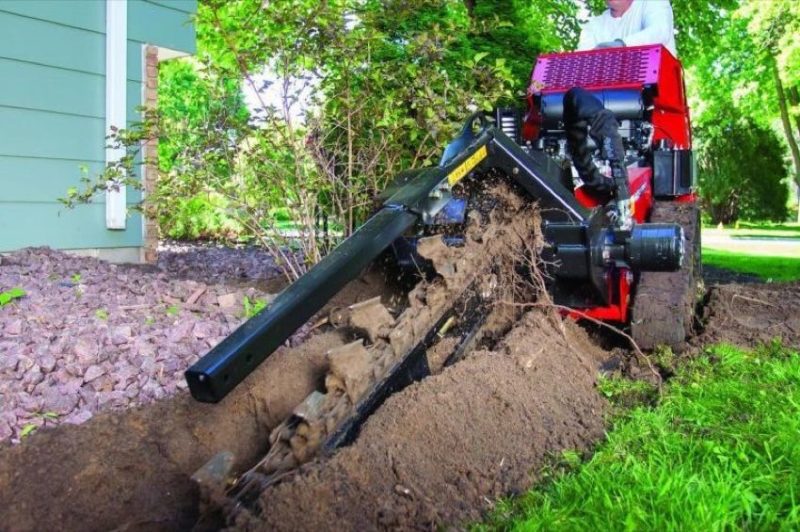
You can rent a 24-inch trencher in most places for less than $200 a day. You can even pay less if you only need it for a few hours. It saves you countless hours and hassle, so if you can afford it, grab one at your local tool rental store.
Using the trencher, plan your course and dig the trench where you plan to run your direct-burial cable or PVC pipe.
Cut Your Ingress or Egress Holes
Cut your egress and ingress holes from the starting point (for example, your electrical panel) to the end of your run.
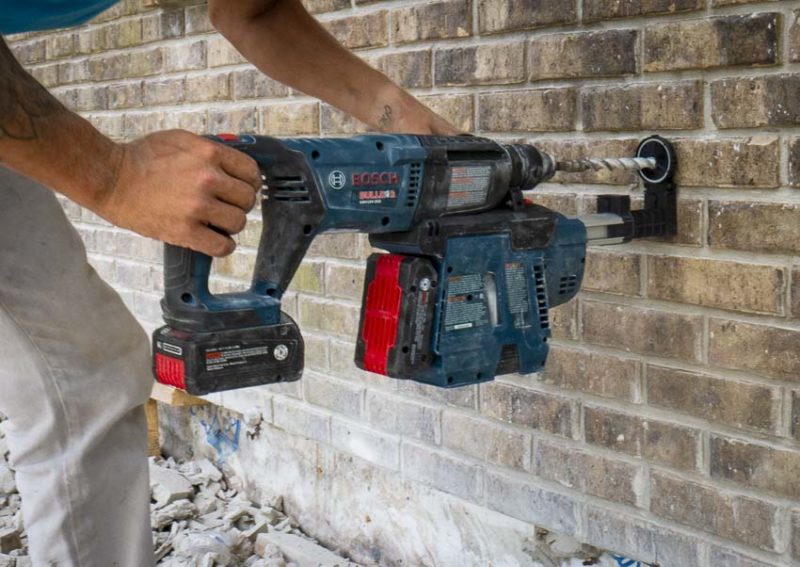
It helps to use what’s known as a PVC conduit outlet body (LB).
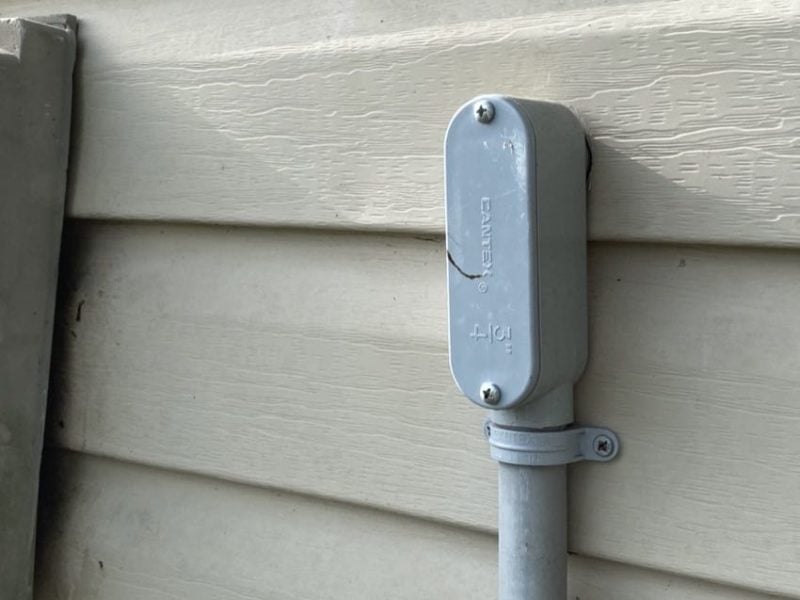
These make it easy to feed wire into a building (either the source or the destination garage or shop). You just remove the plate using the two screws and feed the wire as needed without having to worry about making a sharp right-angle turn at the point of entry.
Pro Tip: Use a heat gun to bend PVC conduit if you need to make a bend to get up against the house, garage, or workshop with your pipe.
Feeding Your Wire
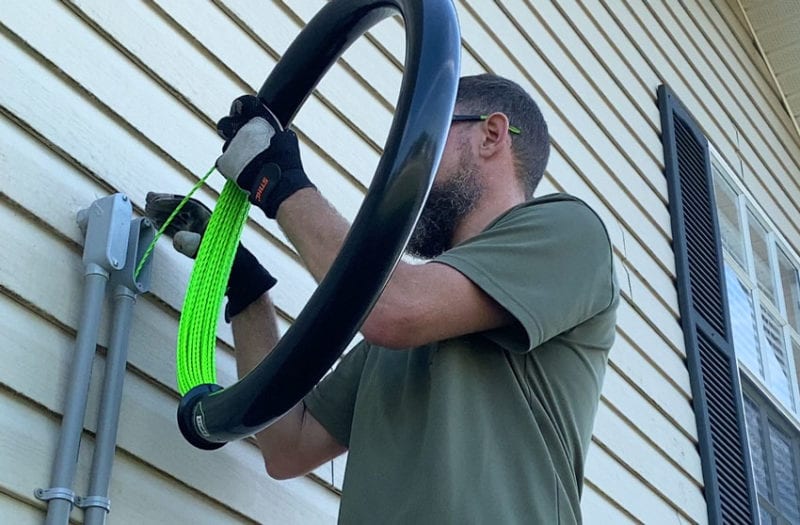
Many times you can simply push your cable through minimal runs of PVC conduit. If needed, you can use a metal fish tape or even vacuum a pull line through the pipe and use that to pull the wires through a long run.
Finish Off Your Connections and Conduit Fittings
After pulling your wire, make your connections to the electrical panel and finish your conduit fittings. That includes securing the plates on your PVC conduit outlet bodies. Test your run, and pat yourself on the back for a job well done!
Final Thoughts
Nothing beats getting much-needed power to a shed or garage. Attack this type of project with gusto and reap the benefits. As always, consult or use a licensed electrician if things seem to be beyond your level of expertise.


Thank you for sharing this guide. It really helps us so we can prevent faulty wiring but doing this with the guide from experts is the best thing to do.