
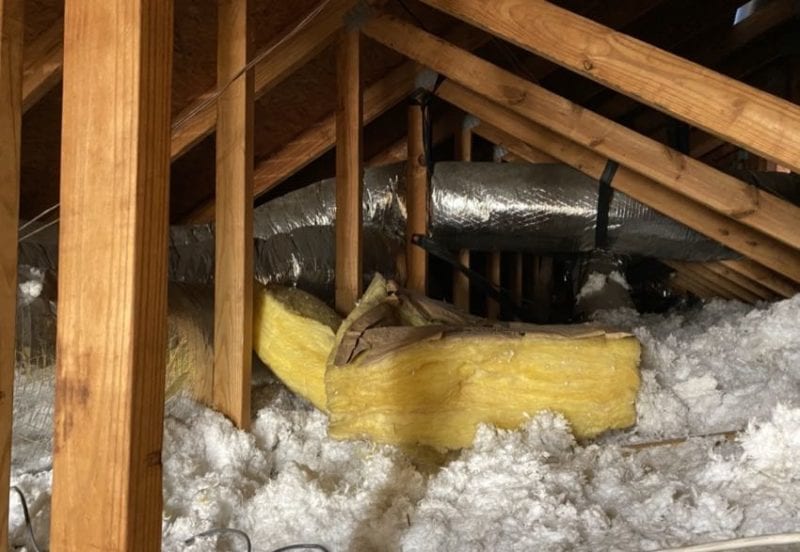
Everyone needs insulation in their attic, but did you know there are lots of things to consider other than simply whether to blow it in (loose-fill) or use batt (blanket) insulation? There are different recommended values depending upon where in the United States you live. That determines how much attic insulation you need.
Recommended R-Value Varies by State
When figuring out how much attic insulation you need, it helps to look at where you live. The chart below helps you understand where your state sits with respect to the recommendations for R-value.
For example, when determining how much attic insulation is enough for those in the southernmost part of the US, things get interesting. You need exactly as much as the area you live in determines. Here, where temps get pretty hot for much of the year, attics should have from R30 to R60 (average is R38).
Those living up north want anything from R49 to R60. This helps insulate against the extreme cold weather. The more insulation you use, the better insulated your home will be.
Check out our article on how to install radiant barrier for another efficient method of cutting energy costs.
Attic Insulation Matters More Than Walls or Floors
While there are also insulation recommendations for walls and floors, this article deals mainly with the oft-overlooked attics. Knowing the R-value and region will help you know how much attic insulation you need. Here is a map of the different zones and corresponding R-value recommendations per the U.S. Department of Energy:
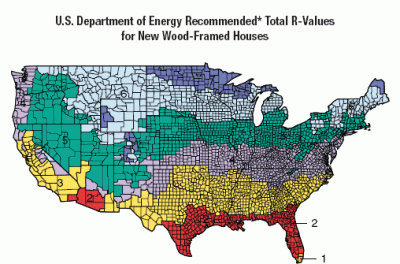
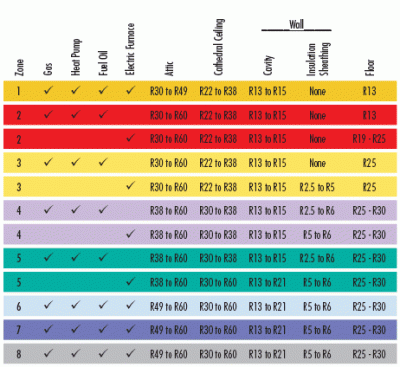
You’ll find it hard to have too much insulation, though it is possible to simply overpay and reach a point of diminishing returns. Even though the chart above breaks down insulation ranges per climate zone, it’s important to note that each zone has a range of possible R-values. That is partially due to the different heating systems in use across the united states.
Blown-in or Batten Attic Insulation
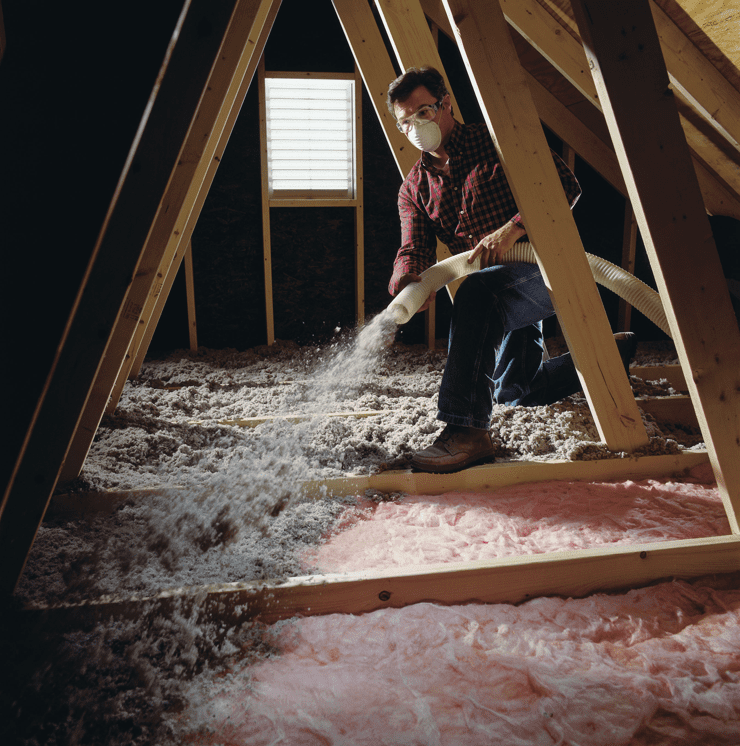
Attic insulation can be blown in or laid down from rolls. Loose-fill insulation is blown into the attic via a long tube and system that is fairly proprietary and often best left to the professionals. “Blanket” style insulation can be purchased as either batts (8-foot long rectangular pieces) or rolls (which come in 16- or 24-inch widths).
Insulation is typically made from fiberglass or mineral fibers, and with all the options, make sure you measure the spacing between the joists to ensure you grabbed the best kind for your needs. For example, unfaced insulation is great for adding to existing attic insulation, but paper-faced insulation is best for new spaces.
Calculating the Amount of Batt Insulation You Need
Calculating the amount of insulation you’ll need isn’t that hard. You just need to know the right formula. First, measure the length of each row between the attic joists, and add that all up. If you then divide by the individual length of the bat or roll insulation you’re buying, you’ll have the quantity you need to purchase. Where it gets hard, is factoring in the required R-value.
Calculating the Amount of Blown-in Insulation You Need
For blown-in insulation, you need to understand the R-value per inch. Also, it’s very important to understand how the insulation “settles” so that you don’t end up under-insulating your attic. If you have someone do this work for you, they’ll handle that. Do it yourself, however, and you want to make double-sure you purchase the right amount of blown-in insulation.
Know Your Starting and Ending R-Values
If you are starting off fresh, and have no attic insulation yet, start with an R-value of at least 38. You can check local codes and the Department of Energy chart above for specific recommendations). If you already have some insulation, simply subtract what you have from the desired value. R38 works well as a basic starting point.
To find out if you have enough insulation in your attic, measure the thickness of the insulation from top to bottom using a ruler. If it is less than R-30 (which is to say, 11 inches of fiberglass/rock wool or 8 inches of cellulose) then you may want to add more. Check the chart below as a down and dirty guide of your existing R-value:
| Type of Insulation | Form | Color | R-value (per inch) |
|---|---|---|---|
| Fiberglass | blown | pink or yellow | 2.2 |
| Perlite | loose-fill | white | 2.4 |
| Fiberglass | blown | white | 2.8 |
| Rockwool | blown | dark gray or brown | 2.8 |
| Vermiculite | loose-fill | white | 2.8 |
| Fiberglass | blanket/batt | pink or yellow | 3.1 |
| Rockwool | blanket/batt | dark gray or brown | 3.2 |
| Cellulose (paper) | blown | dark gray | 3.7 |
| Polystyrene | molded | pink or white | 4 |
| Polystyrene | extruded | pink or white | 5 |
| Polyurethane | unfaced | beige or white | 6 |
| Polyisocyanurate | unfaced | tan or beige | 6 |
| Polyurethane | faced | beige or white | 7.1 |
| Polyisocyanurate | faced | tan or beige | 7.1 |
For those blowing in insulation (our favorite choice) be sure to install some makeshift “depth gauges” in the attic from scrap lumber. Cheap yardsticks also work really well for this. If you use scrap wood, you can mark it to indicate the desired finished thickness of insulation. It lets you know for certain that your contractors have indeed blown in the right amount of insulation.