
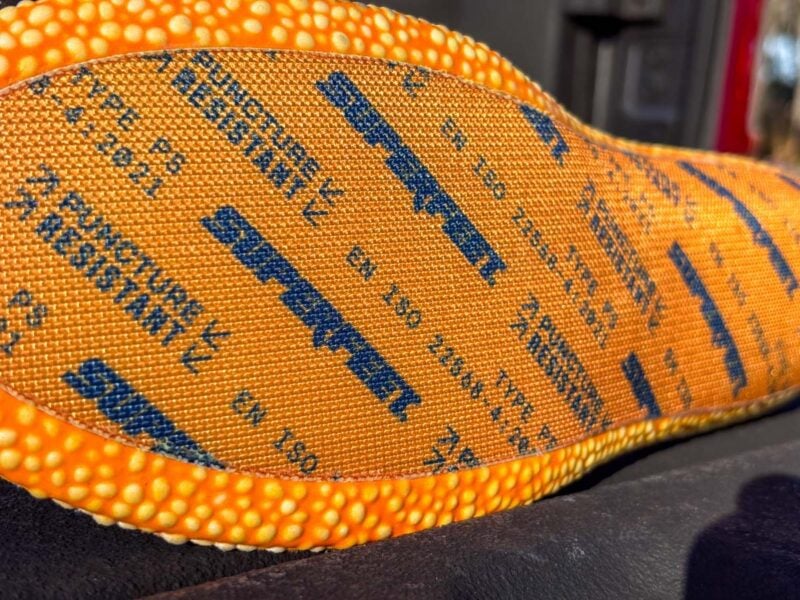
PTR’s Josh McGaffigan was telling me just the other day about a job he was working when he stepped on a nail, and it went clear through his boot. Fortunately for him, it managed to find the space between his toes, and he avoided a trip to the ER. That ended well for him, but it highlights the need for puncture protection on jobsites, even if it’s not a required part of your safety plan.
The traditional route is to purchase boots with a puncture plate built in. But what if your favorite boots don’t have that option?
Superfeet has a solution for you. Their new Work Puncture Resistant insoles can turn any pair of work boots or work shoes into certified puncture-resistant ones. Josh and I both snagged a pair to see how well they wear.
Pros
- Certified puncture-resistance protection
- Works in nearly any boot or shoe
- Can be cut to fit your current insole’s shape
- Long-lasting durability (1000+ miles)
Cons
- Slightly increases boot stiffness
Read
Best Work Boots
Superfeet Work Puncture Resistant Insoles: What They Say
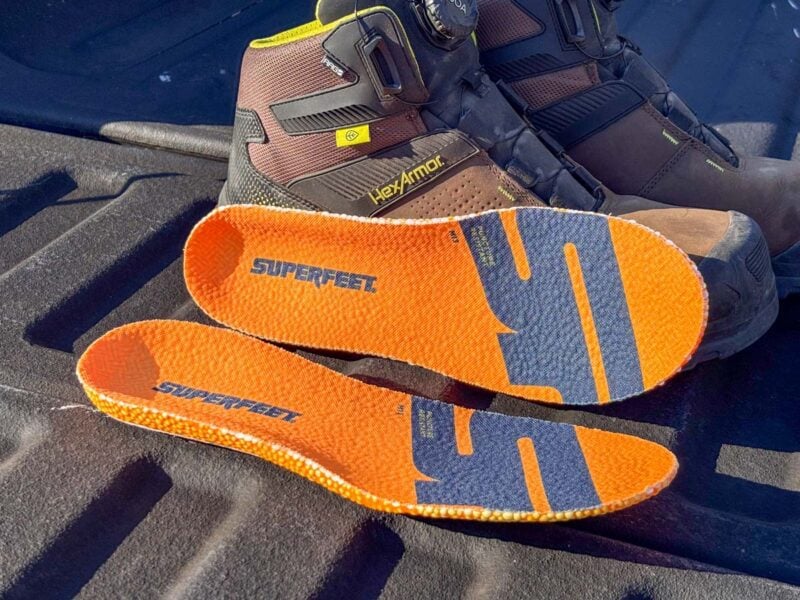
Before I jump into our impressions, let’s take a quick tour of what Superfeet has to say about these insoles.
SuperRev Foam: Made from a blend of advanced foams, it adds softness to keep your feet comfortable all day.
Puncture-resistant Plate: Flexible plate that’s designed to prevent sharp hazards from penetrating. Its thin profile is versatile enough to fit in a broad range of boots and shoes.
Certified Puncture Resistance: Meets ASTM F2413-18 and can withstand 1200 Newtons of puncture force.
Long Lasting Protection: Designed to last 1000+ miles and verified by third-party testing.
Insole Profile
- Good for all arches
- Maximum thickness
- Medium cushioning
Superfeet Work Puncture Resistant Insoles: What We Say
To get an idea of the overall feel of these insoles, I compared them to Superfeet’s Work Cushion insoles, which have been my go-to replacement insoles since they launched a few years ago. The profile is similar, though they have soft cushioning, whereas the Work Puncture Resistant model has medium cushioning.
Stiffness and Flexibility
Any time you add a puncture plate to a pair of boots or shoes, it necessarily increases the stiffness. It’s most noticeable in cement or direct attach construction, or if your boots have a super-plush midsole.
Superfeet’s insoles are no different, and there are some things you should know before sliding them in.
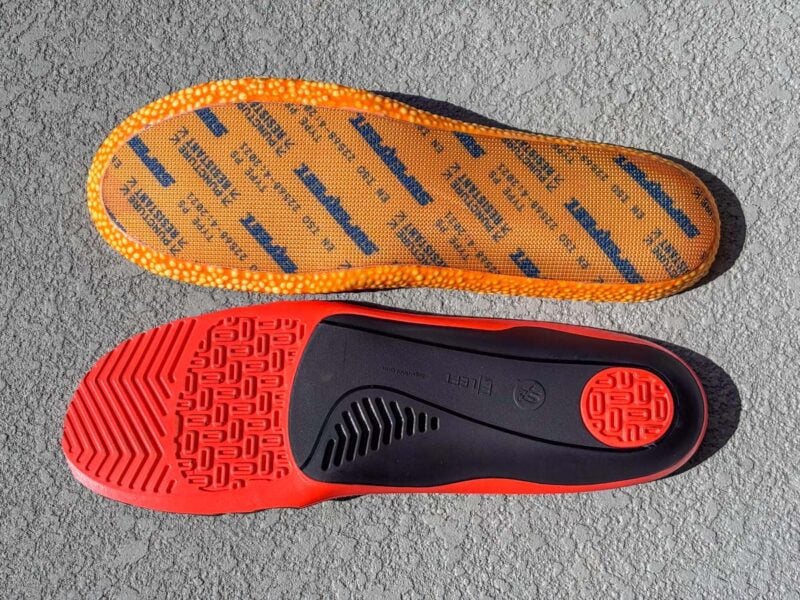
When it comes to flexibility, the biggest difference is on the front third. The Work Cushion has no support there, so it’s super-flexible, providing no stiffness during toe-off. Since the puncture plate on the Puncture Resistant insole runs all the way to front of the toes, it’s stiffer across that section.
However, the Work Cushion’s back two-thirds is stiffer, providing very solid arch support. The Puncture Resistant insoles are more flexible from the heel through the center section. There’s also more twist flexibility in the back half.
Note that the flexibility of the Puncture Resistant insoles will improve as they break in, so give them a few weeks to find their stride.
Cushioning
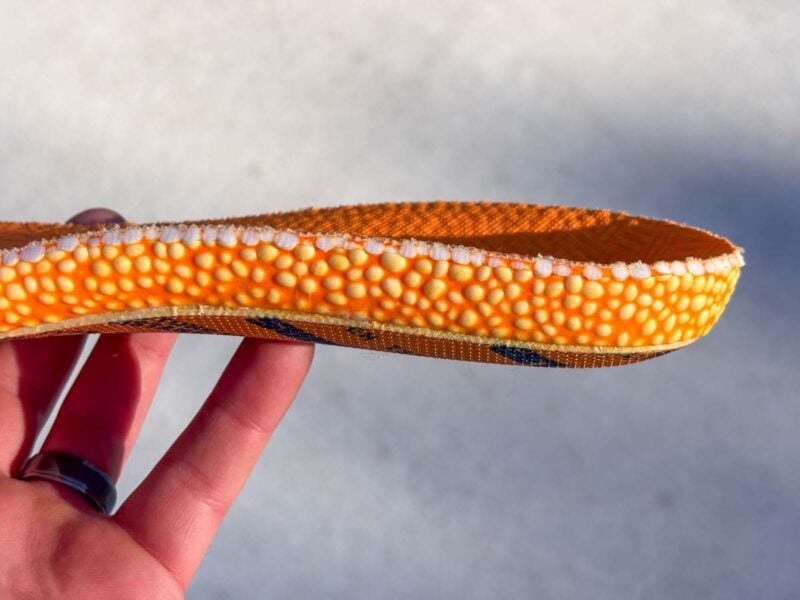
You can tell the difference between the two levels of cushioning. Of course, that’s exactly what we expect since we’re comparing soft vs medium levels between the two. But there’s also no heel cutout on the Puncture Resistant model since it has to be, well, puncture-resistant all the way through.
Still, I can feel the difference on my heel strikes. Depending on how you walk, that can be critical to your comfort since a straight-leg heel strike can amplify force through your knee and into your hip. If you can adjust your stride to land closer to mid-foot with a slight bend in your knee, you’ll eliminate a lot of the discomfort from that (the former triathlete in me is geeking out right now).
Weight
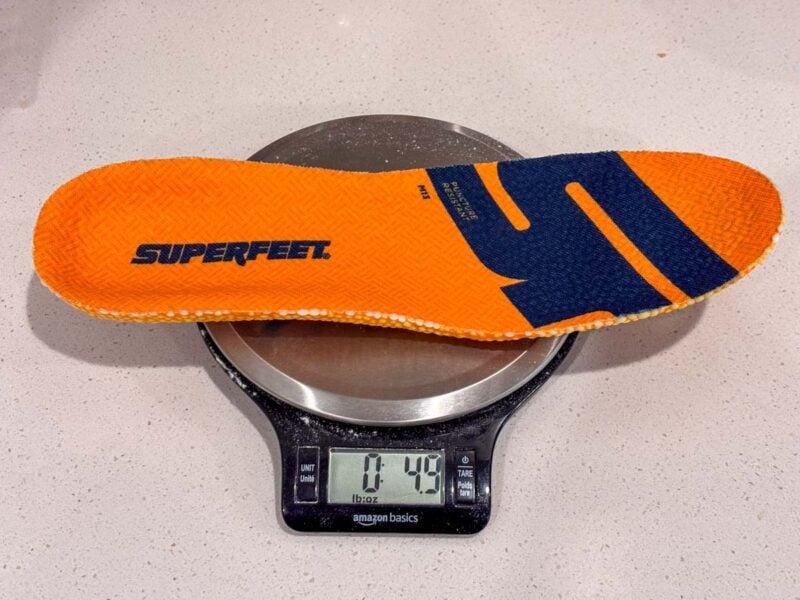
I noticed a difference in weight between the two styles as well. In hand, it seemed more significant than it really is. At 4.9 ounces each, the Puncture Resistant insoles are about 1.5 ounces heavier, but it’s not enough to make much of a difference once they’re in work boots.
Customizing the Fit
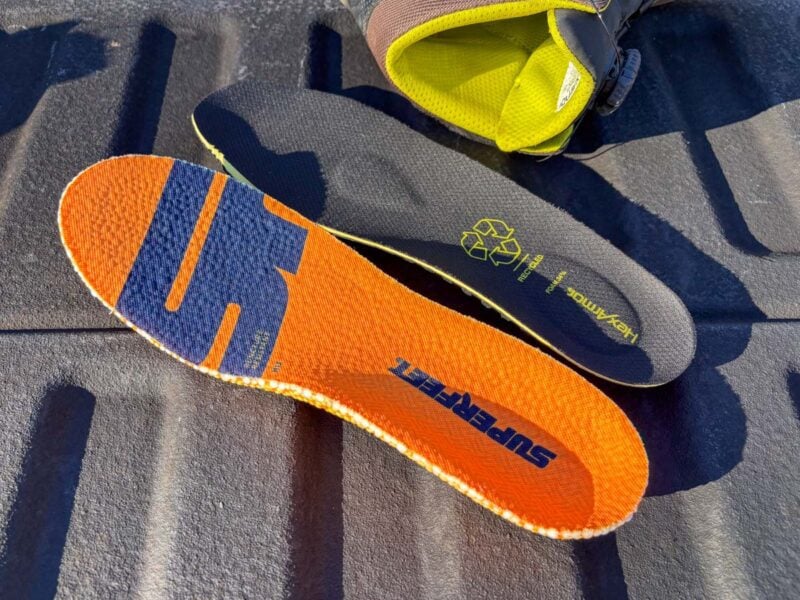
Like their other insoles, Superfeet left enough room to trim them up so you can customize them to your boot. The easiest way to do it it use the insoles your boots came with to trace their outline onto the new ones and use a pair of scissors to shape them up.
There’s one more minor thing to address. I noticed several people mentioned that these insoles are thicker and made their boots fit tighter. I don’t find them to be much thicker than the Work Cushion insoles I’m used to. But even if they are thicker than the ones you currently wear, take a few minutes to relace your boots, and that will relieve the pressure on the top.
Should You Buy Them?
There’s no question that the ability to make any work boot puncture-resistant by simply adding Superfeet Work Puncture Resistant Insoles has very real value for professional tradesmen. After trying them for myself, my recommendation is to pick your battles.
While they offer true protection, they also increase your boot’s stiffness slightly and can make them feel less cushioned, depending on the insole and midsole you’re used to. It’s a difference you’ll feel the most on hard surfaces like concrete or asphalt. The effect is certainly lessened on bare ground.
If puncture protection is required on your jobsite, by all means, slip these into your favorite boots or shoes. The effects I described aren’t much different from a pair of work boots that already have puncture plates built in above the midsole.
Because my needs are more varied, I’ll continue to use these on an as-needed basis. When there’s a puncture risk, I’ll slide them in. When there’s not, I’ll stick with the Work Cushion insoles. That’s part of the beauty of having the protection on the insole instead of being permanently integrated into the boot.
If adding certified puncture protection to your work boots sounds good, pick up a pair for $59.99