
In partnership with American Standard Heating and Air Conditioning
Upgrading to a heat pump is a big decision, and some of the technical terms can take some time to understand. As you consider your choices, one of the most important things to understand is the SEER2 and HSPF2 values.
To gain some clarity, we worked with American Standard Heating and Air Conditioning and connected with Chelsea Hudson, Product Manager for Heat Pumps and System Ratings, for some solid answers. In this article, I’ll help you better understand how to interpret SEER2 and HSPF2, how they can impact energy efficiency, and what they mean for your family’s comfort.
READ
Why Heat Pumps Are the Smart Choice for Heating and Cooling
SEER and HSPF vs SEER2 and HSPF2
SEER stands for Seasonal Energy Efficiency Ratio. It measures how efficiently an air conditioner or heat pump cools a home over a typical season. The ratio it refers to is the total cooling output compared to the total electrical energy required over the course of the cooling season.
HSPF stands for Heating Seasonal Performance Factor, and is specific to heat pumps. Similar to SEER in that it’s an efficiency rating, it measures a heat pump’s heating efficiency over the course of a typical heating season.
Using these calculations, a higher number indicates greater energy efficiency which can result in lower cooling and heating costs.
Obviously, each part of the country is different, so you wouldn’t want one system’s rating to be based on Washington’s typical weather and another based on Florida’s. To ensure consistency, the ratings are calculated based on ASHRAE Climate Zone IV, a roughly average cross-section of the country with temperate, mixed climates and moderate heating and cooling needs.
In 2023, the U.S. Department of Energy introduced SEER2 and HSPF2 efficiency ratings, replacing the previous SEER and HSPF ratings. It’s not a complete overhaul; it’s more like an updated version based on more rigorous testing conditions. For example, the updated tests use higher external static pressure to better represent the more restrictive ductwork encountered in typical homes.
The updated ratings better reflect real-world system performance and support higher baseline efficiency standards. If you were to rate the same system based on both testing standards, the newer rating would most likely be slightly lower, representing a more accurate efficiency picture. For example, 14 SEER would be roughly equivalent to 13.4 SEER2.
Can You Convert SEER/HSPF to SEER2/HSPF2?
If you have a system built and installed prior to the 2023 updates, you can convert the SEER and HSPF ratings to get an idea of where they stand today.
For cooling efficiency, multiply the SEER value by 0.95 to estimate the SEER2 rating. As an example, let’s say your existing system is SEER 15. SEER 15 x 0.95 = 14.3 estimated SEER2.
For heating efficiency, multiply the HSPF value by 0.85 to estimate the HSPF2 rating. If your existing system is HSPF 7.9, then HSPF 7.9 x 0.85 = 6.7 estimated HSPF2.
It’s that simple!
Upgrading to a Heat Pump Based on SEER2 and HSPF2
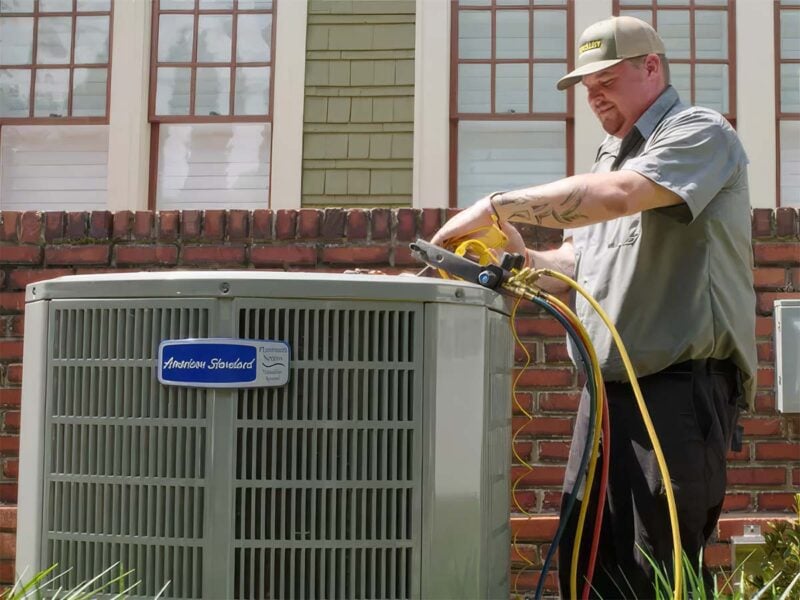
Your air conditioner must meet minimum efficiency standards, which vary depending on where you live. In the North, air conditioners have to meet at least 13.4 SEER2. In the Southeast and Southwest, split AC systems must range from 13.8 to 14.3 SEER2, depending on capacity.
Switching to heat pumps, which perform both cooling and heating, split systems must meet at least 14.3 SEER2 across the country, while packaged systems have to be at least 13.4 SEER2.
On the heating side, heat pumps must be at least 7.5 HSPF2 for split systems and 6.7 HSPF2 for packaged systems.
If it’s time to replace your current system or you’re thinking about an upgrade, the best way to compare SEER2 and HSPF2 is to focus on real-world impact, including energy use, operating cost, and how well the system matches your home’s climate and comfort needs. Here are a few things to keep in mind:
- Even small increases in efficiency can result in meaningful savings over time
- In warmer parts of the country, where you have greater cooling demand, higher SEER2 ratings may provide the greatest benefit
- In cooler parts of the country where you have greater heating demand, higher HSPF2 values should carry more weight
Remember to balance upfront cost with long-term energy savings. The longer you stay in the home, higher local energy costs, and heavier heat pump use all point to greater benefits with a more efficient system.
Installation quality and duct design also come into play, and even a high-efficiency system may not deliver its full potential if it’s not installed properly or the ductwork restricts airflow.
You’re not alone, though. Your local American Standard Customer Care Dealer has highly-trained experts available to help you determine the best heat pump for your home. They can inspect your current HVAC system and recommend which model fits your family’s budget, climate, and comfort needs.
SEER2 and HSPF2 Case Study
A good lifespan estimate for air conditioning and heat pump systems is 15 to 20 years. Let’s say your system is 15 years old, and it’s time to replace it, or you want to get ahead of any problems and upgrade.
Since the majority of HVAC systems generally align with minimum efficiency standards, you’d be looking at roughly 13 SEER for cooling and 7.7 to 8.2 HSPF for heating in a unit that’s around 15 years old. Using our conversions, that would be approximately 12.4 SEER2 and 6.5 to 7.0 HSPF2.
If your goal is making an upgrade to a heat pump with the lowest up-front cost, American Standard’s Silver series is the way to go. The Silver 16 heat pump is a single-stage unit with ratings up to 17 SEER2 and 8.5 HSPF2. Those are significant improvements! As single-stage heat pumps, they provide serious value and uphold American Standard’s commitment to quality.
If you want to balance enhanced efficiency and price, consider the American Standard Gold 17 heat pump for a noticeable step up in comfort and energy efficiency. This multi-speed unit can reach up to 17.1 SEER2 and 11 HSPF2. It’s a strong mid-tier option for homeowners who want enhanced performance without moving to a premium variable-speed system. If you live in a colder part of the country, that’s a compelling upgrade in heating efficiency.
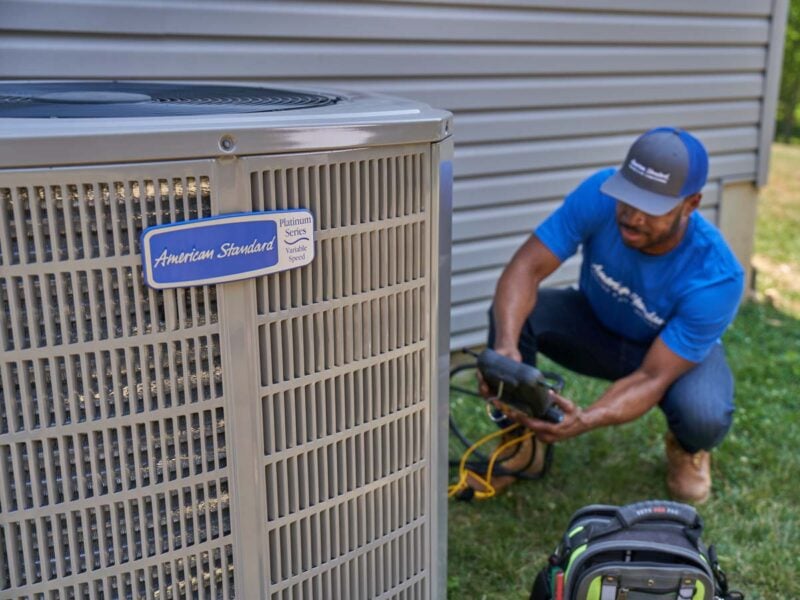
For the ultimate in home comfort, look to American Standard’s Platinum Series. The AccuComfort Variable Speed Platinum 20 is one of the industry’s most efficient heat pumps and can reach up to 22.4 SEER2 and 10.5 HSPF2. For warmer parts of the country, this model offers the best cooling efficiency.
READ
Leveling Up: How American Standard Heat Pumps Deliver Ultimate Home Comfort
Efficiency is Only the Beginning
Energy efficiency is only part of the story. As you upgrade to more efficient heat pumps, there are other benefits. A variable speed model offers more consistent temperatures, improved humidity control, and quieter, more refined performance throughout the home.
The same goes for temperature precision. American Standard’s AccuComfort Variable Speed Platinum 20 heat pump delivers consistent comfort, adjusting capacity in increments as 1/10th of 1%, to stay within a half-degree of your target temperature. You set the comfort level, and the AccuComfort Technology does the rest.
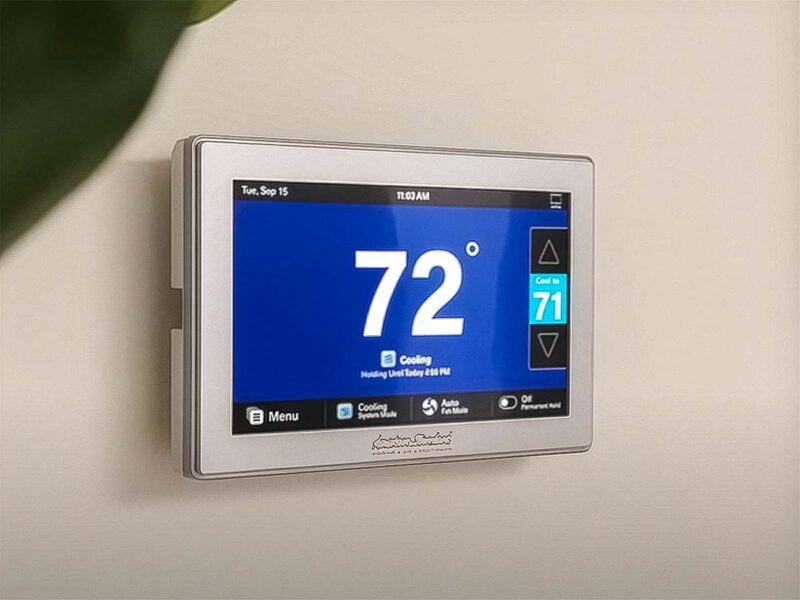
Thanks to new, smarter features, the Platinum Series includes the innovative American Standard Link Communicating technology that allows your HVAC components to talk to each other automatically and allows you to control and adjust settings remotely through the Home App. It can also alert you when it’s time for maintenance and even send remote diagnostic information to your local American Standard pro to detect possible issues and provide valuable information on the health of your system to help service techs prepare for system repairs or even troubleshoot remotely.
READ
Intelligent Upgrade: American Standard Link UX360 Smart Thermostat
Ready to upgrade? Call your local HVAC technician or American Standard Customer Care Dealer to discuss installing the right heat pump for your home and take advantage of greater heating and cooling efficiency.