
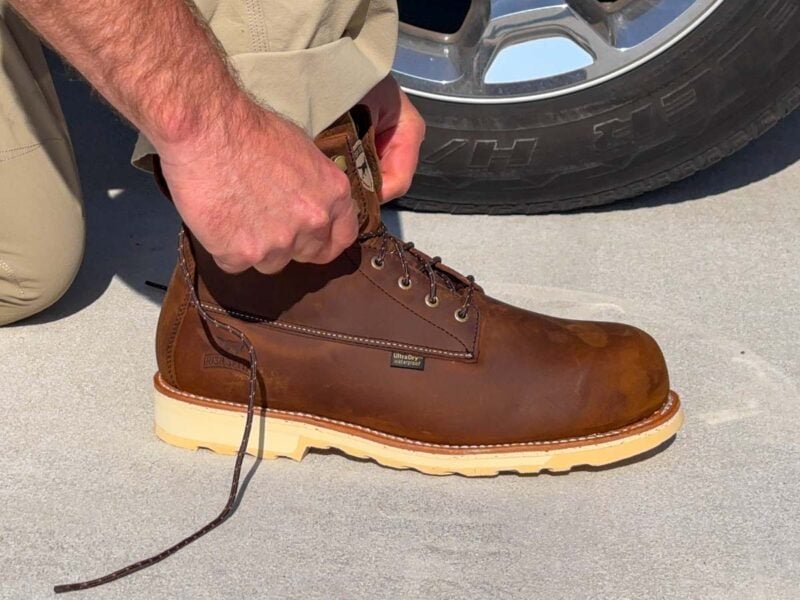
It’s barely 10:00 AM, your feet have been screaming for more than an hour, your knees are already starting to feel sore, and your lower back is begging for a couple of Aleve. Sound familiar? As I creep closer to the age of 50, I’ve had to deal with these ailments more regularly than I’d like, and you might be surprised to discover how much your work boots contribute to your pain. I’ll share what I’ve learned from experience that can actually make a difference, and put a little more spring in your step.
One disclaimer: more comfortable work boots can’t fix everything. Real damage to your knees or back needs to be addressed by a medical professional if you’re going to find permanent relief.
Now that the legal department is happy, let’s make your feet happy.
READ
Best Work Boots: Most Comfortable Boots for Tradesmen
Get the Right Fit

The best work boot in the world won’t be comfortable for you if it’s the wrong fit. When you put your boots on in the morning, there should be about a thumb’s width of space between the end of your big toe and the front of the boot. Your foot naturally swells over the course of the day, so you need room in the toe box to allow for it.
Pay attention to the width as well. Putting wide feet in a standard-width work boot creates additional pressure points that add to discomfort.
A well-fitting work boot should have a comfortable amount of room, but shouldn’t allow your foot to slide around. Your feet should feel like they’re being hugged rather than trapped, yet not given too much freedom
The easiest way to ensure you get the right fit is to shop in-store, where you can try on different styles and sizes. Retailers like your local Red Wing store have people trained to help you find the right fit. In big box stores, you’re more on your own, but you can still try them before you buy them.
There’s no arguing with the convenience of online shopping, though. Be sure to check the return policy, and don’t wear your new boots outside until you know you’re keeping them. Most retailers won’t accept returns unless they’re sent back in perfect, like-new condition, and many specifically mention they can’t have been worn outside. While Amazon doesn’t carry every brand and model we recommend, their quick shipping and easy returns make online work boot shopping less of a hassle.
READ
BOA Fit System: Ultimate Work Boot Upgrade or Unnecessary?
Consider the Construction
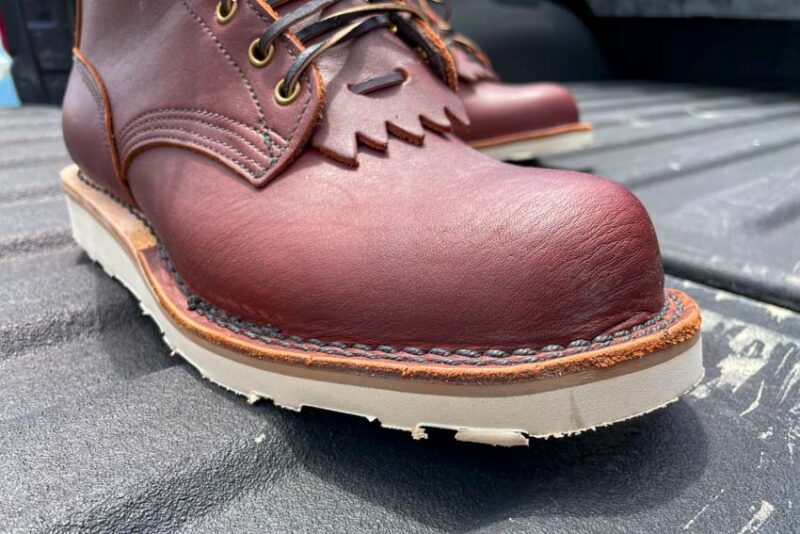
There are three main types of work boot construction: cement (glued), direct attach, and Goodyear welt.
Cement construction boots are typically the most flexible, ready for a full day’s work right out of the box, and the least expensive. However, it’s the least durable type of construction, so you’ll have to replace these boots more often.
Direct attach boots are in the middle ground. They have a short break-in period (often just a couple of days), have a mid-range price, and mid-range durability.
Goodyear welted boots require real break-in time, often a couple of weeks or even a month for high-quality handmade boots like Nick’s or JK Boots. Plus, they’re the most expensive. However, these boots break in based on the unique shape of your foot. If you have patience on the front end, these often turn into the most comfortable work boots.
A Weighty Issue
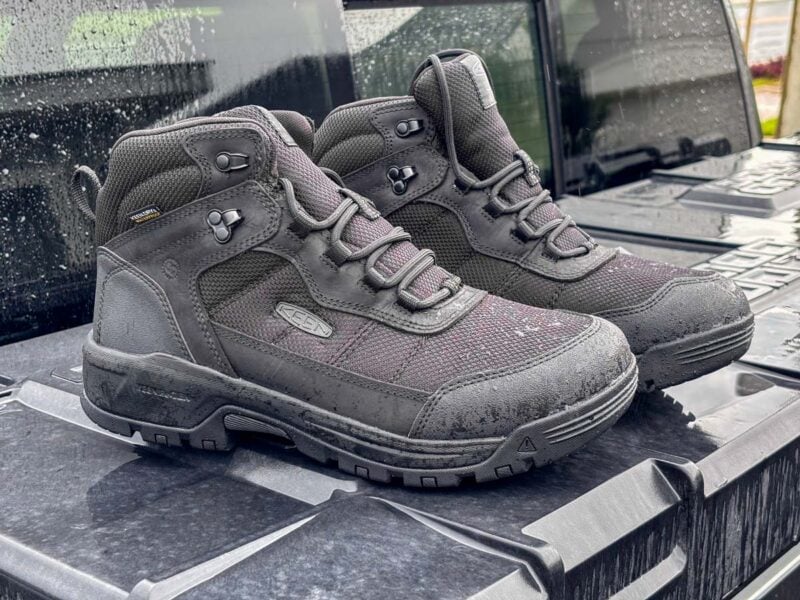
You take thousands of steps every day, and the weight of your work boots plays heavily into how much fatigue builds up in your feet and legs. Lighter boots reduce the effort of each step and their compounded effects over the course of the day. Most of the time, lighter is better, but there are some caveats.
Starting with construction, cement is the lightest, direct attach is in the middle, and Goodyear welted are the heaviest.
Consider duty rating as well. Light-duty boots are the lightest, medium-duty next, and heavy-duty boots are the heaviest.
My advice is to start by narrowing down which construction type and duty rating you want. Try on several of your top contenders to see which ones fit your feet the best, then make your choice based on weight.
Wedge vs Heel
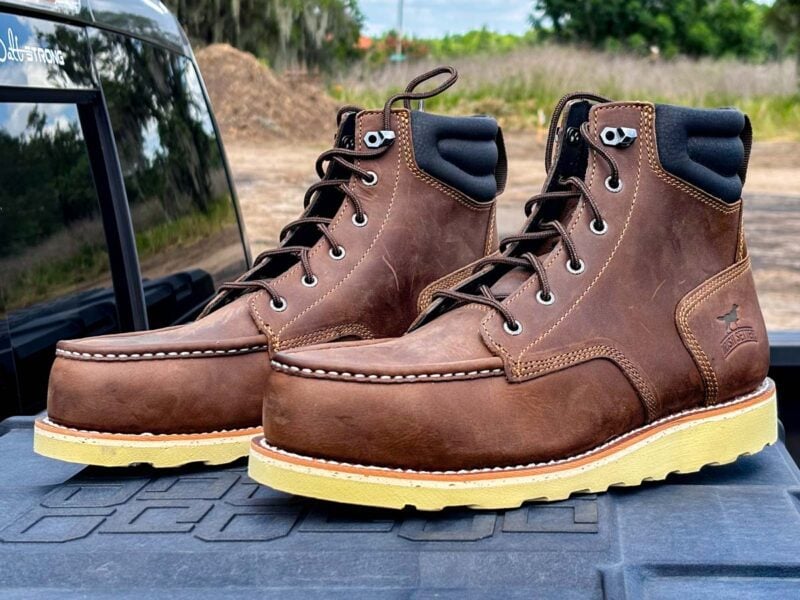
Wedge sole work boots have been gaining in popularity, and we’re big fans of them… in the right environments. Wedges help spread your weight over a larger surface area, which reduces fatigue in your feet. It’s particularly noticeable for bigger guys and gals. I’m 210 pounds on a good day with a lot of miles on my engine, and I wear wedges most of the time because of the extra comfort.
Wedge soles are most effective on hard surfaces, such as concrete, asphalt, and hard-packed ground. Their outsole tread tends to be very shallow to maximize surface area contact with the floor or ground. In the right environment, it improves traction.
However, on loose soil, rocky terrain, or sloped ground, they can have worse traction than traditional heeled work boots. Even though wedges spread your weight out, they can’t overcome the fatigue that comes from fighting for traction.
So, for hard surfaces, consider trying wedge work boots. For softer or more rugged surfaces, or if you spend a lot of time on a ladder, stick with a heeled boot.
READ
Why More Pros Are Turning to Wedge Sole Work Boots (Including Us)
Midsole Matters
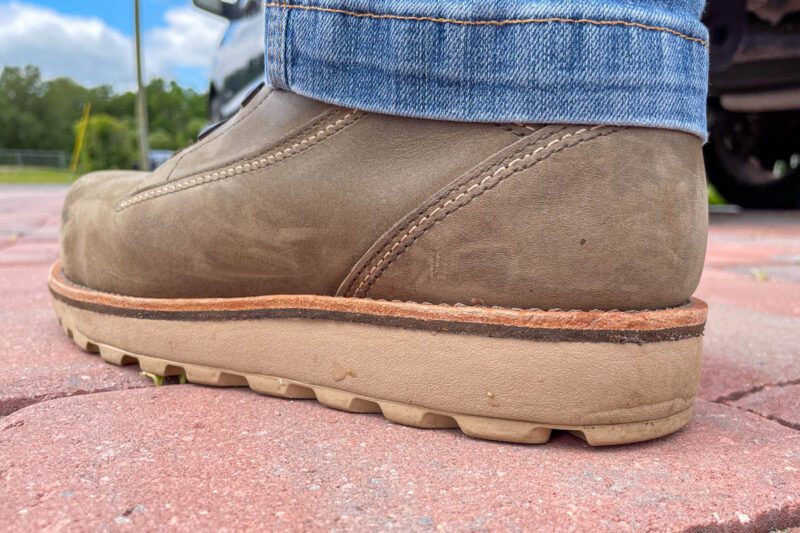
Most of the topics we’ve already covered are codependent on other aspects of the work boot, but the midsole works alone. It also has the biggest impact on how comfortable your feet feel.
It’s all about density. A denser midsole is more stable and has longer durability, but it’s harder on your feet. A softer midsole is less stable (though a stabilizer shank can help) and has shorter durability, but has much better cushioning.
Softer midsoles are typically made from an air-injected EVA foam, similar to running shoes. They tend to be thick and supremely cushioned to the point that you literally feel the difference as soon as you put them on.
The downside is that the foam degrades much faster than polyurethane or more dense EVA midsoles. You can expect roughly 6 months of regular wear before you need to replace them. That makes them a good pairing for cement construction boots that already have a shorter life by nature, so you can often find them on highly flexible, affordable boots with no break-in time.
It’s also possible to get them on Goodyear welted boots. Since that type of construction is designed to be rebuilt, some brands offer midsole replacements.
Direct attach boots are far less likely to have a lightweight EVA midsole. The injection process is better suited to polyurethane midsoles.
Don’t Neglect the Insole
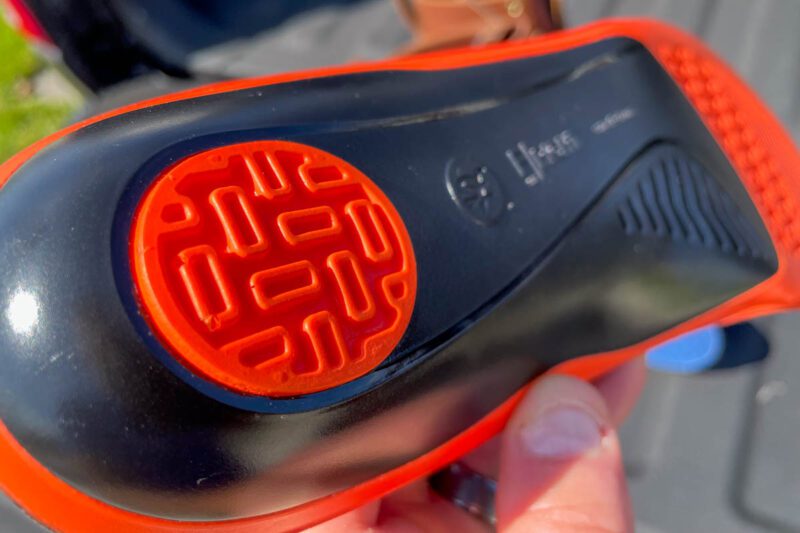
Most likely, your work boots are going to come with insoles. For many people, they work great, but others (myself included) need an upgrade.
There are plenty of off-the-shelf insoles that add some cushioning and improve your boot’s comfort. Personally, I’ve been using Superfeet’s Work Cushion insoles for the past several years. They’re more expensive than Dr. Scholl’s, but I have less knee pain with them.
You may need to dig deeper to find relief, though. Recently, I came across an alternative to custom orthotics from a company called Stride Soles. Using scans taken from your cell phone, they create custom insoles matched to the unique shape of your feet. There can be some discomfort on the front end, but stick it out. They’re designed to actually fix the problem, not just cushion your feet.
To Waterproof or Not to Waterproof

The decision between waterproof and non-waterproof work boots is more than just whether your feet might get wet. Of course, water intrusion is a big deal. If your feet get soaked in the morning, you’re in for a long day of dampness and odor build-up.
In order to keep water out, waterproof boots have to fully enclose your foot in solid material. Technology such as waterproof, breathable membranes can help move water and sweat away from your feet to help keep them drier. It’s no substitute for vented boots, though, especially in the summertime. Mesh vents allow for much greater airflow, which leads to better sweat release and cooler feet.
If water intrusion from rain, splashes, or standing water is a real concern, go waterproof, and look for boots with a breathable membrane to help you deal with sweat. But if you don’t have to worry about water in your boots, consider vented models to help you stay cooler and drier.