
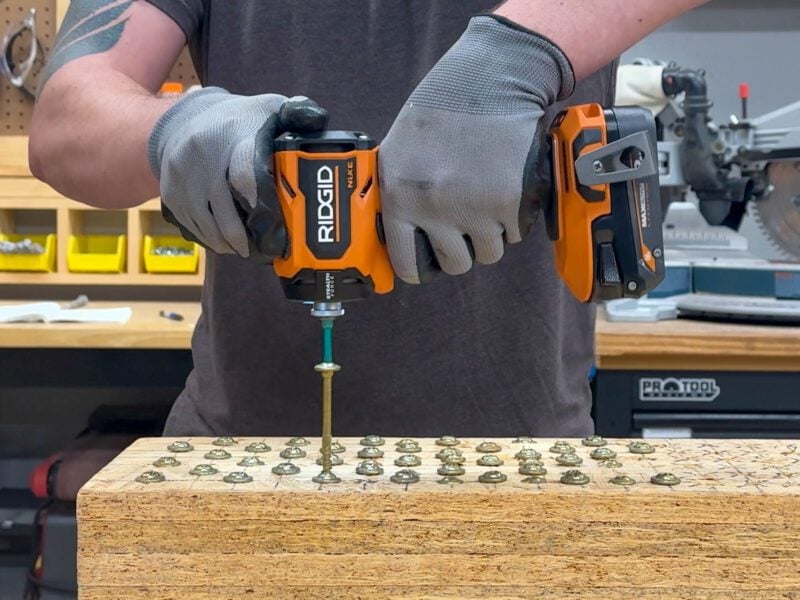
Ridgid is expanding its 18V lineup with a brand new batch of subcompact tools, and so far, I’m definitely impressed. Today, I’ve got my hands on the 18V Nuke SubCompact Stealth Force Oil Pulse Driver, and I’m putting it to the test here at our shop. I want to know how it performs and how it compares to other models on the market.
Pros
- Excellent driving power
- Well-balanced design
- Auto-Eject collet
- Quiet operation
- 4 speed modes
Cons
- No significant drawbacks
Ridgid Nuke SubCompact Oil Pulse Driver Performance
Speed and Power
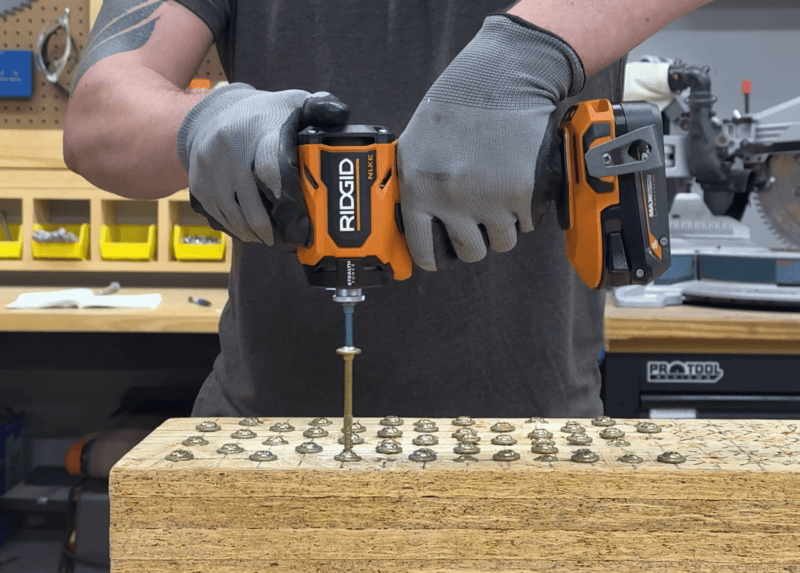
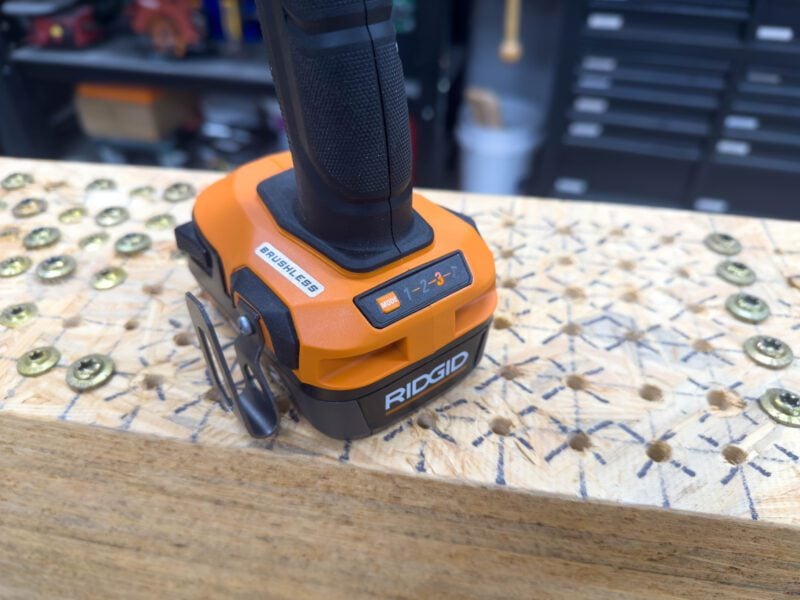
Ridgid equips the Nuke Oil Pulse Impact Driver with a brushless motor, three standard speed modes, and a dedicated self-tapping mode. Speeds range from 700 RPMs up to 2,300 RPMs under normal operation, and top out at 1,900 RPMs when using the self-tapping mode. It also has a max impact rate of 3,000 IPM.
Here’s a quick look at how it compares to other oil pulse drivers:
| Model | Top Speed | Impact Rate | Max Torque |
|---|---|---|---|
| Ridgid 18V Nuke RNKSID03 | 2,300 RPM | 3,000 IPM | Not Specified |
| DeWalt 20V Max DCF870 | 3000 RPM | 4200 IPM | 500 in-lbs |
| Makita 18V LXT XST01 | 3200 RPM | 2700 IPM | 355 in-lbs |
| Milwaukee M12 Fuel Surge 2551 | 3000 RPM | 3400 IPM | 450 in-lbs |
| Milwaukee M18 Fuel Surge 2760 | 3000 RPM | 4000 IPM | 450 in-lbs |
These specs are noticeably lower than what we recently experienced with the Ridgid Nuke SubCompact Impact Driver (RNKSID02). However, that’s to be expected when dealing with this style of impact driver.
While they often tackle some of the same tasks, the internals are different. You don’t get nearly as much power and speed, but the tradeoff is that this tool is quiet and the impacts are far less violent. It’s not just about what you’re working on, but also where you’re working.
Noise Level
How quiet is it, you ask? Ridgid claims the RNKSID03 is up to 73% quieter when compared to the flagship R862312 and their previous SubCompact model, the R872311. Although I didn’t break out the SPL meter this time, having personally used all three tools, I can speak to the truth of their claim.
This is one of the real benefits of an oil pulse impact driver. Sure, you don’t get the same raw power, but this is an ideal choice if you’re working in an occupied office space, a customer’s home, or a confined space where excess noise is simply uncomfortable.
On a somewhat related note, I think the RNKSID03 sounds like George Jetson’s flying car when it begins to impact…but that’s just me.
Hands-On Impressions
Since this impact driver doesn’t perform at the same level as Ridgid’s other models, I decided to deviate from our standard impact driver tests in favor of something a little more applicable.
Given our experience with oil pulse drivers in the past, I knew that standard drywall, deck, and self-tapping screws should be well within reach for this tool. I decided instead to pull out some 6 x 1/4-inch GRK RSS screws and drive them into our OSB test block. This gave the tool a chance to actually impact and flex its muscles a bit.
On average, the RNKSID03 drove the screws in 2.27 seconds—much faster than I expected! For comparison, I ran the DeWalt 20V Max XR Hydraulic Impact Driver (DCF870) through the same test, and it averaged 4.49 seconds per screw. That’s quite a spread, and it got me thinking that Ridgid had a little more left in the tank…so I kicked up the intensity.
For my final test, I broke out some 8 x 3/8-inch GRK RSS screws and drove them into the same OSB block. This is straight out of our standard impact driver testing methods, so I was able to see how Ridgid stacked up against the competition.
Here, the RNKSID03 drove the screws in 8.03 seconds, on average! What’s crazy about these results is that this model’s average time was only 1.2 seconds slower than Ridgid’s flagship impact driver. More impressively, it outpaced half of the competitors from our Impact Driver Roundup. This is a big win for the folks over at Ridgid, and for you if you decide to buy it.
What this means for you is that even moderately sized structural fasteners are still well within reach for this impact driver. Obviously, there are limits as the diameter increases, but from what I can tell, the majority of your typical fastening tasks are on the table. With that said, if you don’t mind sacrificing a little power for a quieter tool, Ridgid has you covered.
Ridgid Nuke SubCompact Oil Pulse Driver Design Notes
Size and Weight
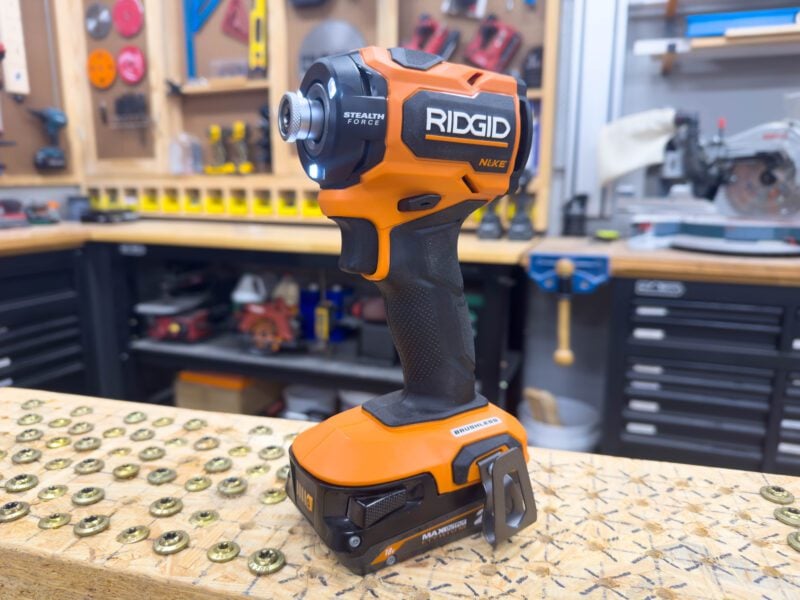
The Ridgid RNKSID03 weighs 2.4 pounds as a bare tool, 3.3 pounds with a 2.0Ah battery, and measures 4.5 inches from tip to tail. This is pretty standard for a subcompact impact driver, but I will say it’s remarkably well-balanced. Naturally, using a larger battery will add more weight, but even the larger 4.0Ah MaxOutput battery isn’t unwieldy.
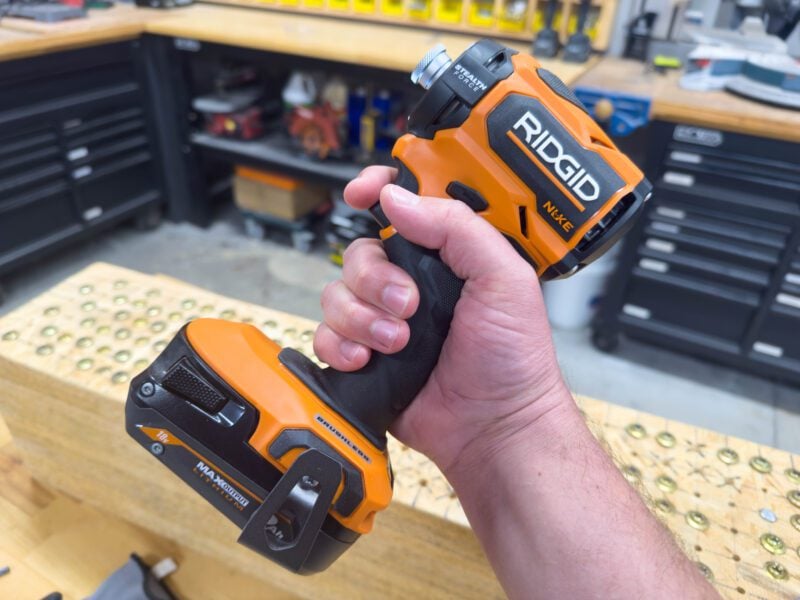
The grip is draped in Ridgid’s standard rubber overmold, and there are extra pads on the top and sides of the motor housing for additional protection.
Additional Features
- Tri-LEDs: Three LED worklights surround the collet for improved visibility in low-light conditions
- Reversible Belt Hook: Customize the tool to fit your workflow and preferences
- Auto-Eject Collet: Quickly insert and remove bits with one hand
Should You Buy It?
After getting some hands-on time with this oil pulse driver, I’m impressed. I know I’ve said it several times already, but the truth is, I was genuinely surprised by the RNKSID03’s performance during our testing, given what I’m used to from other hydraulic impacts. It displayed confident driving power, and the added self-tapping mode improves the overall versatility of this tool.
So, who is this a good fit for?
Well, as I mentioned earlier, this tool is very quiet, which makes it perfect for indoor use. If you’re frequently working in occupied or confined spaces, you’ll notice the difference immediately.
It can drive a little further than that, though. With its higher-than-expected performance, this could be your go-to screwdriving specialist if you’re simply tired of the noise or vibration from standard impact drivers. You’ll give up a little driving speed, but the relief to your ears and hands may be well worth it.
The big thing to keep in mind is that the overall torque level won’t match those top-tier Pro impact drivers, but after my testing, I think it has more than enough power for most light- to medium-load screwdriving applications.
Sound good to you? The Ridgid RNKSID03 retails for $169 as a bare tool and is slated to hit Home Depot shelves in July of 2026.
Specs
- Model: Ridgid RNKSID03
- Power Source: Ridgid 18V battery
- No-Load Speed: 0-700 / 1,800 / 2,300 RPM
- Self-Tapping Speed: 1,900 RPM
- Max Torque: Not specified
- Impact Rate: 3,000 IPM
- Weight: 2.4 lbs (bare tool), 3.3 lbs (with 2.0Ah battery)
- Head Length: 4.5 in.
- Collet: Auto-Eject 1/4-inch hex


I just got my stealth force. Its my first Ridgid tool. I am a commercial electrician so I am normally driving small #8×1/2″ self tappers through thin metal. A normal impact will ream out the hole long before impacting, which is why oil impacts are ideal. I also have the DCF870 and gen 2 m18 surge.
Im honestly not the most impressed by the Nuke, even though I was hell bent on trying to love it. Its low rpm really hurts it in drilling metal, it takes a lot of torque to impact, and the motor makes a very loud whistling noise at certain RPMs. The motor is also a lot louder than the gen 2 surge and DCF870.
Maybe I just got a bad unit? I got it the first day it came out, HD actually had to unpackage a pallet for me to get my hands on it.
In that application, it makes sense that the lower RPM and IPM rate would feel slower than the others you’re using, especially if you’re used to the Gen 2 Surge. Josh was primarily focusing on driving in wood for his tests, and noted that the torque drove faster than he expected for the RPM specs. It may be that the design team intentionally dialed it in for stronger wood fastening.
Josh is on vacation this week, but I’ll ask him to chime in about the noise when he gets back. A loud whistling seems like it would defeat the purpose of being a quieter alternative to an impact driver.