
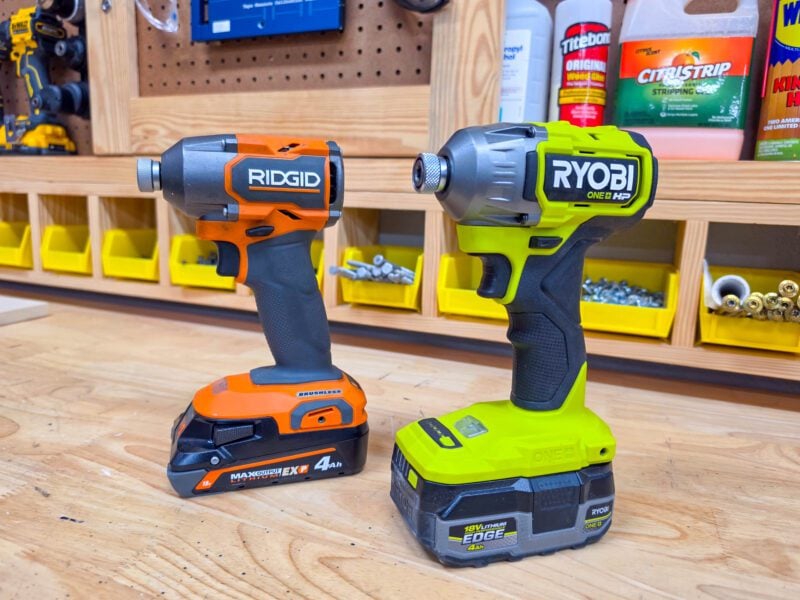
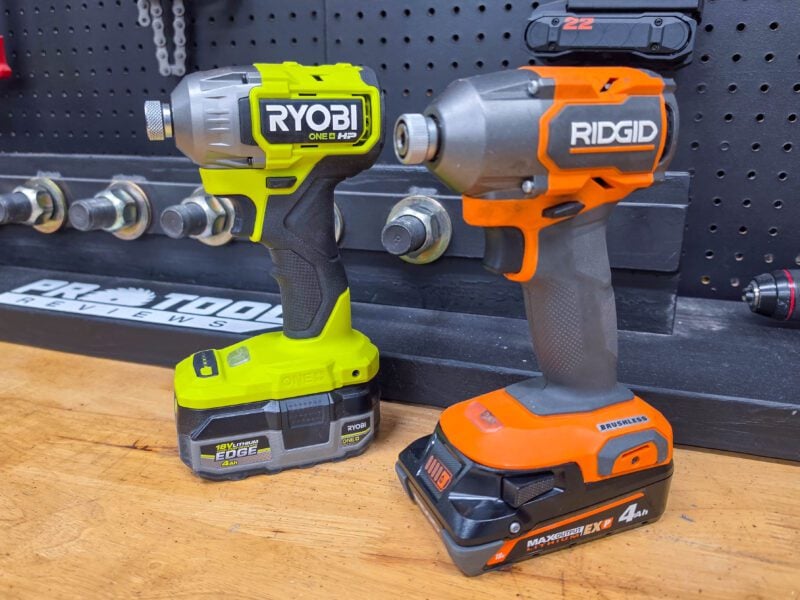
Over the years, we’ve tested our fair share of impact drivers, and today I’m pitting two popular brands found at Home Depot against each other in a Ryobi vs Ridgid impact driver competition. The Ryobi HP Brushless PBLID04 and Ridgid 18V Brushless R862312 represent the top of the line for both brands and are very similar in many respects, but is one better than the other?
It’s an interesting question considering both brands are part of the TTI group. Ridgid has traditionally been the Pro value brand, while Ryobi has served the needs of DIYers. However, Ryobi’s HP Brushless line has steadily eroded the gap, and I’m curious whether it’s fully breached it.
Let’s break down what we discovered in our testing and examine the results to see the current state of affairs.
READ
Best Cordless Impact Driver Head-to-Head Review
Ryobi vs Ridgid Impact Driver Specifications
Here’s a quick look at the key specs to know before we jump into testing:
| Ryobi PBLID04 | Ridgid R862312 | |
|---|---|---|
| No-Load Speed | 950/2100/3400/2100(A) RPM | 800/2000/3400/2000 RPM |
| Max Impact Rate | 4200 IPM | 4300 IPM |
| Max Torque | 2300 in-lbs | 2400 in-lbs |
| Head Length | 5.2 in. | 5.0 in. |
| Bare Weight | 2.5 lbs | 2.5 lbs |
| Working Weight | 3.8 lbs (4.0Ah Edge battery) | 3.75 lbs (4.0Ah Max Output EXP battery) |
On paper, it looks like Ridgid has a slight advantage in performance. However, it’s the test results that will tell the full story.
Ryobi vs Ridgid Impact Driver: How We Tested
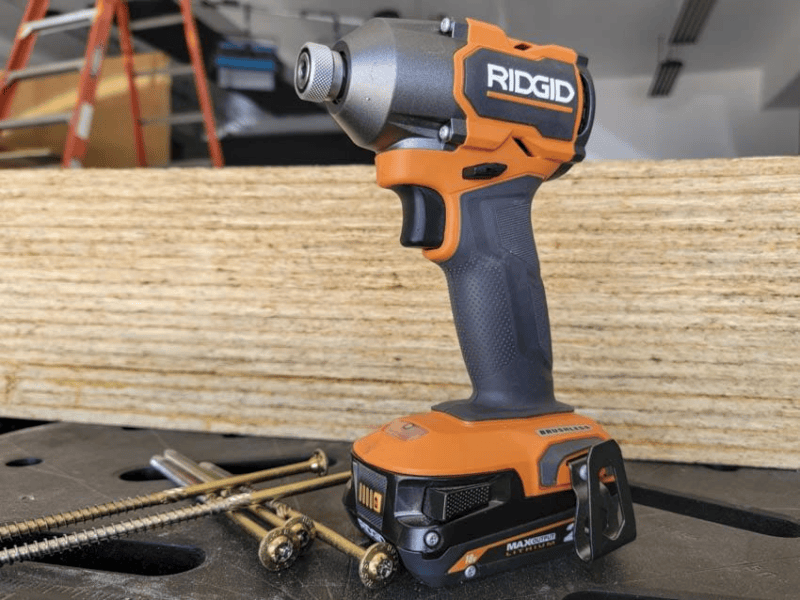
We put both tools through our standard suite of performance tests. Each one helps us gauge different aspects of what they’re capable of and how they compare to one another.
READ
How Pro Tool Reviews Tests Impact Drivers
Speed Test with Ledger Screws
To kick off our testing, we drove three 8-inch GRK RSS screws into our stacked OSB test block, recording how long each tool took to fully drive the fasteners. We then averaged the three results to give us a more consistent performance benchmark. This represents a medium-load application and falls comfortably within the capabilities of these tools.
Bolt Break Test
Next, we tested breakaway performance by torquing eight 1 1/2-inch hardened steel lug nuts to 150 ft-lbs (1,800 in-lbs). We then timed how long each tool took to loosen all eight nuts, using the total time to calculate an average breakaway time per fastener. This gives us a good look at how each tool handles a heavier load.
Lag Bolt Speed Test
For our final test, we raised the stakes with another driving test. Returning to our stacked OSB test block, we drove a single 10 × 1/2-inch lag bolt with each tool and gave them 30 seconds to see how far they could drive it. It’s an incredibly hard test, and we don’t expect any impact diver to drive flush, so we measure the amount remaining to compare in the results.
Testing Results
| Ryobi PBLID04 | Ridgid R862312 | |
|---|---|---|
| RSS Screw Average | 6.80 sec | 6.83 sec |
| Bolt Break Average | Total: 16.25 sec Average Per Nut: 2.03 sec | Total: 15.46 seconds Average Per Nut: 1.93 sec |
| Lag Bolt Test | 1.13 inches remaining | 1.5 inches remaining |
As you can see from this data, Ryobi has a leg up against Ridgid. What’s interesting is that, on paper, Ridgid has the advantage in terms of brute strength and impact rate, but Ryobi has a slight edge with top-end speed. With that said, Ridgid didn’t lag behind by any significant margin, so while I’m declaring Ryobi as the performance winner, either tool has the speed and power to get the job done.
Ryobi VS Ridgid Impact Driver Key Highlights
Ryobi PBLID04
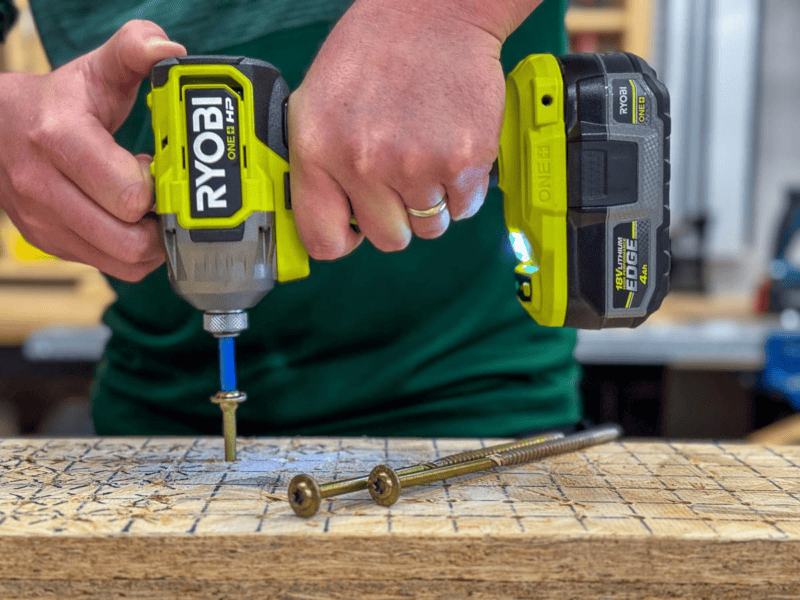
- Brushless motor
- 3 speed setting + Auto mode
- One-handed bit insertion
- Automatic bit ejection
- Foot-mounted LED work light
Ridgid R862312
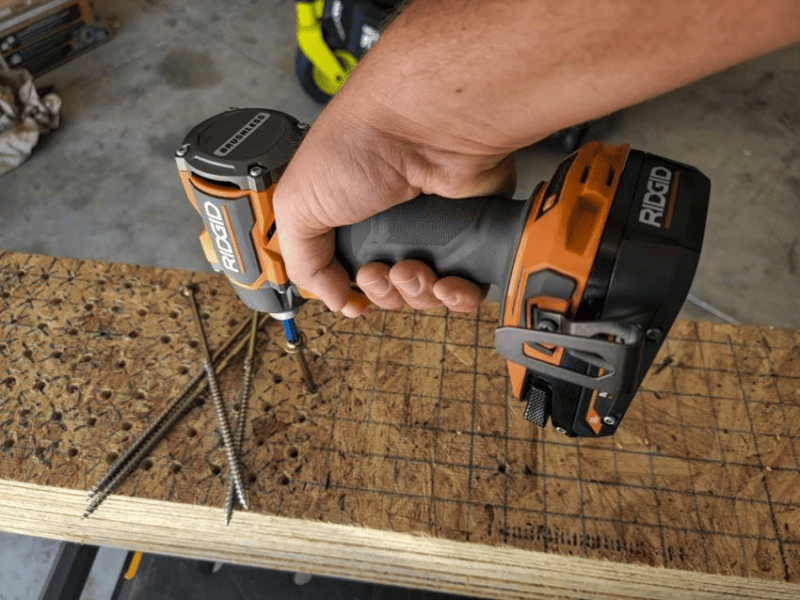
- Brushless motor
- 3 speed setting + Self-Tapping mode
- One-handed bit insertion
- Automatic bit ejection
- Foot-mounted LED work light
From a design and feature standpoint, this one’s a toss-up. The bare tool weights are identical, and Ridgid has less than a 1/4-inch advantage in head length.
Even the feature sets are the same, at least when it comes to the ones we key in on. Unless you feel strongly about stem packs vs slide packs for the battery design, this one’s effectively a tie.
Pricing and Final Thoughts
| Ryobi PBLID04 | Ridgid R862312 | |
|---|---|---|
| Bare Tool | $129 | $149 |
| Kit | N/A | $209 |
| Warranty | 3-year | 3-year + Ridgid LSA |
After some hands-on time with these tools, it’s clear that these impact drivers are fairly evenly matched. Their specs were close on paper, so I’m not really surprised that our test results were so close, though I would have expected Ridgid to have the edge.
So, which one is right for you?
Well, to me, this all comes down to personal preference and which battery platform better fits the way you work.
Ryobi isn’t available as a kit, but that’s not a real issue if you’re already plugged into their 18V ecosystem. It’s a massive platform that includes a wide range of power tools as well as tons of lifestyle products plus lawn care tools.
While the Ridgid’s 18V system isn’t as extensive, the R862312 is a very compelling option. It’s proven that it competes well against other Pro brands, and the Lifetime Service Agreement is a serious value-add. Just remember to register your purchase to make sure you’re covered.
For me, I lean towards the Ryobi PBLID04, even though Ridgid finished 1 point ahead in our full head-to-head. It feels very comfortable in my hand, and it’s incredibly well-balanced, even when using the 4.0Ah Edge battery. On top of that, the bare tool price is more affordable, and Ryobi 18V batteries often go on sale at Home Depot, so savvy shoppers can quickly piece together a good deal.