
With cooler weather here and downright cold weather on the way, it’s a good time to check in on the best heated jacket options of the year. No matter what trade you’re in as a Pro, there are some solid choices available. In this article, I’ll show you my favorite designs, including models that break the mold from what we’re used to. Even if there’s not a perfect fit for you on this list, you can see what other styles these brands offer, and I’ll share what I look for when evaluating heated workwear.
Best Heated Jacket Top Picks
- Milwaukee M12 ToughShell
Jump to this Heated Jacket ↓ - Fieldsheer Mobile Warming Ranch Jacket
Jump to this Heated Jacket ↓ - Ororo 6-Zone Heated Hoodie Pullover
Jump to this Heated Jacket ↓ - ActionHeat 1/2-Zip Pullover
Jump to this Heated Shirt ↓ - Bosch 12V Max Heated Jacket
Jump to this Heated Jacket ↓
Also in this Article
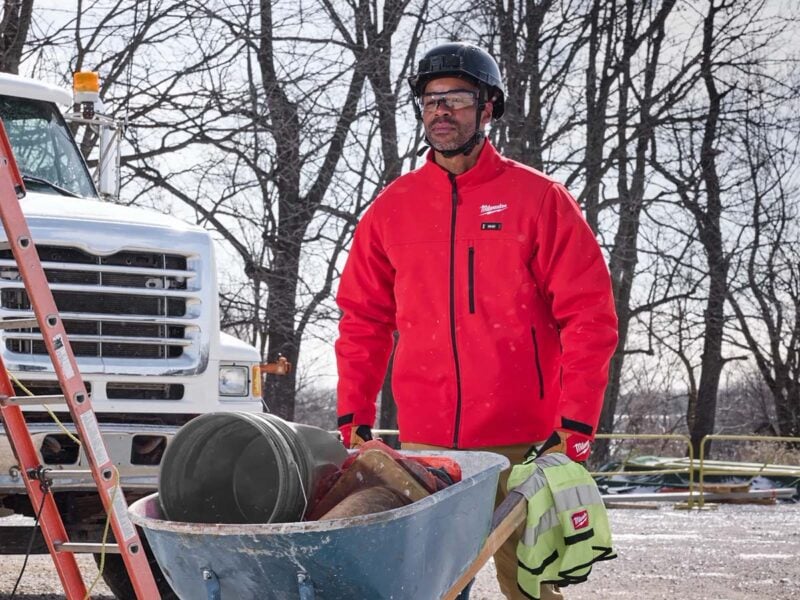
Milwaukee M12 Toughshell Heated Jacket
Pros
- Advanced heating design
- Excellent runtime
- Independent zone controls
- Front or back battery placement
- Tough outer shell
- Wind and water resistant
- Washer and dryer safe
- Battery is compatible with all M12 tools
Cons
- No women’s specific fit
- Not as easy-moving as Axis models
Highlighted Features
- Hexon Heat Technology: Faster heating and more effective heat coverage
- 3-Zone Coverage: Back, chest, and pocket zones
- All-day Runtime: Up to 12 hours on low, 6 hours on medium, or 3 hours on high
- 5 Pockets: Two zippered hand, zippered interior, zippered exterior, zippered battery pass-thru pocket
- Polyester Construction: Woven into a tough, stretch fabric
- DWR Treatment: Resists light rain, sleet, and snow
Why I Recommend It
When it comes to heated jackets, no one is as dialed in on the needs of professional tradesmen as Milwaukee. They have a long track record of innovating the space and they have a wide range of heated gear for men and women.
Among Milwaukee’s broad lineup, the newest Toughshell model is my top pick, though the Axis is a close second. With advanced Hexon heating elements, jackets with this technology heat faster and with better coverage. Combined with the Toughshell’s tough outer shell, it’s a superb choice for both warmth and jobsite durability.
At the same time, the polyester material still has plenty of stretch to allow for movement, and a DWR treatment keeps light rain, sleet, and snow from getting through and soaking your base layer.
Even though there’s no women’s specific fit for this model, Milwaukee does make a nice selection of women’s heated gear, so be sure to check it out.
Price: $199 – $209 bare, $229 – $239 kit
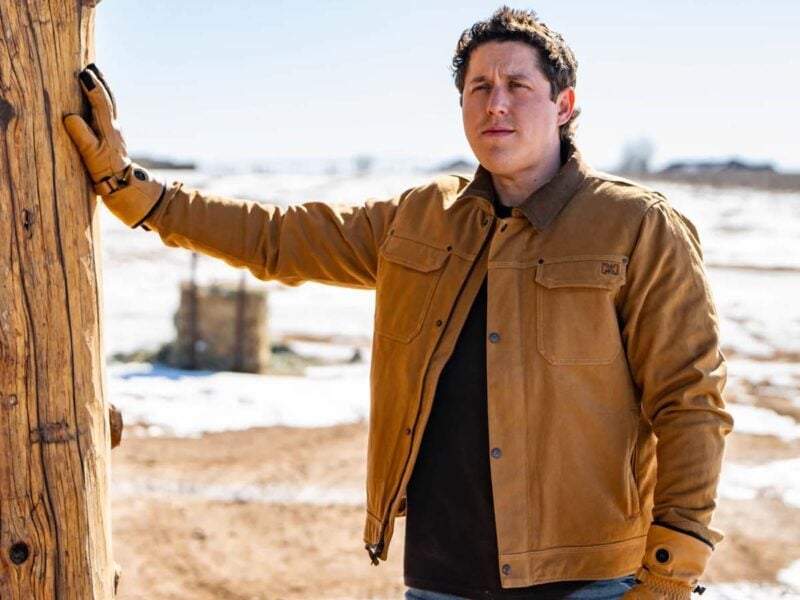
Fieldsheer Mobile Warming Heated Ranch Jacket
Pros
- Looks great
- Excellent runtime
- Four heating modes
- Slim battery form
- App controls
- Tough outer shell
- Wind and water resistant
- Washer and dryer safe
- Affordable battery replacements
Cons
- Expensive
- Limited battery compatibility
- No women’s specific fit
Highlighted Features
- 3-Zone Coverage: Upper back, lower back, and chest zones
- All-day Runtime: Up to 12 hours on low, 6 hours on medium low, 4 hours on medium high, or 3 hours on high
- 6 Pockets: Two zippered hand, zippered interior, two snapped chest, hidden battery pocket
- Smith & Rogue Original Canvas: Durable and soft hemp-based outer shell
- DWR Treatment: Resists light rain, sleet, and snow
- App Control: Adjust heat controls using your phone or smartwatch
Why I Recommend It
Fieldsheer has a very broad portfolio of heated jackets and gear. Most of it is geared toward outdoor recreation or light-duty work. However, if you look around, you’ll find some solid jobsite picks for tradesmen and women.
I’m not a love-at-first-sight kind of guy, but the Mobile Warming Ranch Jacket stood out to me the moment I saw it, thanks to its classic western style. It looks great, and fits in just as well in casual settings as it does on the job.
The deeper I dug, the more I liked what I found. Fieldsheer chose quality components for the construction, while maintaining features like a DWR coating and a washer/dryer-friendly design. I also like that replacement batteries aren’t too expensive. You can’t use them for your power tools, so they’re not as versatile as ones from power tool brands. However, you can use them as a USB power supply and there’s a built-in flashlight.
Price: $329 kit
Ororo 6-Zone Heated Hoodie Pullover

Pros
- Independent zone controls
- Compact battery form
- Outstanding range of motion
- More breathable than standard jacket designs
- Washer safe
Cons
- Limited battery compatibility
- Runtime isn’t as long as some brands
- Not dryer safe
- No women’s specific fit
Highlighted Features
- 3-Zone Coverage: Upper back, front pocket, and chest zones
- 2 Pockets: Kangaroo hand and zippered chest pockets
- Polyester/Cotton Shell: Woven into a durable fleece knit shell
- Thumbhole Cuffs: Keep sleeves in place while you work
Why I Recommend It
If a sweatshirt is more your style, I like what the Ororo Heated Hoodie Pullover has to offer. It’s classic sweatshirt style uses a polyester/cotton blend that breathes and encourages sweat wicking, yet doesn’t trap odor as much as 100% polyester. Plus, the thumbholes on the cuffs work great to keep the sleeves in place while you’re working.
For heating, you get the three key zones (pockets, chest, and back) that we look for. The battery is more compact than ones from power tool brands. While it’s more convenient, the runtimes aren’t as long as some of the others on our list, though.
Still, if you pick your battles and think of this as a heated midlayer, it’s an effective choice you can easily strip down to as the day warms up and you want something more breathable.
Price: $219 kit
ActionHeat 1/2-Zip Heated Pullover

Pros
- Higher temperature than most
- Not as bulky as heated jackets and hoodies
- Outstanding range of motion
- Slim battery profile
- Athletic fit
- Washer safe
- Women’s specific fit available
- Affordable battery replacements
Cons
- Not as many heating zones as other models
- Limited battery compatibility
- Lower runtime than most heated gear
- Not dryer safe
Highlighted Features
- 2-Zone Coverage: Chest and upper back
- 4-way Stretch Polyester/Spandex: Wicks sweat and promotes super-easy movement
- Ghost Mode: Turns off the LED indicator when you don’t want to be seen in activities like wildlife viewing
Why I Recommend It
If you’re looking to avoid the bulk of most heated jackets and sweatshirts, ActionHeat’s 1/2-zip Heated Pullover is a compelling choice. Its style and design carry an athletic foundation, both in the material choices and fit. As such, it can be a good choice for landscaping crews and others who need a little extra heat while preserving outstanding movement.
It’s not as durable of a garment as some of the others on our list, so its jobsite potential is more limited. However, it’s fantastic as a heated base layer. With a top temperature of 150°, it can help eliminate the need for a midlayer or how thick a jacket you need to wear over it. Just pair it with a durable outer layer, and you’re good to go.
Price: $179.99 kit
Bosch 12V Max Heated Jacket

Pros
- Trim, athletic design
- Tough outer shell
- Wind and water resistant
- Washer and dryer safe
- Battery is compatible with all Bosch 12V tools
Cons
- No women’s specific fit
- Not as many heating zones as other models
- Runtime isn’t as long as some brands
Highlighted Features
- Polyester Outer Shell: Woven into a durable material suitable for jobsite conditions
- 6 Pockets: Two hand, one zippered chest, and three interior pockets
Why I Recommend It
Bosch doesn’t have many heated jackets. In fact, it’s just this one and the vest version of it. But if you’re going to make just one, you might as well do it right, and I love the design.
Overall, it’s fairly simple with just two hand pockets and a chest pocket on the exterior. It has a trimmer, more athletic fit than others, and reminds me a bit of Truewerk’s S3 Solutions jacket in form. That trimmer fit helps keep the heating elements closer to your body, where they’re more effective.
For me, it’s a winning style, and even though it doesn’t have as many heat zones or as long of a runtime as some models, I like the fit enough that I keep coming back to it.
Price: $219 kit
What To Look for When You’re Shopping for a Heated Jacket
Heat Zones
Most modern heated jackets have heat zones along the back, chest, and pockets. Ideally, you want separate controls for all three, but a separation between just the back/chest and pocket zones is usually enough for most people.
By having separate zones, you can customize which zones you want heat onto dial in the best comfort. An added bonus is that by turning off zones you don’t want on, you can extend your battery runtime.
Modes
For the best control over heat levels, look for a heated jacket with three modes: low, medium, and high. Having three levels to work with makes it easier to adjust as the day warms up and then cools back down. It also makes your jacket more versatile for use on days where you might just need a little heat in the morning while relying on the jacket’s shell and insulation the rest of the day.
Fit
Fit is critical for a heated jacket. You want it to fit against your base or midlayer to transfer heat to your body most effectively. If you go for a loose fit, it creates an air gap that doesn’t heat you up nearly as well.
At the same time, you need to focus on the job at hand. A site manager might be able to get away with just about anything, while a framer has to be able to freely move his or her arms. Look for a balance of the right fit with enough movement for the type of work you do.
Battery Design
Having a heated jacket that uses a power tool battery is great since you can use it to power other tools and products on that system. However, pay close attention to the size, shape, and placement of the battery on the jacket.
A battery that sits against your back can be super-uncomfortable if you’re sitting all day. That’s not just desk work, it also includes heavy equipment operators, transport drivers, and others who spend a lot of time behind the wheel.
Pay attention to the weight and size, too. You might get several days’ worth of runtime out of a high-capacity battery, but having a bulky 5-pound brick in your pocket is annoying.
Shell and Insulation
One of the nice things about a heated jacket is that when the power is turned off, it’s still a jacket. With three heat modes, it’s like having four jackets in one instead of messing with extra layers or carrying multiple jackets.
As you consider different outer shell types, keep in mind how much durability you need. Puff jackets are really nice from an insulation standpoint, but they tend to snag and rip easier than something with a durable ripstop shell.
Look for any additional shell features you might need, like wind or water resistance.
Consider how much insulation it has as well. In milder climates, you might not need much. On the other hand, those of you braving the far north will likely want a substantial amount.
Pockets
Don’t neglect the pocket loadout. In addition to storing the jacket’s battery and having a place to keep your hands warm, many models have other highly functional pockets that can be a real benefit.
Why You Can Trust Pro Tool Reviews
Ever check out a “review” site and you can’t tell if they actually test products or if they’re just “recommending” the Amazon top sellers? That’s not us. We won’t recommend anything unless we’d use it ourselves, and we don’t care who the primary retailer is. It’s all about giving you a legitimate recommendation and our honest opinion of each product.
Since 2008, Pro Tool Reviews has provided in-depth tool reviews, buying guides, how-to articles, and industry news in the construction and lawn care industries. We focus on professionals in the trades and our writers have the skills and experience to know whether a tool or accessory will hold up on the jobsite.
Each year, we bring in and review more than 250 individual products. Additionally, our team will put their hands on hundreds more tools at media events and trade shows throughout the year.
The bottom line is that tools are what we do, and if I recommend a heated jacket, I’d use it myself.