

Professional tradesmen and serious DIYers often gravitate toward the highest-performing power tools. If that’s you, and you’ve bought a cordless drill in the past few years, you may have noticed that kickback control is becoming a more popular feature.
But is kickback control really necessary on a drill? Or is it just another reason to push the price tag higher?
I’ll walk you through what this feature is and why most (but not all) Pros should look for a drill that has it.
Drill Kickback Control Basics
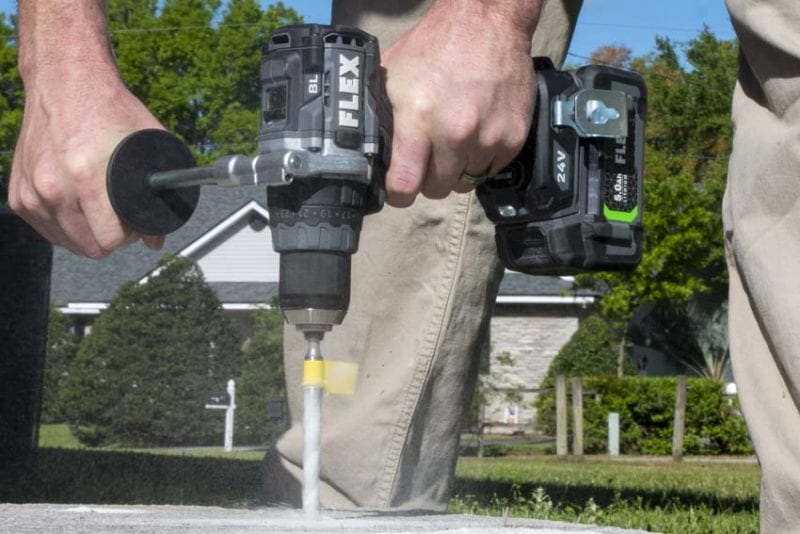
With the rise of brushless motors, the technology has opened up new ways of designing power tools. These motors require electronics that control the internal rotation, which also provides a foundation to build in other electronically-driven features. Kickback control is one of them.
Kickback occurs when the bit binds up and stops before you take your finger off the trigger. Physics is not your friend in this case. With the bit stuck, the motor tries to continue turning, rotating the tool instead of the bit. It’s an extremely fast reaction that can painfully twist your wrist and elbow, causing real injury.
Kickback control uses a sensor that can tell when the tool starts to rotate. When it trips, it sends a signal to automatically shut the motor off. The great thing is that the whole process takes place in far less time than you can react and let go of the trigger.
Why Kickback Control is Suddenly So Critical for Drills

We live in a golden age of power tool development. Battery technology has evolved to deliver more watts to the motor without having to rely on a massive, heavy pack or using multiple batteries. At the same time, manufacturers have made great strides in creating smaller, more compact tools that offer more power.
When it comes to cordless drills, this all comes together with torque values we didn’t believe possible 10 years ago. When the first drill managed 1000 in-lbs of torque, we were legitimately impressed. Now, we hardly bat an eye when we see one with 1200 in-lbs or more. Numbers like that have become the standard for high-performance drills, and most brands are competing with them.
Regardless of how common high-torque drills are, it’s a lot of force to manage. While drills have always had the potential of kickback, the speed and power of modern builds have a greater risk of injury that comes with them. Side handles certainly help in a bind-up event, but electronic kickback control is the feature that’s doing the best job of preventing injuries that come from them.
Not Every Drill Needs Kickback Control
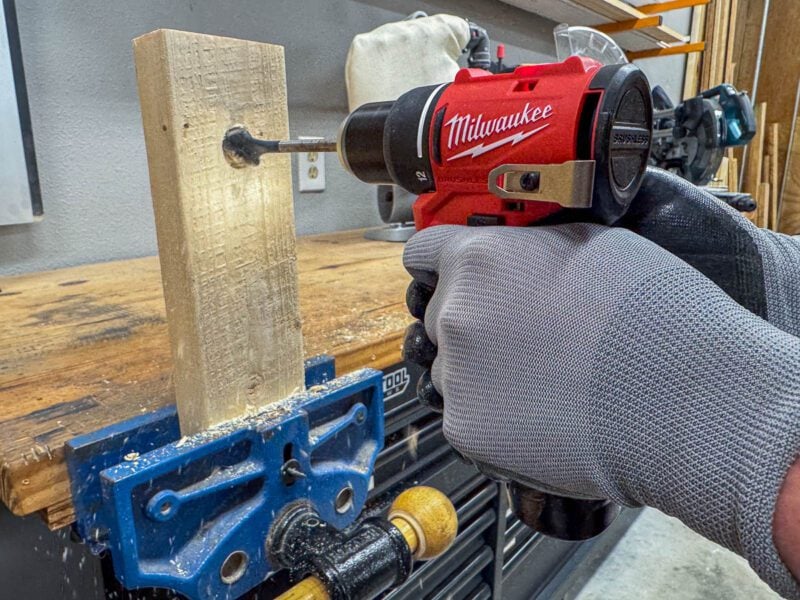
Often, a feature is so innovative that it makes sense to apply it to an entire class of tools and make it the new standard. That’s not the case with kickback control.
Compact drills typically don’t have the speed and power of their high-performance counterparts. Their goal is to fit into tighter spaces or be less fatiguing to use. With lower speed and less torque, it’s easier for you to fight kickback by simply keeping a proper grip on the tool.
That doesn’t mean you shouldn’t get a brushless motor in a compact drill, though. You’ll still enjoy the benefits of higher performance, better runtime, and less maintenance than brushed models.
The Bottom Line
In my opinion, if you’re buying a high-performance drill, it should have kickback control. The injury prevention benefits make it a no-brainer, especially when you’re training new people who may not be as experienced with power tools as you are.
The good news is that most manufacturers offer it on their flagship models. If you’d like to see how those high-performance drills compare, check out our best cordless drill head-to-head review.
We want to hear from you! Do you use a drill with kickback control? Why or why not? Let us know in the comments below!


First time I’ve heard of kick back control on hand drills. Sounds like it will save a lot of wrist and hand injuries for inexperienced and some veteran users. It only took one time for me to learn how quickly kick back can occur and how painful it can be. I’ve since changed my grip on holding my hand drills. I no longer put my thumb on the side opposite my fingers but keep it on the side with them. I’ve found my grip to be strong enough to hold the drill while using it while using this method. Should a kick back occur and the wants to turn the handle will rotate out of your hand without taking your thumb with it while twisting your wrist.
Interesting technique, Mike. Thanks for sharing that!