
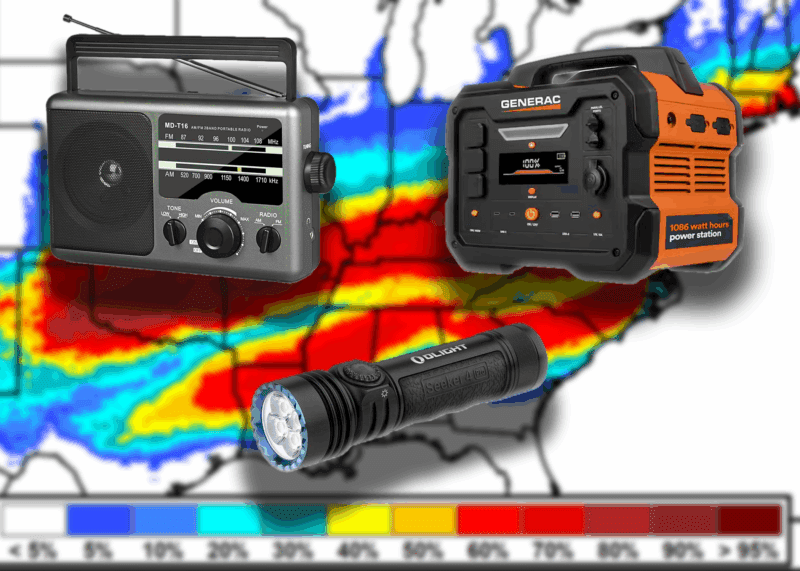
At the time of writing, a severe winter storm is threatening much of the South, Midwest, and East Coast of the U.S. If you don’t have an emergency tool kit, now’s the time to prepare your home while you still have time.
There are several excellent checklists out there to guide you on first aid kits, food and water needs, and more. However, I’m taking this from the perspective of professional tradesmen or tool enthusiasts. There are several key products you can pull from your collection, and I’ll walk you through some tools that can help you get through the storm as comfortably as possible.
Considering PTR is based in central Florida, we know a thing or two about preparing for natural disasters, especially during our 6-month-long hurricane season. Plus, most of our staff are transplants, and while none of us miss the winter storms, we do know what it’s like to go through them.
For more natural disaster preparation tips, read about how to prepare for a hurricane.
Tools You Can Use During a Winter Storm
Generators, Inverters, and Portable Power Stations
That same generator or inverter you use to power your tools on the jobsite can be used to run your refrigerator, microwave, charge power tool batteries, run lights, and much more.
There are a couple of things to remember, though. First, never, ever run a gas generator inside. Even with the carbon monoxide detectors most current models have, the emissions can kill you.
Also, be sure you’re not overloading your generator. Small generators in the 2000-watt range can run most anything that plugs into a standard outlet… but not many of them at once. Check the wattage requirements of what you want to run and see if how much your generator can handle at once.
Remember to fill up your gas tanks and charge up the starting battery if you have electric start before the storm hits.
Portable power stations can be handy, but they generally won’t run nearly as long or with as much power as most gas generators. Still, they have the advantage of being able to safely run inside, so they’re great for apartments.
You really have to pick and choose your battles since you’re managing your power draw. And since it’s winter, there’s not much chance of ideal solar charging efficiency. So, stick with necessary low-draw items like CPAP machines, internet router/Wi-Fi, and recharging small electronics.
One of the best case scenarios, if it’s in your budget, is to have both a generator/inverter for the big items and a portable power supply for your smaller ones.
If you have a generator, inverter, or portable power station for a few essentials and natural gas/propane for your stove and furnace, you’ll be in great shape.
Flashlights
We lean towards premium flashlights from brands like Olight and Acebeam for everyday use, but any flashlight will do in a pinch. We prefer higher-end models for several reasons:
- Aluminum construction is far more durable than plastic
- Rechargeable batteries mean you don’t need spares
- Multiple modes let you use only the amount of light you need, extending your runtime
If you’re likely to lose power during a winter storm, having a few flashlights around the house is ideal. Store one in the kitchen, main living area, and bathroom to start.
It wouldn’t hurt to have one in each bedroom, either, in case you or your family need to navigate the dark in the middle of the night.
Work Lights
One of the best crossover power tool products you can own is a broad-throw LED work light. Whether you choose a smaller model, a full-on tripod light, or something in between, they offer broader more light when you need it.
Inside, you can throw the light up against the ceiling, and it will spread throughout the room. It’ll be dimmer than pointing the light directly at a wall, but you’ll avoid dark sections and be able to navigate obstacles better.
Outside, it can be super-helpful if you need to check for damage after dark when a tree comes down or you’re working to keep home access points clear.
Jobsite Radio
Emergency radios are great if you have one. But jobsite radios can be just as helpful. There are some considerations, though.
I’d avoid relying on jobsite Bluetooth speakers. These are great as long as you have a cell signal, but if that drops out, it’s not much good.
A true jobsite radio with AM/FM capability is the way to go. Unless the radio station goes down (there are protections against that), you’ll be able to stay up to date on the latest.
Plus, jobsite radios tend to be low-draw items, so a single battery can last for days.
Heated Jacket and Heated Blankets
Many power tool brands make heated jackets that run on power tool batteries. Some even offer heated blankets.
These are great to have on hand when it’s cold out, but can be even more beneficial if someone is beginning to experience hypothermia.
Generating heat uses a lot of energy, though. While many of these jackets can run for 8 hours or more on low, they can chew through that same battery in just a couple of hours on high.
Cordless Heat Gun
Most power tool brands have a heat gun on their primary battery systems. While strategies like keeping your tap dripping and insulating exposed pipes can stave off water freezing in them, a cordless heat gun can get things moving again if they start to freeze up.
Batteries
Most of the products we’ve mentioned so far require batteries, so make sure you charge them up! Remember to check your power tool batteries, plus anything else that has a rechargeable battery like flashlights.
If you don’t have a slide-on power adapter, you might want to grab one. They can turn your power tool battery into a small portable power supply that’s perfect for charging USB devices such as your phone or even running low-draw items like your internet router.
If you have devices you’re running with alkaline batteries (AA, AAA, D, etc.), be sure to put fresh ones in and have spares on hand.
Knife or Multi-Tool
You never know when you need to make a quick repair, and a multi-tool, or even a basic pocket knife, can be very useful to have on hand.
Other Winter Storm Essentials
Even though we’re primarily focused on how your tool collection can get you through a winter storm, we’re not neglecting the essentials.
Blankets
Especially during a winter storm, you can’t really have enough blankets. Stock a few in every room to keep warm in case of a power disruption.
Boots
Whether it’s work boots, snow boots, or rain boots, your feet need to be protected if you’re venturing outdoors after a storm. From fallen debris to freezing snow or ice, don’t be the person losing a flip-flop.
Need boot ideas? Check out our best work boots feature.
First Aid Kit
While it may seem self-explanatory, a first-aid kit can be a real lifesaver in a natural disaster. Make sure yours is stocked with bandages, medicine, gauze, and anything else you may need in case of injury.
Candles
Stock up on candles for some ambient light in your home to supplement your flashlights. While you may not need them, you’ll miss them if you don’t have them.
Outdoor Gas Cooker
If you don’t already have a barbecue or propane grill in your yard, consider picking up a small propane cooktop to keep your family fed in case you lose power. However, remember to only use gas cookers outdoors!
Fire Extinguisher
House fires are common during power outages, especially with the rise of candle usage and unwise heating methods. Have an up-to-date fire extinguisher at the ready in case of emergency.
Final Thoughts
While this isn’t a definitive list of everything you need during a natural disaster, it’s a good place to start when you’re preparing. Remember to stock up on food, water, baby formula, and medicine, too. If you have the capacity, remember to also check up on your friends and neighbors as we all navigate the tough part. The seemingly never-ending list of needs gets easier to handle the more prepared you become.
Did we miss anything? Leave a comment with your best natural disaster tips for other readers!