
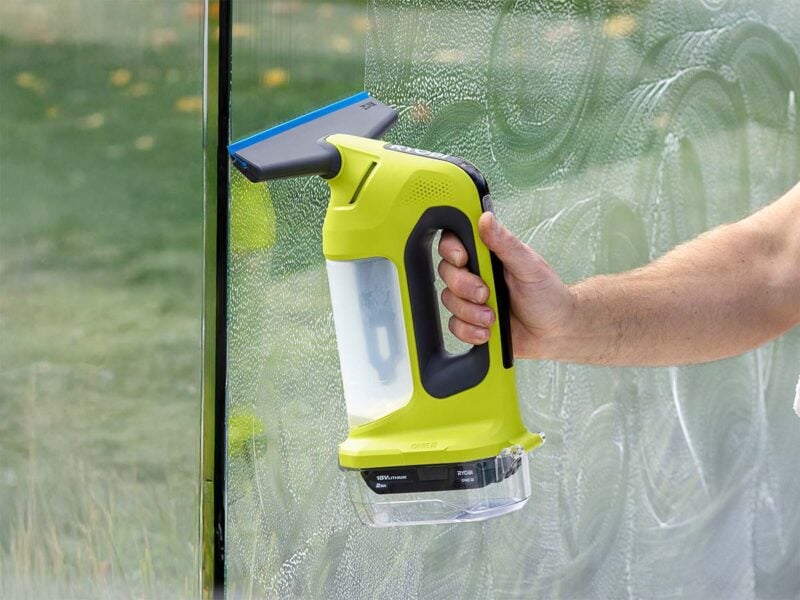
I was in a meeting with the rest of the PTR crew this morning when an email hit all our inboxes about the new Ryobi 18V One+ Window Vacuum. While everyone looked a bit curious and perhaps skeptical, I was excited. I’ve been using a window vacuum from Karcher for a while, and having one that works on my existing Ryobi 18V batteries is very appealing.
I’ll walk you through what Ryobi has revealed about their window vacuum and share some of my experience using this type of tool to help you decide whether it’s a solution you need.
Ryobi 18V One+ Window Vacuum Basics
A Two-Part System
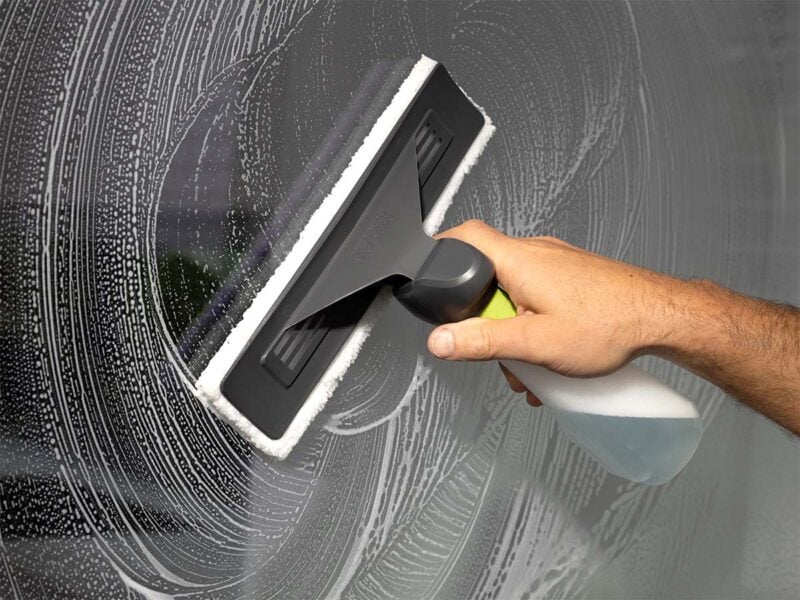
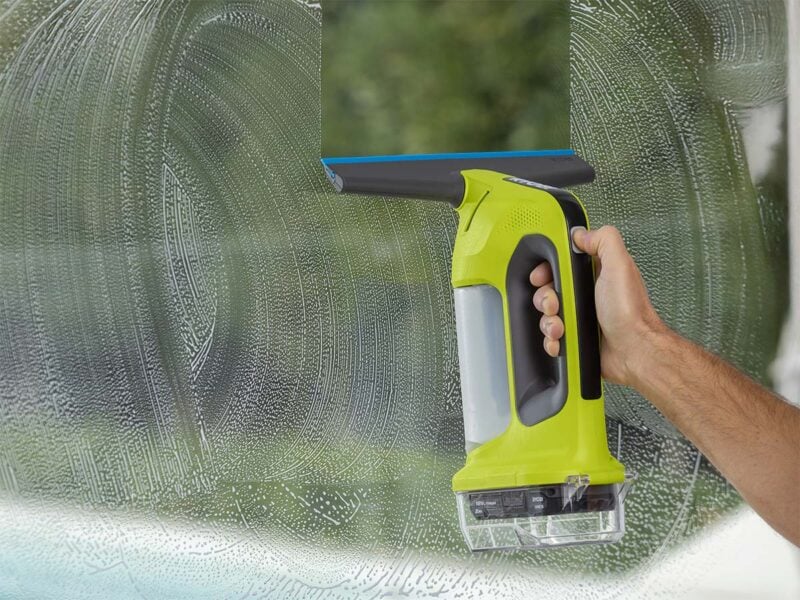
First of all, Ryobi’s window vacuum is only one part of your window-cleaning system. The vacuum features an 11-inch squeegee at the top, which directs liquid to the vents, where it’s sucked into a holding container.
The other part is a combination spray bottle and microfiber cleaning pad, and you’ll use it for the first stage of cleaning.
The idea is to spray a cleaning solution on the glass, use the cleaning pad to loosen debris, and then run the vacuum across to suck up the liquid. When the holding container is full, simply dump the waste liquid down the sink and give the container a quick rinse.
The 18V One+ Battery Advantage
Looking at the system, I see that it’s very similar to the Karcher model I use, but instead of an integrated battery, it uses Ryobi 18V One+ packs. That means you can use batteries up to 6.0Ah or swap packs instead of waiting to recharge. For large homes and other buildings that have a lot of glass to clean, it’s a big advantage.
The battery is also contained behind an IPX4-rated door to prevent contact with cleaning solution or water.
Do Window Vacuums Actually Work?
Before I pulled the trigger on a window vacuum, I was primarily concerned about glass streaks. There’s nothing like thinking you’re done cleaning a window or mirror, only to realize you have to do it again.
However, the cleaning solutions I’ve used for window vacuums don’t evaporate as fast as Windex. You can spray it on more heavily, and you actually want the glass to still be wet after you wipe it. The final action of the squeegee wiping cleanly and the vacuum removing the liquid really does make for a streak-free finish.
Now, that’s based on my experience with another model, and I haven’t had the chance to use Ryobi’s version yet. But unless they managed to get it totally wrong with the squeegee and vacuum power (which is highly unlikely), I expect it to work just as well, if not better.
Should You Buy It?
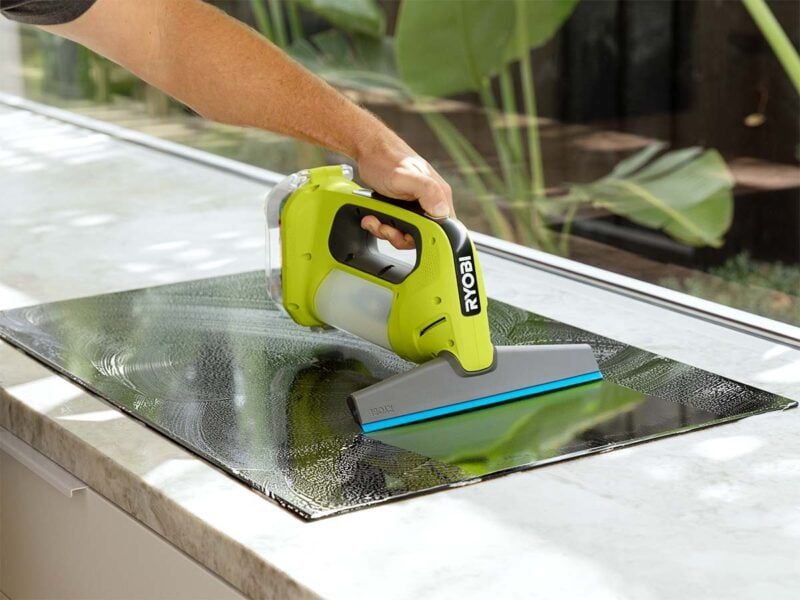
I can tell you that a window vacuum can genuinely save time and effort in your cleaning chores. Analyzing what I can gather from Ryobi’s pictures, videos, and press information, I don’t see any red flags. If anything, it looks like they’ve come up with a highly competitive design with Karcher’s, a brand that enjoys an excellent reputation in the cleaning industry.
So, it really comes down to understanding what a vacuum like this is good at, and what it isn’t. Here are some common applications where it’s a solid bet:
- Windows
- Mirrors
- Glass stovetops
- Countertops
- Shower doors/enclosures
- Tile walls and floors
However, there’s a big BUT that comes into play. A window vacuum like this works best on smooth, flat, easy-access surfaces. It’s not effective for cleaning vehicle glass. Neither the pad nor the squeegee can reach deep enough into the corners or work easily enough around the rearview mirror to clean effectively. That, combined with the curve of windshields and other auto glass, tends to leave behind streaks and haze.
Exterior windows can also be hit or miss. I’d skip using the Ryobi window vacuum on your home’s exterior windows, for example. They tend to go much longer between cleanings and accumulate heavier debris, along with mildew, bug carcasses, and other outdoor gunk. Instead, I use Ryobi’s extendable 18V Power Scrubber with a mild detergent and just hose the windows off when I’m done.
On the other hand, commercial exterior doors and windows that are cleaned regularly work well with a window vacuum since they don’t accumulate as much buildup. So, for restaurants, churches, offices, schools, and other large buildings or campuses, Ryobi’s window vacuum can be a big time-saver.
Like what you see? The Ryobi PCL750B Window Vacuum is launching in November 2026 at Home Depot as a bare tool for $69.97. It’s backed by a 2-year warranty and will be available online and in select local stores.