
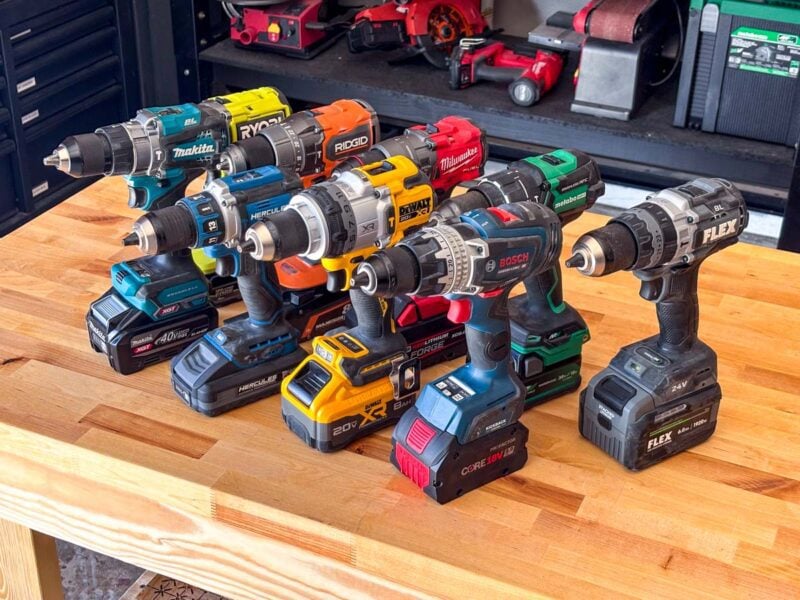
There’s always something appealing about owning the biggest, fastest, and most powerful tool in the lineup… and tool companies know it, too. Every new generation seems to push the limits a little further, promising more torque, higher speeds, better performance, and newer features than the one before. And if you’re shopping for a new drill, it’s easy to get caught up in the numbers.
But here’s a question worth asking: How often do you actually need all that performance? Let’s take a look at why you may or may not want to spend the money on a flagship drill.
What Does a High-Performance Drill Actually Get You?
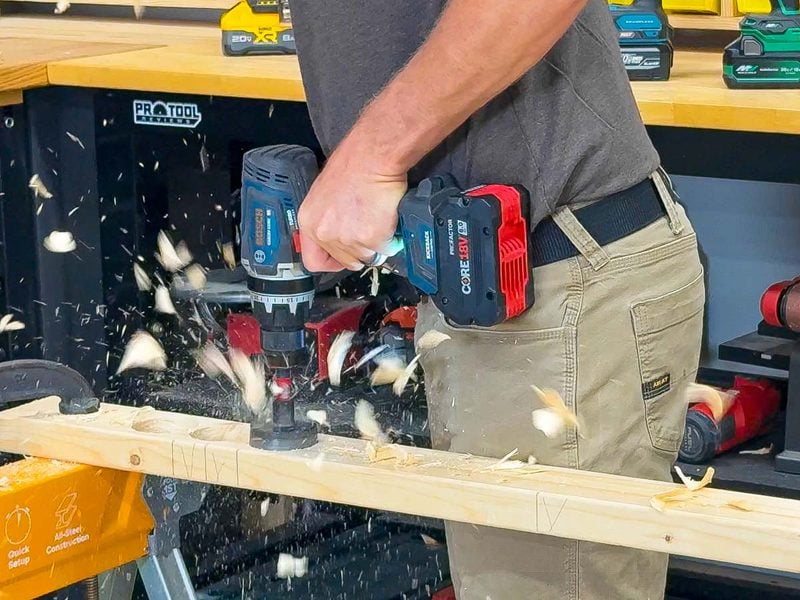
Before deciding whether you need a top-of-the-line drill, it’s worth understanding what you’re paying for. Most companies distinguish their flagship models through higher torque ratings, increased RPM, improved hammer-drilling capabilities, more advanced motors and electronics, and upgraded features.
Those higher specs aren’t just for show. That extra torque helps the drill maintain performance under heavier loads, while higher top-end speeds improve your overall productivity when drilling holes or working with materials that benefit from faster drilling speeds. On top of that, the advanced electronics suites help improve overall safety, protect the motor, and allow you to adapt the tool’s performance level to match your needs.
For Pros who demand the most from their tools, those advantages can really add up. Plumbers running large-diameter hole saws through subflooring, electricians drilling multiple holes for cable runs, or GCs working with demanding materials can all benefit from having more muscle on hand.
The Trade-Off: More Power Often Means More Tool
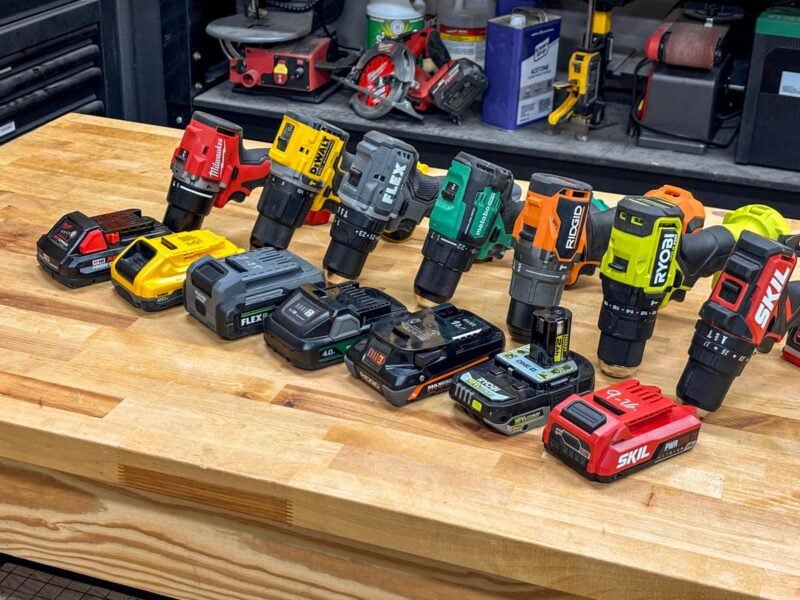
One of the biggest misconceptions about buying a drill is that more power is always better. On paper, that might be true. In practice, there’s a little more to consider.
High-performance drills tend to require larger motors, more substantial gearboxes, and batteries capable of keeping up with the higher power draw. Those aspects naturally contribute to the overall size and weight of the tool. While many manufacturers have made significant improvements in these areas, flagship drills can still feel like a lot of tool when you’re doing relatively simple work. A drill with a motor that produces 1,400 in-lbs of torque isn’t the best option for someone who’s typically driving smaller fasteners, drilling pilot holes, assembling furniture, or simply doing small drilling and driving tasks.
A compact drill will be considerably more comfortable when you’re working overhead, reaching into tight spaces, or using the tool throughout the day for common tasks.
Weight isn’t just a convenience issue, either. Fatigue can affect how comfortably and consistently you work, particularly when you’re performing repetitive tasks. In fact, NIOSH guidance on tool selection emphasizes matching a tool’s size, weight, and power to the application rather than simply choosing the most capable option. When you look at it from that perspective, this actually makes a lot of sense. I mean, you wouldn’t pick up the new Milwaukee sledge hammer to drive a tack nail for a picture frame, right?
There’s also the question of control. A powerful drill can deliver more torque than the job actually requires, so making sure the clutch is properly adjusted and feathering the trigger just right are paramount. From a practical standpoint, you don’t need maximum power output to drive a small screw into a piece of softwood like white pine. Sometimes less is more, so having a tool that’s easier to manage is more valuable than having one that can drill the biggest hole.
That’s not to say that flagship drills are inherently difficult to use. With the aid of modern electronic suites, adjustable clutch settings, and multiple speed settings, even the most powerful drills can be surprisingly versatile. The point is that you’re paying for additional capability, and that doesn’t always translate into a better experience.
When Does a High-Performance Drill Make Sense?
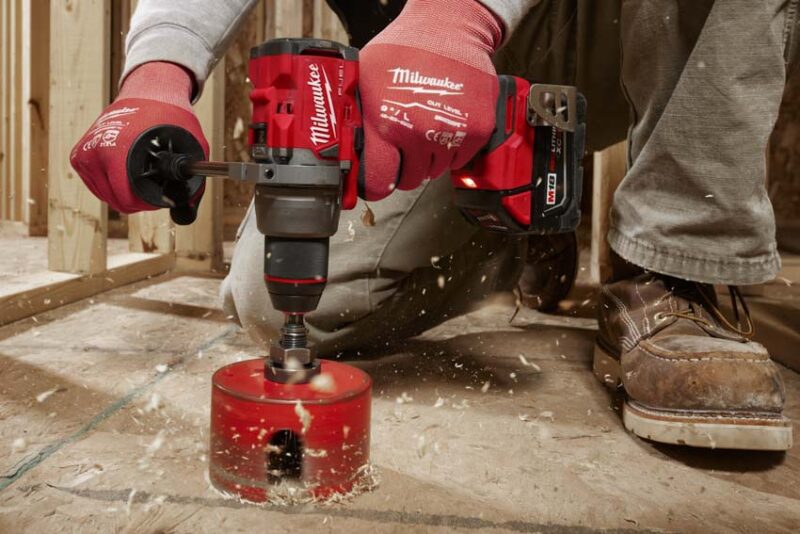
There are plenty of situations where spending more for a flagship drill is a smart investment. If you’re regularly asking your drill to perform demanding work, having additional power on hand can save time and reduce the strain on the tool.
Here are a few applications where stepping up to a more powerful model makes sense.
Large-Diameter Drilling
Running large auger bits, self-feed bits, and hole saws through framing lumber is one of the more demanding jobs you can ask a cordless drill to handle. These accessories create considerably more resistance than smaller twist bits, requiring the drill to deliver consistent power under load. In many cases, these jobs call for an even more powerful right-angle drill (Hole Hawg) to finish the job.
A high-performance drill can make a noticeable difference here, particularly when you’re drilling multiple holes throughout the day. More available torque and a motor capable of maintaining speed under load can help you work more efficiently.
This is especially relevant for electricians, plumbers, HVAC techs, and GCs who regularly drill larger openings for wiring, plumbing, and other rough-in tasks.
Mixing Applications
Mixing materials with a drill is another application where some additional power can be useful. Whether you’re mixing drywall mud, thinset, mortar, or even concrete, the resistance those materials create can put a serious strain on the motor.
A more powerful drill gives you some additional headroom when working with these heavier materials. However, this is also an application where you need to pay close attention to the tool to make sure it isn’t overheating (even if you’re using a premium model). Not every drill is designed for mixing, and a dedicated mixer may be the better choice for frequent or demanding work.
Concrete and Masonry Work
Like I said earlier, if your work regularly involves drilling into concrete or masonry, a hammer drill is worth considering. That additional hammering action helps the bit break up material as it rotates, making it more effective than a standard drill/driver for many masonry applications.
That said, there’s a limit to what a hammer drill should be expected to handle. For larger holes, deeper drilling, or frequent concrete work, an SDS rotary hammer is generally a more appropriate tool.
Having the highest-performing hammer drill doesn’t necessarily mean you have the right tool for every masonry application.
When a Mid-Range or Compact Drill Is the Better Choice

For many, a mid-range or compact drill is more than capable of handling the majority of everyday work.
DIYers, Homeowners, and Weekend Warriors
Think about the DIY jobs that make up a typical weekend project. Maybe you’re assembling furniture, installing ventilated shelving in a hall closet, drilling a few pilot holes, hanging cabinets, and occasionally working with some larger fasteners or drill bits. None of those applications necessarily require a flagship drill. In fact, I think you’d be surprised to see how far you can get with a compact drill or even a good 12V model.
MRO Professionals
A quality compact or mid-tier drill can easily handle tasks like drilling Tapcons or anchor holes in concrete block just fine without the additional weight and bulk of a heavy-duty tool. In fact, I’ve seen many Pros reach for 12V tools for just this purpose. MRO professionals in particular rarely require the type of power and torque a flagship model offers. Why not save the money and the weight?
Overhead Applications
When putting up overhead garage storage, the last thing I want is a heavy full-size drill. Same goes for a lot of HVAC and electrical work in confined areas like attics or crawlspaces. There’s also something to be said for keeping a drill that feels comfortable and predictable in your hand.
PTR’s Top-Rated Drills
Over the last few years, I’ve handled and tested more drills than I can count. The main takeaway for me is that bigger isn’t always better, but when you need that extra muscle, it makes all the difference in the world. Here are a few of my top picks.
Compact Cordless Drills
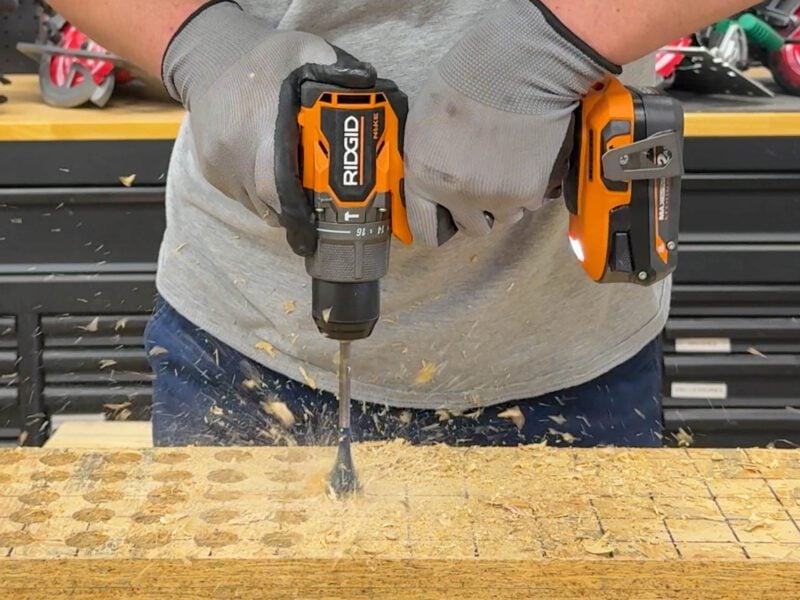
| Ridgid 18V Nuke RNKSHM01 | Milwaukee M18 Compact 3602 | Metabo HPT 18V DV18DEX | |
|---|---|---|---|
| No-Load Speed | 600 / 2,000 RPM | 550 / 1,700 RPM | 550 / 2,000 RPM |
| Max Torque | 750 in-lbs | 550 in-lbs | 620 in-lbs |
| Hammer Rate | 32,000 BPM | 25,500 BPM | 30,000 BPM |
| Working Weight | 4.08 lbs (w/4.0Ah EXP battery) | 3.61 lbs (w/3.0Ah High-Output battery) | 3.9 lbs (w/4.0Ah battery) |
| Kit Price | $159 | $219 | $199 |
Flagship Cordless Drills

| Flex 24V Hammer Drill FX1271T | DeWalt 20V Max Hammer Drill DCD1007 | Makita 40V max XGT Hammer Drill GPH01 | |
|---|---|---|---|
| No-Load Speed | 700 / 2,500 RPM | 450 / 1,300 / 2,000 RPM 500 / 1,500 / 2,250 RPM (Hammer Drilling Mode) | 650 / 2,600 RPM |
| Max Torque | 1,400 in-lbs | 1,530 UWO | 1,250 in-lbs |
| Hammer Rate | 40,000 BPM | 38,250 BPM | 39,000 BPM |
| Working Weight | 6.0 lbs (w/6.0Ah Stacked Lithium battery) | 6.3 lbs (w/8.0Ah PowerPack battery) | 5.8 lbs (w/4.0Ah High Power battery) |
| Kit Price | $249 | $349 | $549 |
Final Thoughts
So, after all of that… which drill is best for you, and do you really need to buy the most powerful model on the market? The answer? Maybe.
As I’ve mentioned several times during this article, you need to buy the tool that fits your workflow the best, and that’s not going to look the same for everyone. If you’re a Pro who is regularly drilling with large-diameter bits or hole saws, then yes, I think you should absolutely reach for a more powerful model for obvious reasons.
However, if you’re the average Joe, or even a serious weekend warrior, I’d tell you to save a few bucks and go with a compact drill or even look for a combo kit and get two tools in one shot. These kinds of deals go on sale regularly at the big-box stores, so keep your eyes open.
All in, it ultimately comes down to what you need to accomplish. There’s nothing wrong with owning the top-tier flagship model. Just make sure you’re buying it because you need what it offers, not because the spec sheet makes it hard to resist.