
Oscillating multi-tools are some of the most versatile tools in a Pro’s arsenal, but they’re also tools where a few design details can make a big difference. DeWalt’s earlier DCS356 was a solid upgrade from previous models, but the new DCS359 brings several meaningful changes to the tool. Let’s take a closer look at what the DeWalt DCS359 oscillating multi-tool offers and how it compares to its predecessor.
Pros
- Excellent vibration control
- Improved speed range
- Wider oscillating arc
- Vibration isolation zone
- Tool-Free Quick-Change OIS interface
Cons
- A little expensive
Read: Best Oscillating Multi-Tool Head-to-Head Review 2026
DeWalt DCS359 Oscillating Multi-Tool Performance
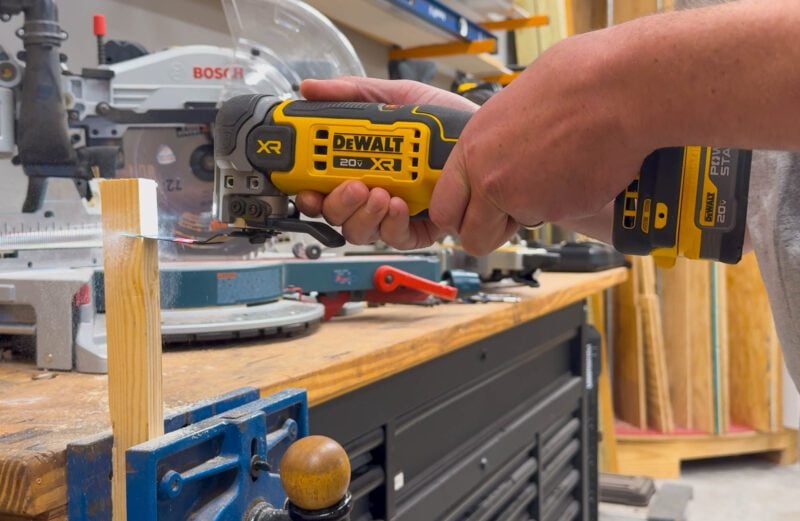
Cutting Speed and Power
The DeWalt DCS359 uses a brushless motor and a 4.2-degree oscillating angle to handle cutting, sanding, and scraping applications across a variety of materials.
Which leads us to the first of the more significant changes from the DCS356: the oscillating angle. The older model uses a 3.2-degree angle, while the DCS359 increases that to 4.2 degrees. That’s a 31% increase in oscillation angle, giving the blade a longer stroke. In theory, that creates more aggressive cutting action and can help you remove material more quickly. Of course, oscillation speed, the blade, material, and application still play a major role in how much of a difference you’ll notice.
Regardless of whether you’re trimming door jambs, making plunge cuts in hardwood, cutting drywall openings, or working through PVC and plastic, the tool is designed to cover a broad range of remodeling and installation tasks with serious aggression.
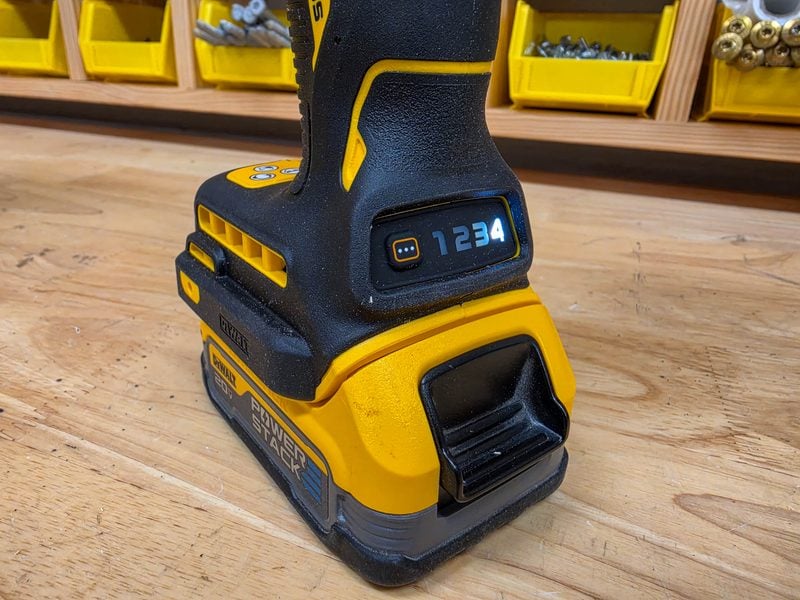
As for speed, the DCS359 has a range of 8,000 to 20,000 OPM across its four speed settings. That’s a little different from the DCS356, which only offers three speeds of 13,000, 17,000, and 20,000 OPM. This new model gives you a lower-speed option for more controlled work while retaining the top-end speed you need for faster cuts. DeWalt also equipped it with a variable-speed trigger so you can easily feather the OPM, giving you additional control as you start a cut or work through different materials.
DeWalt states that the DCS359 offers the fastest cutting speed and lowest vibration in its 20V lineup, and makes similar claims to leading Pro models in its class and price range. Granted, we’ll need some hands-on time to verify this information (more on this later).
Vibration Level
Vibration is one of the biggest drawbacks of using an oscillating multi-tool for extended periods. Even when a tool cuts quickly, excessive vibration can make it uncomfortable to hold and harder to control during detailed work.
That’s another area where DeWalt made some significant improvements with the DCS359. The new model sports an anti-vibration dampening system that helps isolate the head from the tool body. DeWalt claims up to 43% less vibration over similar models, and while I can’t exactly measure this here at our shop, I will say that this is a major improvement over the DCS356. Once again, we’ll dive deeper into this topic when we get to our hands-on feedback.
Hands-On Impressions
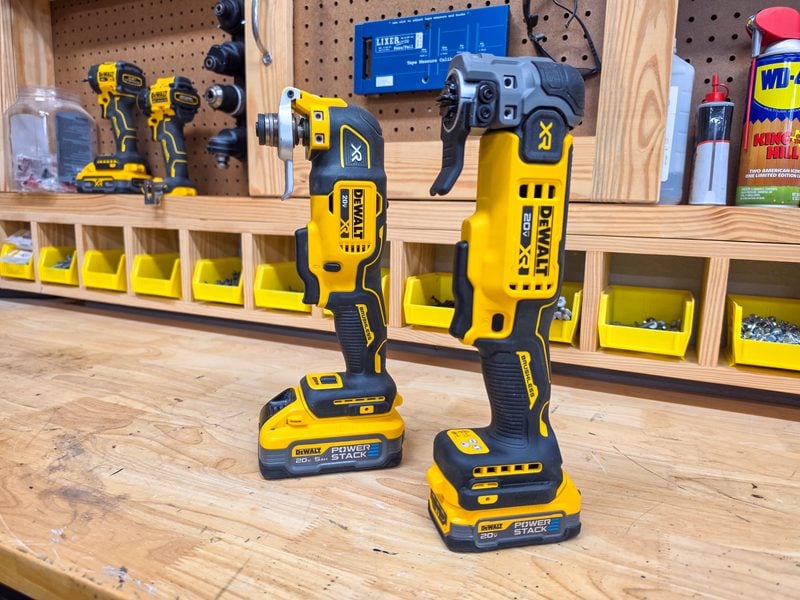
Before we jump in, here’s a quick look at DeWalt’s top three 20V Oscillating Multi Tools:
| Atomic DCS354 | XR DCS356 | XR DCS359 | |
|---|---|---|---|
| No-Load Speed | 0 – 18,000 OPM | 0 – 20,000 OPM | 0 – 20,000 OPM |
| Speed Modes | 1 | 3 | 4 |
| Oscillating Arc | 3.2 degrees | 3.2 degrees | 4.2 degrees |
| Blade Changes | Quick-Change | Quick-Change | Quick-Change |
| Bare Weight | 2.33 lbs | 2.46 lbs | 2.8 lbs |
| Length | 11.2 in. | 11.25 in. | 11.75 in. |
| Price | $189 (bare tool) $219 (kit) | $199 (bare tool) $269.99 (kit) | $249 (bare tool) $299 (kit) |
Just looking at the specs, the biggest and most impactful improvement here has to be the oscillation arc. This puts it in line with the Milwaukee 2836, which shares nearly the same speed range and arc.
Moreover, the vibration level is far better than what I experienced with the 20V XR DCS365. Now, it still doesn’t eclipse the Makita XMT04 or the Bosch GOP18V-34 in this department, but I think DeWalt made a smart move by building in that small isolation zone. It’ll certainly be worth its weight in gold on those longer jobs.
As for actual cutting performance, I set up a few of the usual suspects in our vise and got to work. These materials ranged from plain wood, mild steel, and even #5 rebar. Overall, the DCS359 delivered exactly what I was hoping for. The improved speed range and larger arc helped me produce fast, clean cuts, and the lower vibration level was much easier on my hands, especially compared to the previous model. On top of that, the Quick-Change OIS interface made it easy to swap out blades and accessories in a matter of seconds.
DeWalt DCS359 Oscillating Multi-Tool Design Notes
Size and Weight
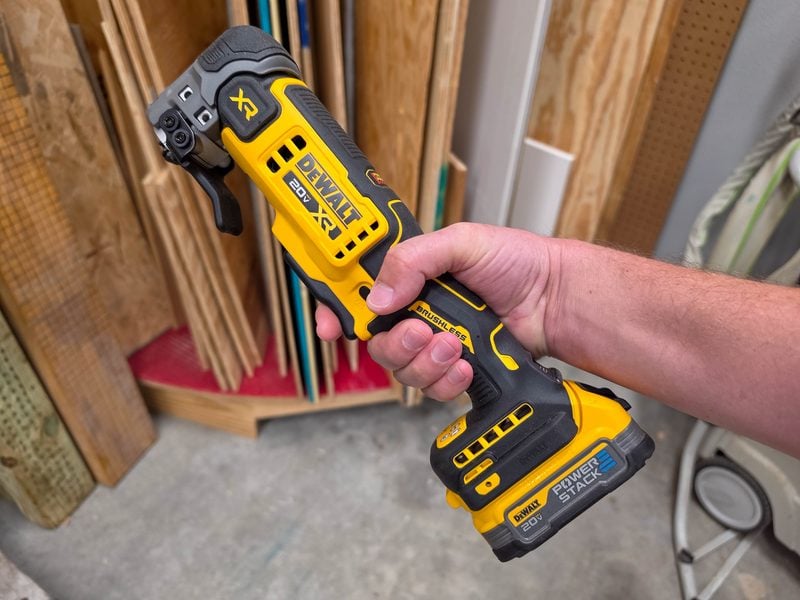
The DeWalt DCS359 weighs 2.8 pounds as a bare tool, 3.6 pounds with the recommended PowerStack battery, and measures 11.75 inches from end to end. Oddly, this is about 16% heavier and 1/2-inch longer than the previous model, but that extra weight and length come with some added benefits.
While the overall profile is a little bigger and heavier, this extra size delivers improved ergonomics
Ergonomics
I think DeWalt absolutely nailed the feel and weighting of this OMT. The grip and tool body sport a generous amount of rubber overmolding which helps you keep a solid grip on the tool and also dampen vibration a little. On the underside, you also have a two-finger trigger, trigger lock, and a lock-on button for extended use.
Accessory Changes
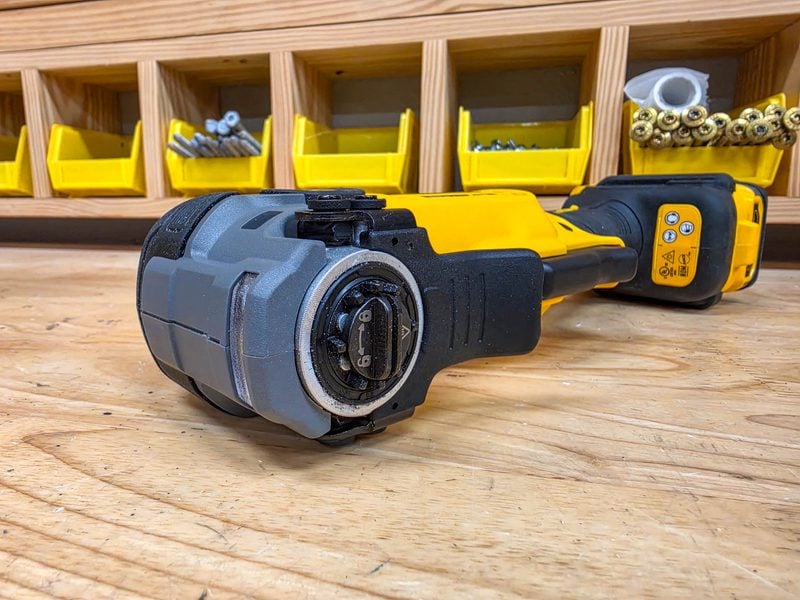
The process for swapping out blades and accessories isn’t too different than with the last model. It still requires blades that are cut out in the rear, it still has the spring-loaded quick-change lever, and there’s a center retaining pin…but there is one key change.
DeWalt swapped out the threaded center retaining pin for a tool-free version that makes accessory changes much easier. To remove it, simply press down on the quick-change lever and then rotate the pin 90 degrees counterclockwise and pull it out. As an added bonus, DeWalt put magnets on the interface, reducing the risk of the pin falling out in case you forget to lock it down.
Additional Features
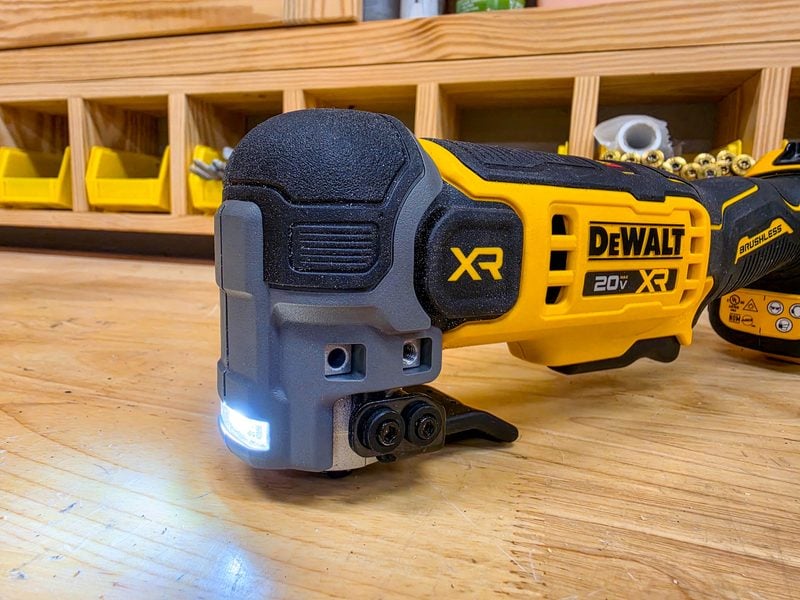
- LED Worklight: Improves cut accuracy in dimly lit areas
- Compatible with Depth Gauge: This is perfect for undercutting door jambs, or when precise cut-depth is key
- Tool Connect Ready: Pair this tool with DeWalt’s Tool Connect chip for better tool tracking
DeWalt DCS359 Oscillating Multi-Tool Price
The DeWalt DCS359 retails for $249 as a bare tool, $299 as a kit, and comes with a 3-year limited warranty. The kit includes a starter pack of accessories, a compact 1.7Ah battery, a Tool Connect adapter (chip sold separately), and a charger.
Should You Buy It?
The DeWalt DCS359 is a meaningful step forward for the 20V Max XR oscillating multi-tool lineup. The larger oscillating angle, wider speed range, four-mode speed control, and dedicated vibration-dampening system all address areas that matter when you’re using a multi-tool regularly.
For Pros who regularly reach for an oscillating multi-tool, the DCS359 is certainly an appealing upgrade. But if you already own the DCS356, the decision comes down to how much you value the added features and speed. Plus, at $299 for the kit, you’re well into the premium price bracket, so if this is just for occasional use and you’re not already on DeWalt’s 20V platform, you may consider something less expensive.
However, if you’re buying a DeWalt 20V Max oscillating tool for the first time, the DCS359 offers a more advanced package, provided the price makes sense for your workload.
Specs
- Model: DeWalt DCS359
- Power Source: DeWalt 20V battery
- No-Load Speed: 8,000 / 12,000 / 16,000 / 20,000 OPM
- Oscillation Arc: 4.2°
- Interface: OIS
- Weight: 2.8 lbs (bare tool), 3.6 lbs (w/1.7Ah PowerStack battery)
- Length: 11.75 in.