
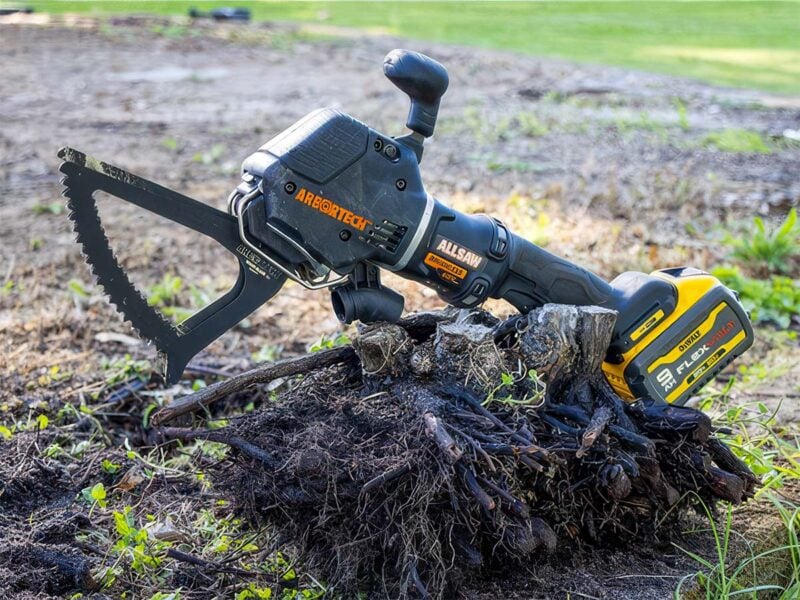
In the North American market, the Arbortech ALLSAW has made a name for itself in building restoration. Its ability to remove individual bricks or blocks sets it apart from other tools when precision is key. Plus, it creates far less silica dust. But what if we think outside that niche and consider other applications—can the ALLSAW do more?
The answer is a resounding yes. I sat down for a chat with Jo Wilkie, David Pellegrine, and Michael Simon from the Arbortech team to explore how the ALLSAW can impact your professional landscaping, tree, and turf projects.
Getting Back to the ALLSAW’s Roots
Consider oscillating multi-tools for a moment. When Fein developed their first one, it was a niche tool for cutting in the automotive industry. It didn’t take long to realize there were other applications for that kind of design—they just needed to create the accessories for them.
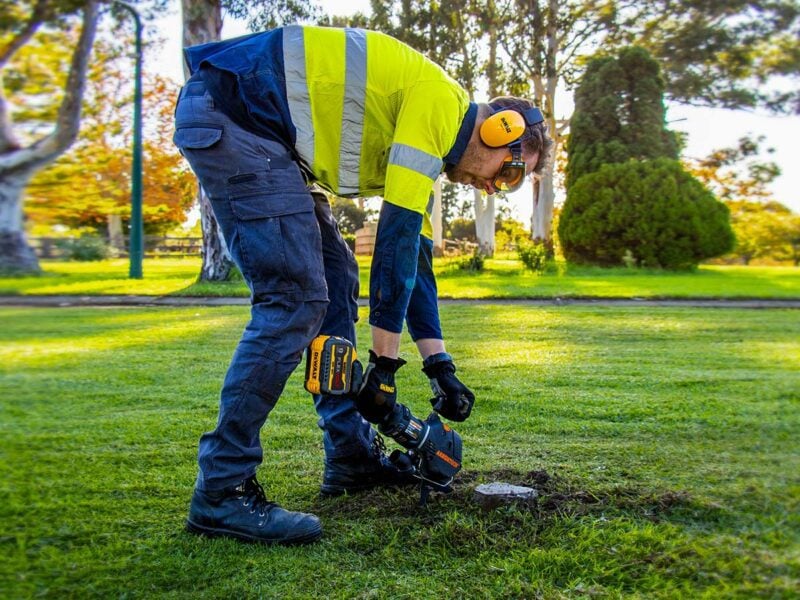
It’s a similar story for Arbortech. Back when the ALLSAW was originally created, it was designed as a safer alternative to a chainsaw for in-ground cutting. The masonry applications we know it best for were actually an evolution of what the engineering team realized it could also do. In considering landscaping applications, we’re quite literally getting back to the ALLSAW’s roots.
Anyone who’s used a chainsaw professionally has either been taught or learned very quickly by experience that chainsaw teeth dull super-fast when they contact soil. You simply can’t use them to cut roots in the ground.
Some landscapers have turned to reciprocating saws to solve the problem. Carbide tooth blades certainly hold up better than chainsaw teeth, but the tools are still awkwardly shaped for cutting around roots.
On the other hand, the ALLSAW is perfectly suited to the task. With its blades set perpendicular to the tool, you’re able to cut more easily by going straight down through the root instead of attacking from the sides.
What about clay, rock-embedded, or even frozen ground? The ALLSAW handles these conditions with ease, where traditional powered or hand tools often struggle, fail, or are simply, impossible to use.
Lessons from the Football Field
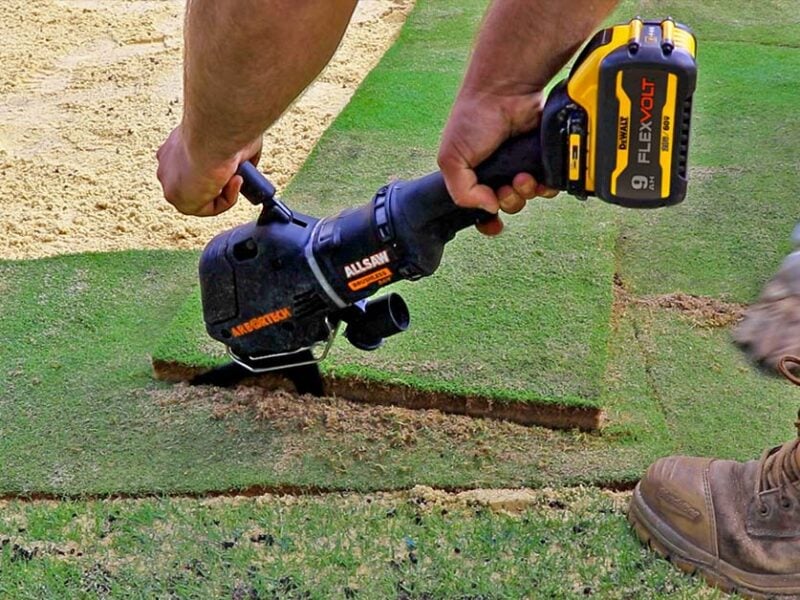
Another application you might not think of at first glance is turf cutting, but the ALLSAW is very well-adapted for it.
As Arbortech was developing the cordless version of the ALLSAW, they connected with a local professional football organization. At the time, they were using gas cut-off saws to cut field turf. Not only are those tools big, bulky, noisy, and frustrating to start, but they also produce a significant amount of heat through their exhaust. If you’ve laid turf before, you already know that burning the grass along the seams is going to be a problem, especially for a professional sports organization.
Alternatively, the ALLSAW, with its purpose-built turf blades, is much lighter and easier to maneuver with no risk of damaging the grass. Plus, the cordless option avoids the frustration of finding a power source or doing it by hand. Better still, turf cutting isn’t a power-hungry application, so one battery can last you all day.
Entrenched in the Task
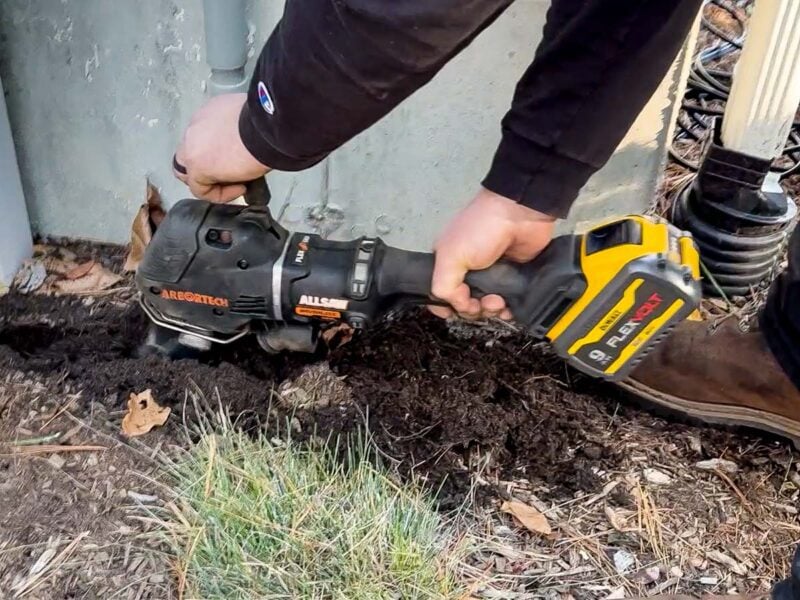
Since the ALLSAW makes for a great turf-cutting tool, it also makes trenching easier. I was watching my internet installer slowly make his way across my yard with a shovel to bury the line. Just the 50 feet or so from the pole to the box seemed to take him forever. With the ALLSAW, he would have had the trench done in minutes with far less effort.
So, whether it’s burying cable for utility, running irrigation lines, or installing in-ground lighting systems, the ALLSAW works for that, too. When you come across roots, just swap from the turf blade to the wood blade and make quick work of them. And with trenching-specific blades and an extension pole in the works, it’s going to get even easier.
Thriving in Hard Times
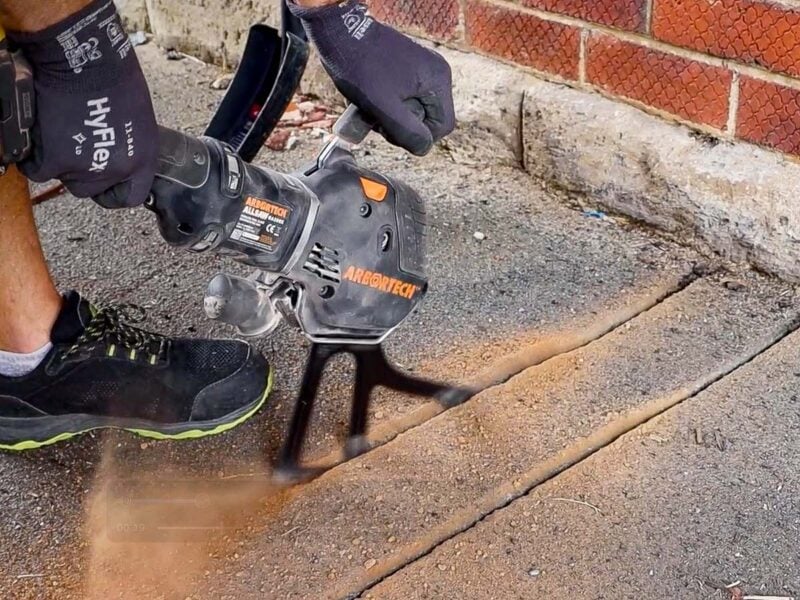
Of course, we can also let the ALLSAW do what it’s been primarily doing in the North American market—cut hard stuff. While you probably don’t need to remove many bricks from structures on your landscaping jobs, you may need to cut hardscape, concrete, or asphalt, or remove polymeric sand on paver jobs.
With years of proven field service in building restoration, you don’t have to worry about whether it’s too much. And since the ALLSAW’s cutting action chips away at masonry instead of abrasively grinding it, it creates 90% less respirable crystalline silica dust than grinders or cut-off saws, keeping your crew safer.
Upgrade Your Landscaping Game with the Arbortech ALLSAW
With many types of multi-tools, you often sacrifice performance for the convenience of carrying fewer tools. That’s not the case with the Arbortech ALLSAW. It not only reduces the number of tools you need, but it also performs those jobs better, making it a no-brainer to add to your tool crib.
While landscaping businesses are the most obvious beneficiary of these capabilities, there are certainly other sectors that can enjoy the same advantages. Farms and ranches, golf courses, college campuses, business parks, utility companies, tree care specialists, outdoor lighting, irrigation, and municipalities all do the same kinds of work we’ve just been describing. There are even some smaller-scale opportunities for cemeteries, dock builders, pest abatement, and more.
If tackling in-ground cutting more easily and efficiently sounds good to you, take a close look at the Arbortech ALLSAW. It’s far more than just a building restoration tool. Paired with purpose-built accessories, it’s the landscaping multi-tool you need to take in-ground cutting to the next level.