
In partnership with ECHO
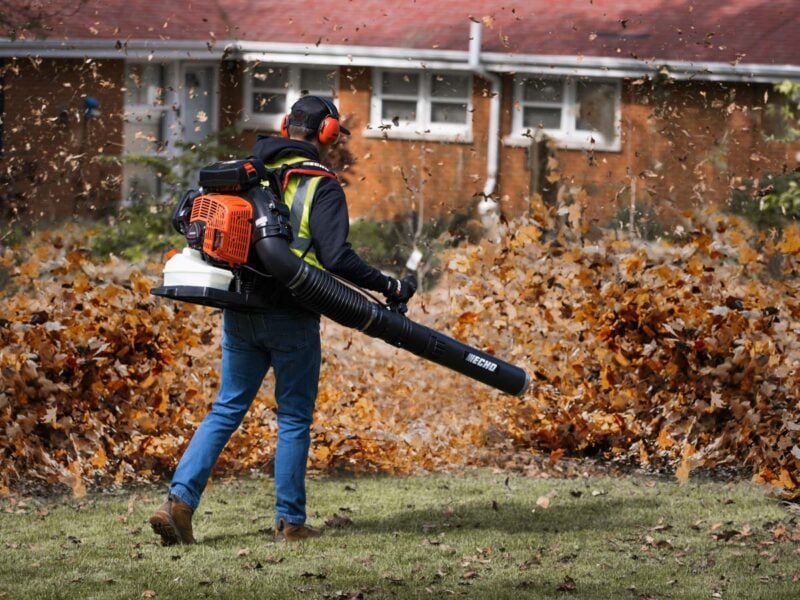
Backpack blowers are a staple among landscaping and lawn care crews. In fact, ECHO invented the backpack category more than 50 years ago. A lot has changed over the decades, and if you’ve taken a look at what’s available today, there are a ton of choices. So, how do professional lawn care and landscaping businesses make an informed decision on what to buy?
Performance is certainly part of the equation, but comfort, cost, and even regulations also come into play. To learn more, I spoke with Jason Wilk from ECHO about how Pros determine which models to put on their trailers, which ECHO models are the most popular, and to get more details about the powerful new PB-9510.
Key Backpack Blower Factors
Quick-start Guide to CFM, MPH, and Newtons

There are three key performance ratings you’ll find on most backpack blowers: MPH, CFM, and Newton force. Each one tells you something different.
MPH represents air speed. Think of it as how far you can move leaves when you’re blowing. The higher the air speed, the farther you can move them.
CFM, or cubic feet per minute, is a measurement of how much air the blower can move. You can think of this as how many leaves you can move at once. The higher the CFM rating, the more leaves you can move.
Newton force is a measure of the blowing force with the air speed and CFM combined. It’s not a calculation, though. There are ANSI testing standards in place that require the use of a force meter, so it’s a real measurement, not a theoretical one. Because it measures the work actually being done, it’s often the most useful single rating to look for when you’re comparing blowers.
Tube-Mounted vs Hip-Mounted Throttle
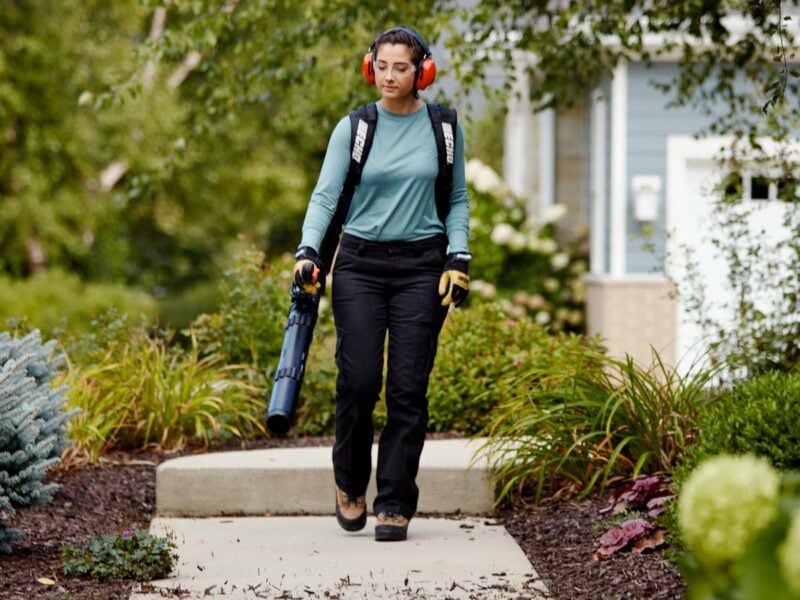
The throttle type you choose is really about preference. Since it has no effect on performance, there’s no right or wrong answer.
With a tube-mounted throttle, you adjust the throttle, set the cruise control, and direct the airflow all with your right hand. Your left hand is free to move objects without stopping.
With a hip-mounted throttle, you control the performance level with your left hand and the direction of the airflow with your right. It’s a two-handed operation, but if you set the cruise control, your left hand can still be free to deal with debris that gets in your way.
According to Jason, ECHO’s sales are split roughly 50/50, so try them at your local dealer and see which one you prefer. Most of ECHO’s backpack blowers have both options. Look for the “T” models if you prefer the tube mount, or the “H” models if you want the throttle on your hip.
Weight and Comfort
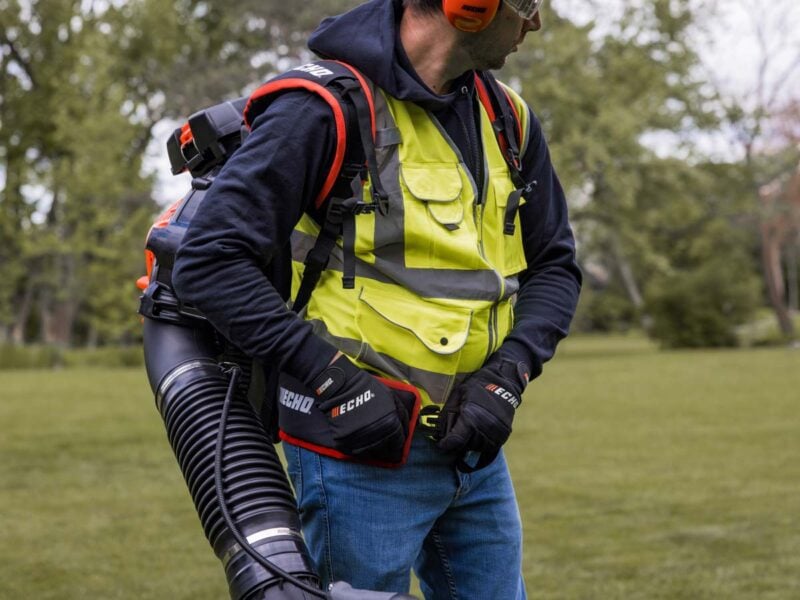
When you spend the day with a blower strapped to your back, weight and comfort play a significant role in how much fatigue builds in your body. Many people think lower weight automatically means a more comfortable experience, but that’s not always the case.
Lower weight can help; however, the harness design plays a significant role. Padding in the shoulder straps reduces pressure points, and built-in airflow around the back helps cool you off.
Of course, when you’re blowing leaves in the fall or light snow in the winter, you might not appreciate the extra airflow, so ECHO has a plug for the air vents to keep you more comfortable during cool weather.
Gas vs Battery Power
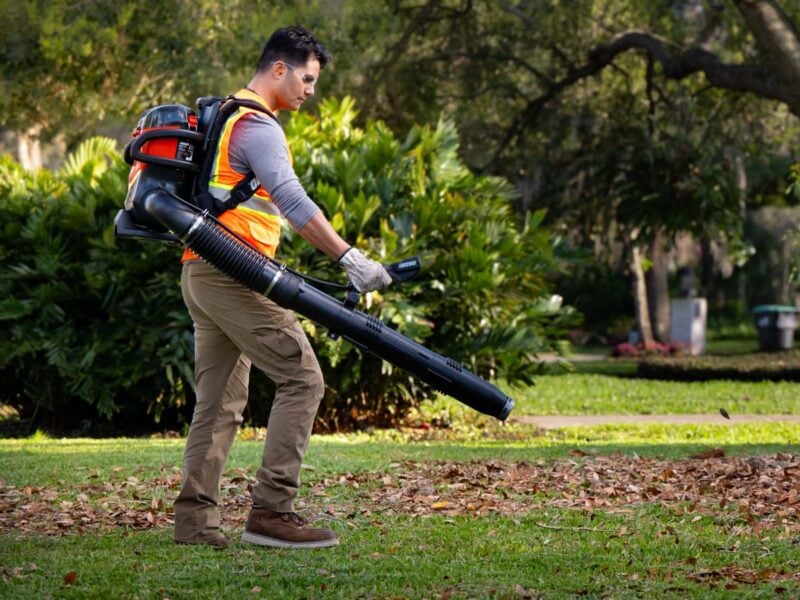
The majority of professional backpack blowers are gas-powered, but battery-powered models continue to make headway. While much of battery’s growth is driven by regulation, some business owners see an opportunity to offer clients a quieter, electrified lawn service experience.
One of the biggest drawbacks of battery-powered backpack blowers has been performance. However, with advanced brushless motors and new tabless battery technology, there are now models that can meet and even beat the performance of gas. In ECHO’s lineup, you have options to cover the entry and mid-level performance classes. They offer all the blowing force of their gas counterparts with much less noise, no direct emissions, and almost no maintenance to worry about.
Learning how to manage runtime is a legitimate concern. Charging technology continues to improve, though, and Pro-focused brands like ECHO are working on innovative solutions to efficiently power your workday.
For most Pros, gas is still king, though. Part of it is familiarity. Even though gas engines require maintenance, dealing with it is ingrained into existing processes. Up-front cost is also a barrier. High-end gas blowers can cost hundreds of dollars less than comparable battery-powered ones.
But performance is likely the biggest driving factor. With models like ECHO’s PB-9010 producing up to 48 Newtons and the new PB-9510 delivering 56 Newtons, battery power isn’t there yet. Even for the battery options that do compete in blowing force, managing runtime isn’t as appealing as simply refilling a fuel tank and moving from one property to the next more quickly.
Three Primary ECHO Backpack Blower Pros Turn To
We’ve set the stage by outlining the key factors to look for when you’re choosing a backpack blower. Now, let’s consider some of ECHO’s most popular models and why Pros choose them.
ECHO PB-580: Lightweight Lawn Care Workhorse
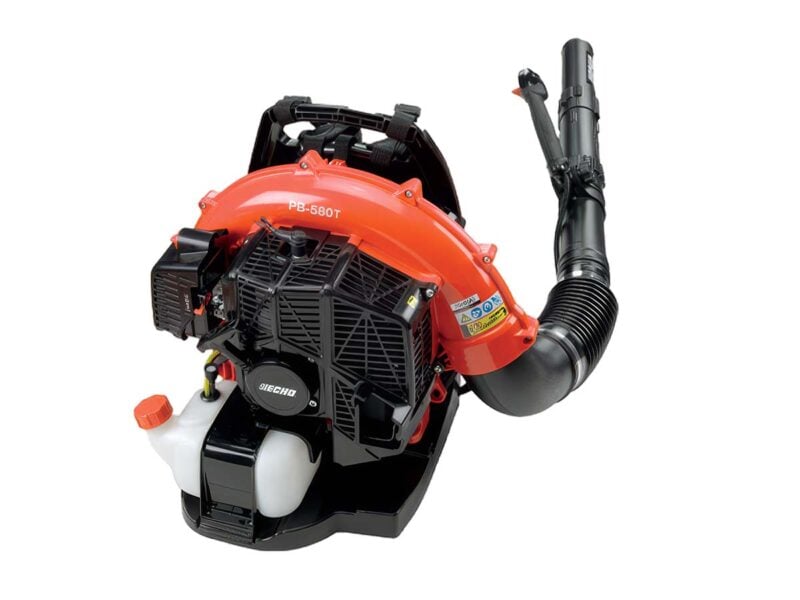
The PB-580 is probably the most popular of all ECHO’s backpack blowers, and it represents the entry point for many businesses. It offers a field-proven, professional-quality build at an affordable price point.
With a 58.2 cc engine, it’s a significant step up in performance from handheld models. The performance isn’t as high as the 79.9cc high-displacement models, but you gain lighter weight and longer runtime.
Don’t assume the PB-580 is weak, though. Delivering up to 22 Newtons of blowing force, it’s great for clearing grass clippings on sidewalks and driveways. It’s designed to offer Pros a balance of post-mowing cleanup performance, weight, comfort, and affordability.
Specifications
- Engine Displacement: 58.2 cc
- Fuel Capacity: 62 fl oz
- Max Airflow at Nozzle: 517 CFM
- Max Air Speed at Nozzle: 216 MPH
- Maximum Blowing Force: 22 Newtons
- ANSI Noise Rating: 70 dB(A)
- Dry Weight: 22.7 pounds
- Price: $449.99
- Warranty: 5 years consumer, 2 years commercial
ECHO PB-770: The Sweet Spot
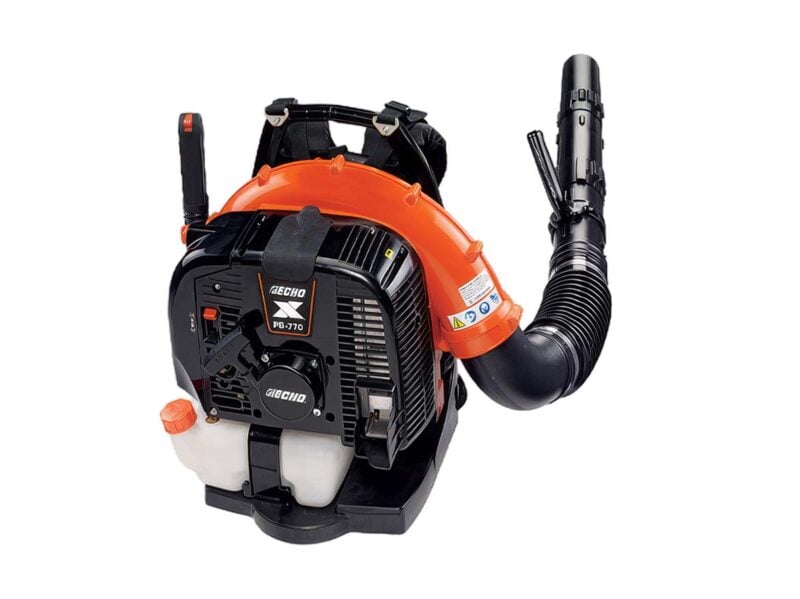
The PB-770 is ECHO’s go-to mid-range backpack blower, and it’s easy to see why it’s so popular. At 33 Newtons, it provides 50% more blowing force than the PB-580. If you’ve been in the industry for a while, you might remember when you could only get that kind of blowing force from a walk-behind blower. At the same time, that performance increase comes with less than 2 pounds of additional weight.
For mow and blow lawn care crews, this is a key upgrade opportunity. The step up to 33 Newtons of blowing force is a significant productivity boost that saves time on the final cleanup, getting you to the next property that much quicker.
If fall leaf management is part of your business operations, this is the best entry point into ECHO’s backpack blower lineup. The PB-580 can certainly move leaves, but professional crews have to consider their need to remain productive, whether leaves are wet or dry. The PB-770 helps them do that in addition to handling high-performance cleanup on mowing days.
Specifications
- Engine Displacement: 63.3 cc
- Fuel Capacity: 68.3 fl oz
- Max Airflow at Nozzle: 756 CFM
- Max Air Speed at Nozzle: 234 MPH
- Maximum Blowing Force: 33 Newtons
- ANSI Noise Rating: 74 dB(A)
- Dry Weight: 24.3 pounds
- Price: $599.99
- Warranty: 5 years consumer, 2 years commercial
New! ECHO PB-9510: The Most Powerful in the Line
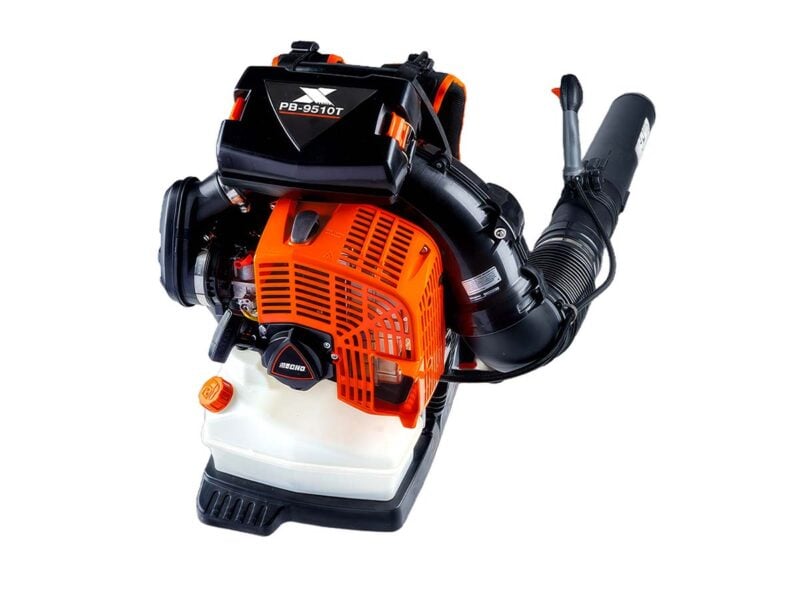
Launching in Fall 2026, the PB-9510 is ECHO’s most powerful backpack blower ever. That’s saying something considering the PB-9010 had set a new benchmark when it initially launched. Even though the engine displacement is the same between the two, continued development of components such as piston shape and transfer port angles helped ECHO’s engineering team deliver 56 Newtons from the PB-9510.
For post-mowing cleanup, 56 Newtons can be overkill. It’ll clear grass quickly, but you won’t necessarily notice enough of a productivity boost to justify the higher cost or extra weight.
On the other hand, there are very real productivity gains for leaf-clearing and moving heavier debris. Even compared to the 48 Newtons of the PB-9010, an 18% increase in blowing force makes a difference. It’s especially helpful in areas like the northeast, where you’re dealing with a high volume of larger, heavier leaves that can get really weighed down when they’re wet.
Specifications
- Engine Displacement: 79.9 cc
- Fuel Capacity: 100 fl oz
- Max Airflow at Nozzle: 1200 CFM
- Max Air Speed at Nozzle: 230 MPH
- Maximum Blowing Force: 56 Newtons
- ANSI Noise Rating: 81.7 dB(A)
- Dry Weight: 27.8 pounds
- Price: $749.99
- Warranty: 5 years consumer, 2 years commercial
ECHO Backpack Blowers that Solve Specific Problems
ECHO PB-5810: Lightweight and Easy Starting
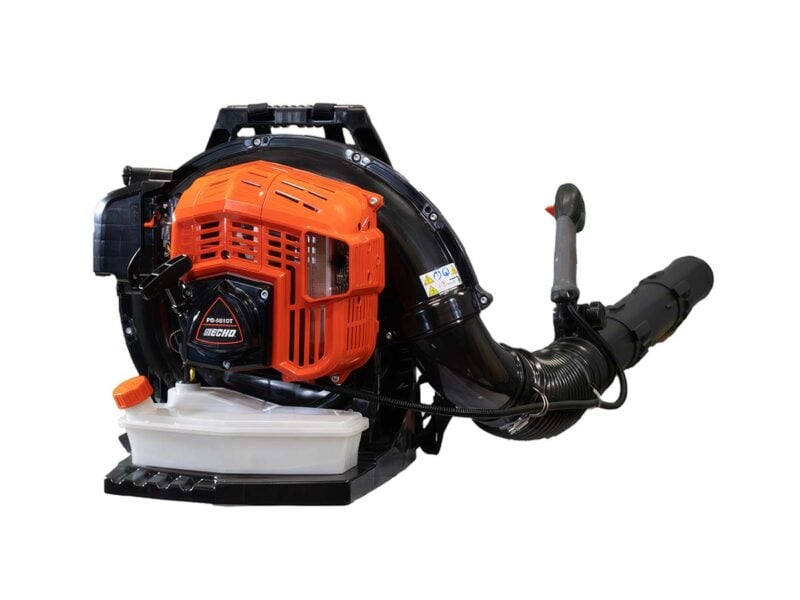
While every ECHO backpack blower is built with Pro-grade quality and has a commercial-grade engine, the PB-5810 is a popular choice for homeowners who maintain larger properties.
A big reason comes down to effort. Thanks to updated engine technology, the cord is 44% easier to pull than the PB-580. It’s also much lighter. At 20.9 pounds dry, it’s almost 2 pounds lighter than the PB-580. At the same time, those benefits don’t cost you in performance. In fact, the PB-5810 is 5 Newtons stronger than the PB-580, hitting 27 Newtons on the high end.
For property owners who value a lower effort blowing experience from start to finish, the PB-5810 is designed to strike the right balance of easy starting, comfort, and performance.
Specifications
- Engine Displacement: 59.7 cc
- Fuel Capacity: 43.2 fl oz
- Max Airflow at Nozzle: 700 CFM
- Max Air Speed at Nozzle: 200 MPH
- Maximum Blowing Force: 27 Newtons
- ANSI Noise Rating: 75 d(B)A
- Dry Weight: 20.9 pounds
- Price: $499.99
- Warranty: 5 years consumer, 2 years commercial
ECHO DPB-7700: Gas Performance Without the Gas
Battery-powered outdoor power equipment is here to stay, and ECHO currently has three choices to meet your needs. The key to choosing the right one is the model number—each model is named to match up with its gas counterpart.
ECHO’s top battery-powered backpack blower is the DPB-7700, which is your gas-free alternative to the PB-770. From a performance perspective, ECHO’s 56V batteries actually deliver more blowing force, hitting 36 Newtons.
The main benefits of battery power are low noise, no gas or oil, no emissions, and virtually no maintenance. But because of the electronics required, this model has some bonus features you won’t find on gas models. There’s an LED display built into the throttle controls to help you keep an eye on your battery levels, MAXOUT technology keeps the performance high through the entire battery charge, and an LED light on the back ensures you’re visible from sunup to sundown.
Whether regulations, individual customers, or building an electrified business are behind your decision to shift to a battery-powered blower, the DPB-7700 delivers legitimate gas-replacement performance.
Specifications
- Battery Ports: 3
- Max Airflow at Nozzle: 950 CFM
- Max Air Speed at Nozzle: 225 MPH
- Maximum Blowing Force: 36 Newtons
- ANSI Noise Rating: 77 dB(A)
- Ingress Rating: IPX5
- Working Weight: 37.6 pounds w/3 x 8.0Ah batteries
- Price: $749.99 – $1699.99
- Warranty: 5 years consumer, 2 years commercial
Buy for the Business, Not the Spec Sheet
That’s a lot of information to take in, and now it’s decision time. Jason’s advice is to buy the best equipment that fits your budget.
Don’t skimp on performance if you can afford to step up; your crew will appreciate the higher productivity. At the same time, there’s no point in paying for performance you’ll never use, so don’t chase higher Newton force numbers if there aren’t real gains. Keep comfort features in mind and be sure to try hip and tube throttles to see which one you like best.
Of course, commercial quality is a must, so you can shop ECHO’s lineup with confidence knowing that every backpack blower in the line is designed to meet the demands of professional use.