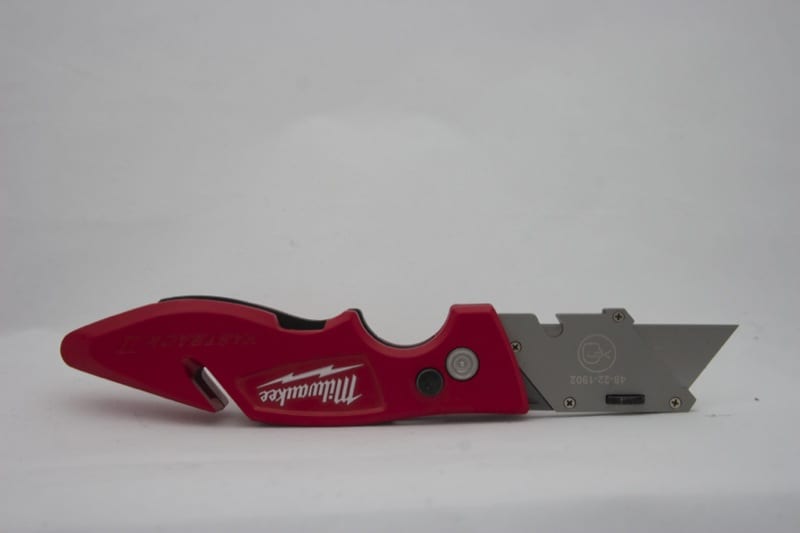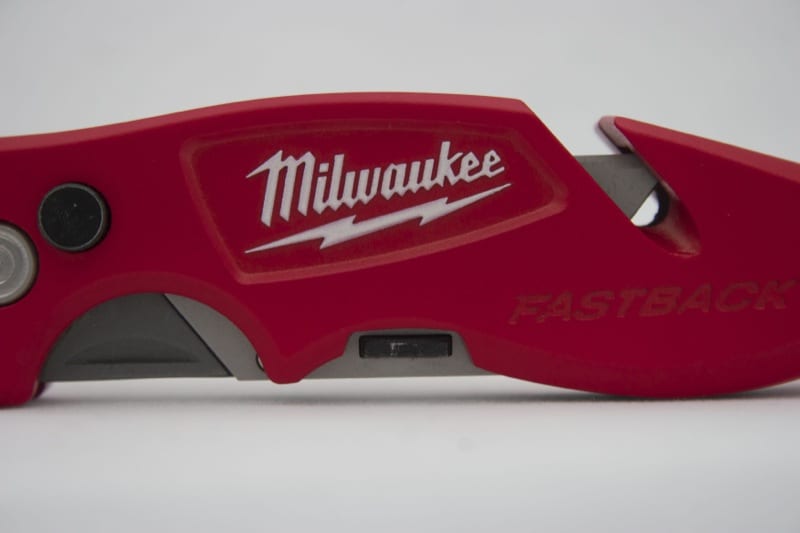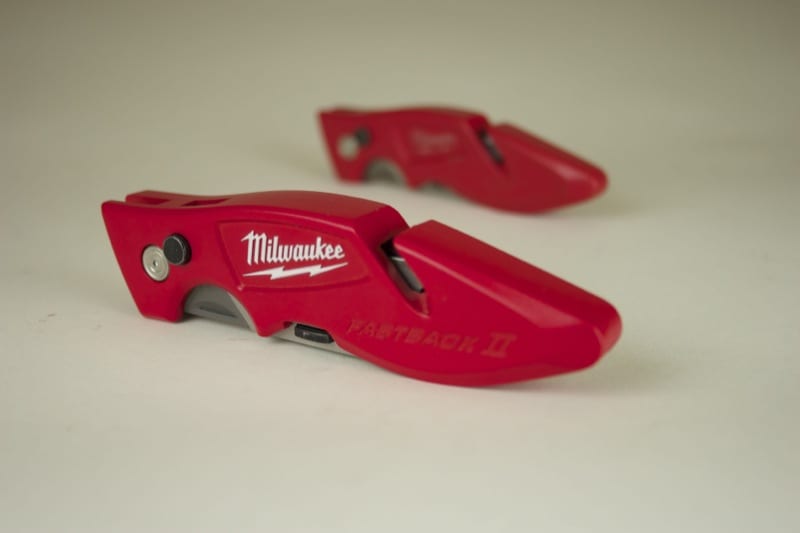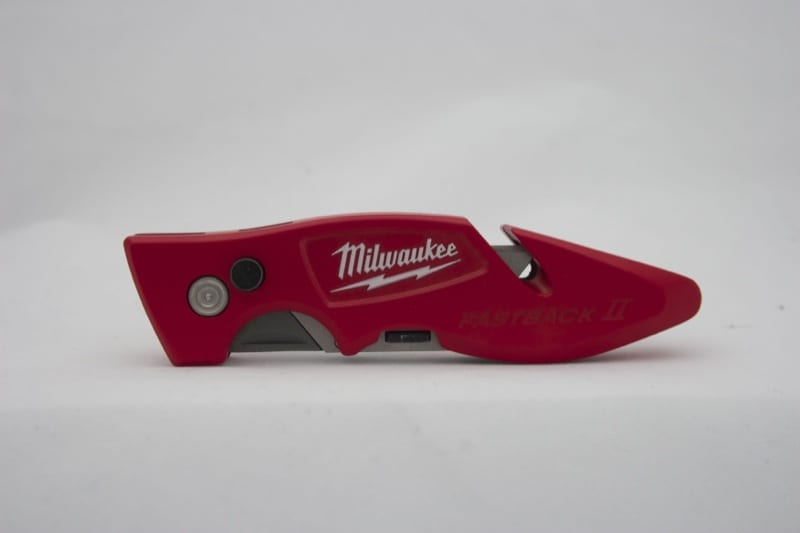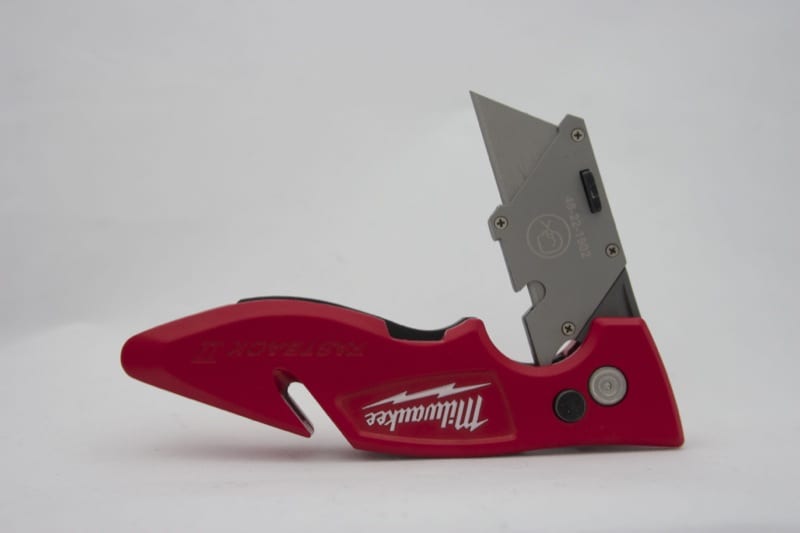

A couple of years ago, we got to review the Milwaukee Fastback folding (or “flip” as they call it) utility knife. At the time, the concept of a folding utility knife still felt new, and the overall ergonomics and styling of this new cutting tool were just spot on. Our electrician friends loved it, and a few of us even put away our pocket knives for a time to carry this thing around with us. It was a new take on an old tool—and that’s generally exciting. While the newly-released Milwaukee Fastback II (or Fastback 2) isn’t nearly as groundbreaking, it adds a much-needed feature: blade storage.
Introduction
Along with all of the positive feedback we received on the original Milwaukee Fastback knife, we saw one consistent critique. Users constantly asked, “Where is the blade storage?” Where indeed? The original Fastback knife was brilliant except for that one area. Apparently, we weren’t the only ones receiving that critique, because the Fastback II addresses that—at least partially.
Editor’s Note: Check out our best utility knife article for our top picks in this category.
The Appeal of the Fastback
Before I get too far, I’ve been presuming that you’re familiar with the Fastback knife. Since that’s not true of everyone reading this, let me take a moment to explain why so many tradesmen have found this to be a compelling tool.
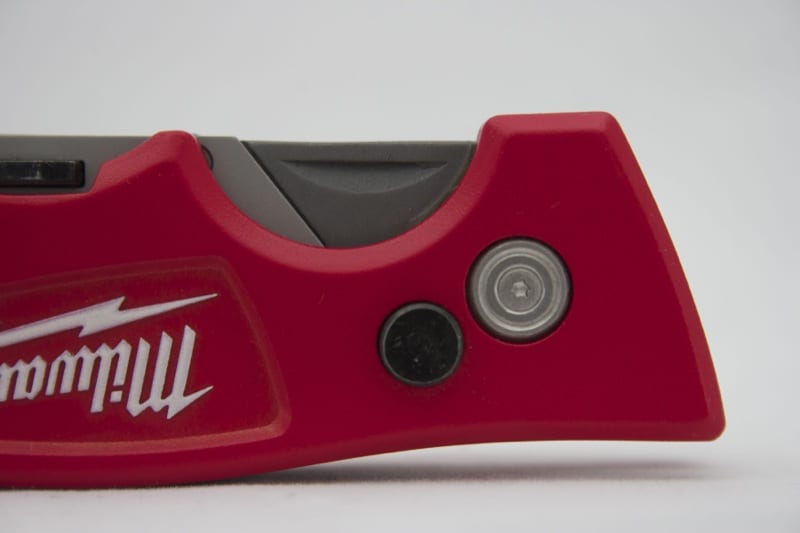
First and foremost, the knife opens easily with just one hand. And I do mean easily. You press the release button with your thumb to free the blade. Then, just give it a gentle flick of the wrist to send the blade swinging out into its open position. Provided you allow the button to release, the knife will then lock securely in place. It’s not something that really takes a lot of practice. You just flip it open a couple of times. If you have any coordination at all, that will be the end of it.
Closing and Locking the Blade
Closing the blade is just as simple. You release the lock by pushing the same button and then flick it closed. The blade locks in both positions, so it’s quite safe to carry around or toss into a tool bag. The only thing easier than the open/close mechanism on this knife is the blade-changing mechanism. To swap out a blade, you don’t need any tools. Press the black blade release button located at the top of the blade holder, and the razor blade comes straight out. In this way, you can flip the blade around and use both ends quite easily before having to replace it.
Milwaukee ships the knife with the blade nicely oiled. We recommend you keep it up in order to maintain the ease of blade exchange. In the event it ever gets too gummed up, the blade holder can be serviced by removing four flush-set Phillips-head screws.
Using the Milwaukee Fastback 2 Knife
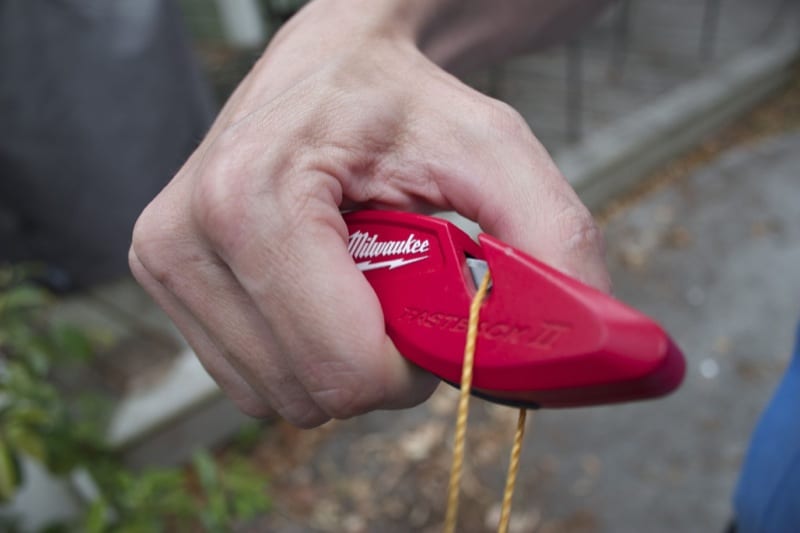
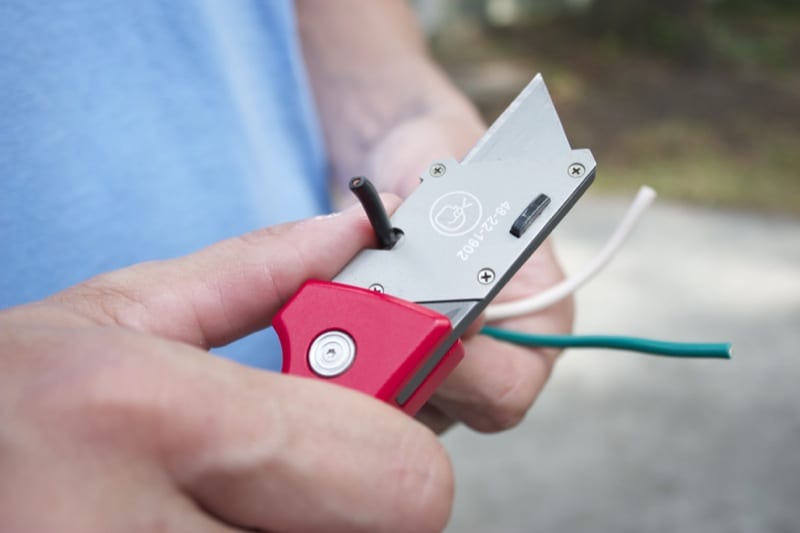
Milwaukee seems to have really catered this knife to electricians and MRO. It does, however, work as a great knife for just about any trade. When folded closed, I was able to use the Fastback as a twine cutter, thanks to the handle’s notch that allows access to the top edge of the blade. Opening the knife gave me access to the bottom side of the blade, which is exposed within the holder. This served as a makeshift wire stripper. Although I actually had mine with me, the Fastback works in a pinch if you leave yours in the truck.
These little details transform what could have been a banal tool into something far more functional and interesting. In fact, I’m not sure I could have penned the 600 words I’ve already written on any other utility knife. Most of them are pretty straightforward and vanilla.
Milwaukee Fastback II Blade Storage
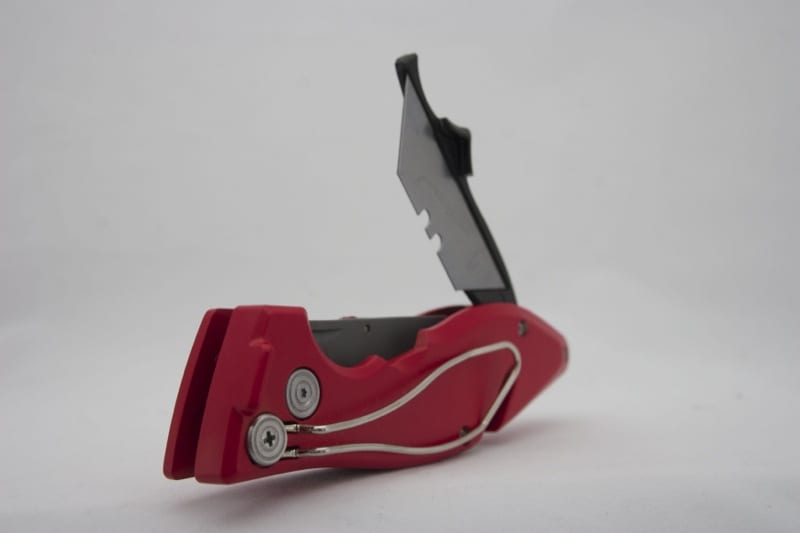
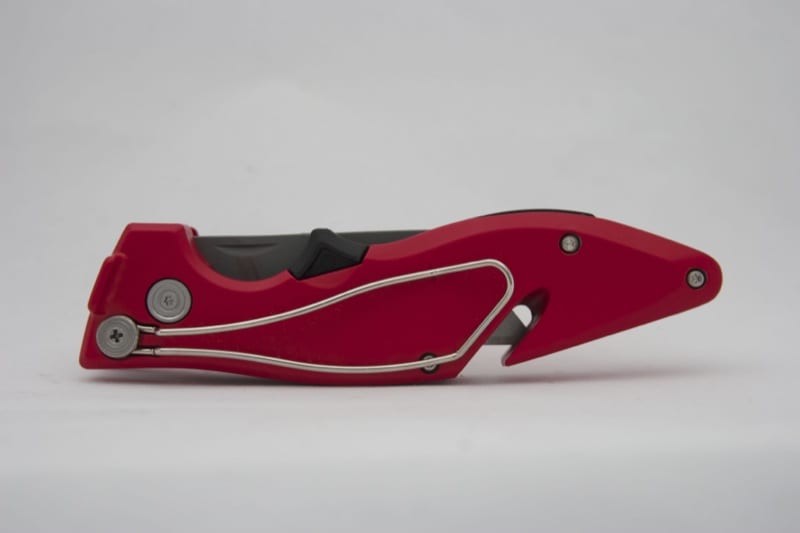
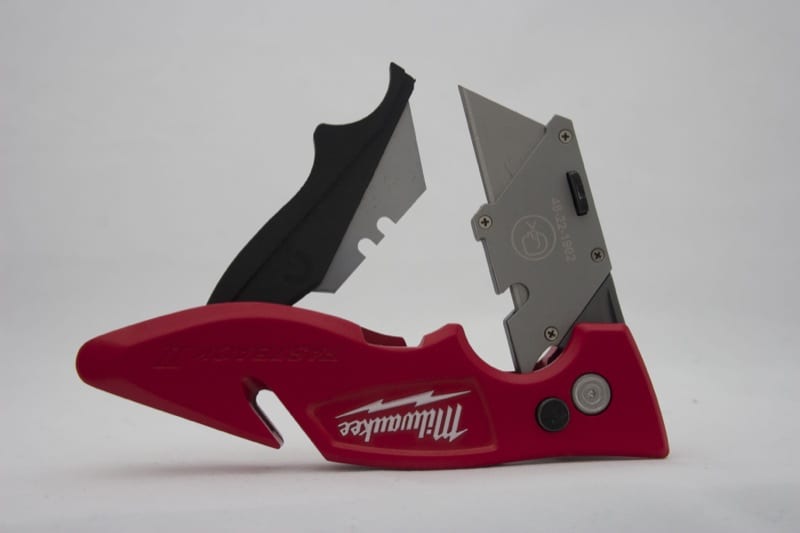
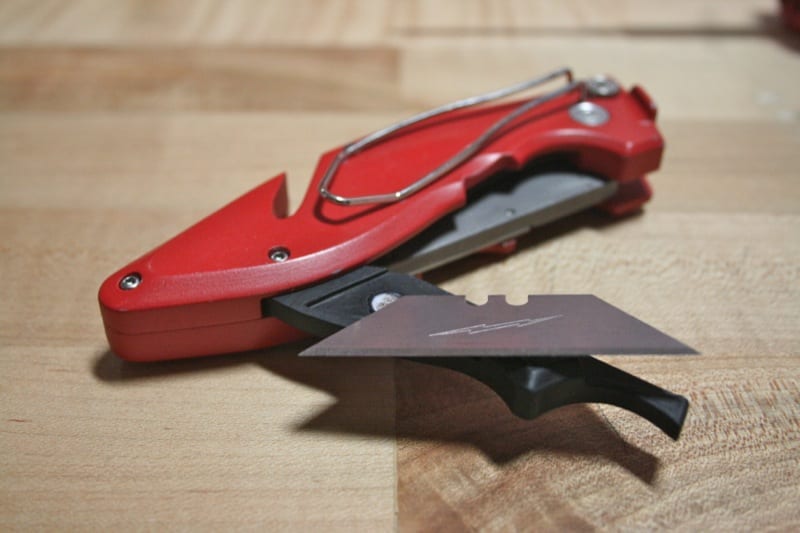
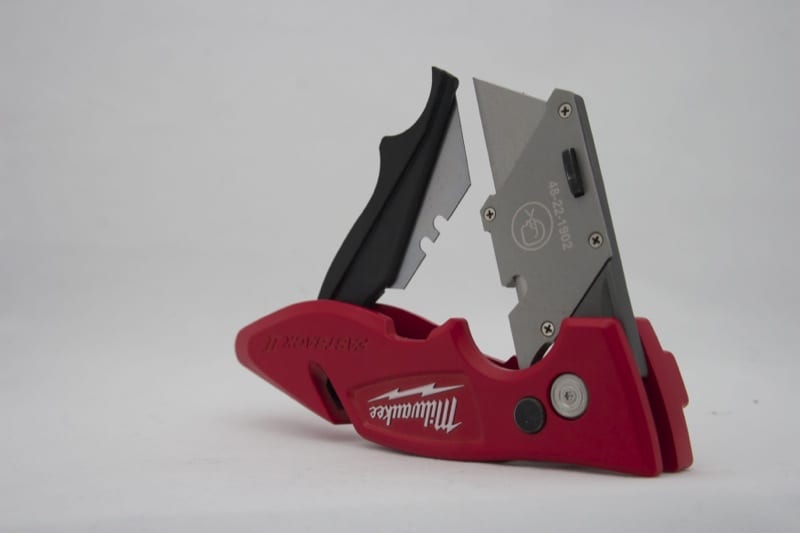
What makes the Fastback II an updated model, however, is the inclusion of blade storage. We’re excited that Milwaukee listened to its users. This was the #1 requested feature for this knife. It only took Milwaukee Tool about a year to make it a reality. But they got a little fancy on us. Instead of the typical loose holder to store a few blades, Milwaukee opted for a swing arm with a rare-earth magnet. You can technically insert a second blade, but it’s not really designed for it. Additionally, a pair of thicker blades will not fit. A simpler holder would have allowed users to store more than one extra blade.
Then again, perhaps this is all a clever scheme to get us to buy the Fastback III next year!
Milwaukee Fastback vs Fastback II – Final Thoughts
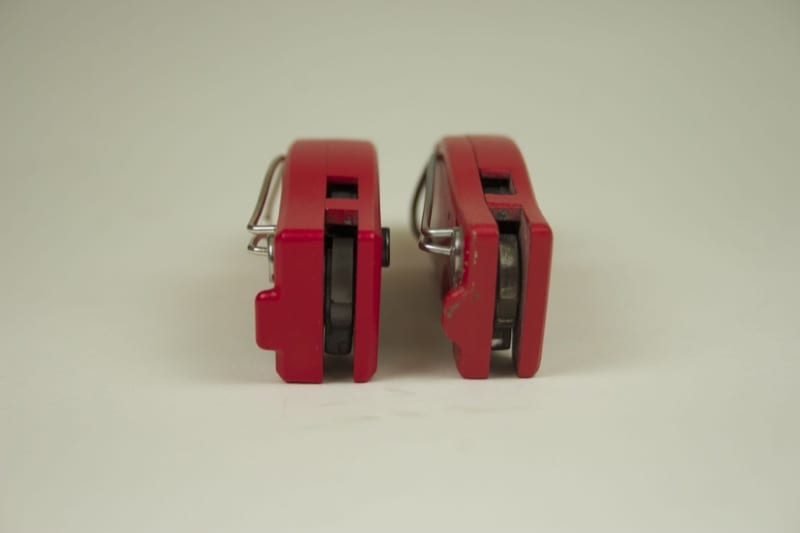
In comparing the Milwaukee Fastback vs Fastback II several things come to mind. The new Fastback II adds just under 1/8″ to the overall 11/16-inch thickness of the knife. It’s hardly noticeable. If anything, I actually feel that the Fastback II fills your hand a little bit more. It helps give you a more sure grip on the handle.
The wire belt clip has also remained unchanged. It’s just too bad Milwaukee didn’t allow for positioning it on the opposite side of the handle for tip-up carrying. It appears that the feature would only require a minimal amount of retooling. Overall, the design is brilliant in that, even though the wire clip rests against your palm during use, it isn’t the least bit uncomfortable. In fact, the entire knife is quite comfortable to use when opened. I found I could hold it just as easily in a conventional grip (for whittling) as in a precision grip (for opening packages and scoring lines on Hardiboard or drywall).
Even the blade storage arm slides open easily, but never on accident. Everything is very purposeful in its design…and solid. The blade arm exhibits almost no lateral movement.
Milwaukee Fastback 2 Ergonomics
In terms of the ergonomics of the tool, you can hold the Milwaukee Fastback 2 in your hand and use your middle finger to open the black blade holder. Everything seems right where you’d expect it to be. When I used the knife to cut out some drywall, the blade was easy to control. I had plenty of room for my index finger to properly guide the knife along its path. I’d describe it as “quick”. You don’t have to baby it, and it will stay where you put it and follow a line well.