

Ever drive past the ritzy part of town with its perfectly manicured lawns and think, “I wish my lawn looked that good”? Getting that kind of look takes real effort, and most of those folks likely pay a lawn care service quite a bit to maintain it. If you prefer to save money and handle things yourself, it is possible to improve your cut quality—and you don’t necessarily have to buy a new mower to do it.
When your lawn mower cuts, three key things are happening. Airflow lifts the grass up, and the edge of the blade cuts off the top. Then, the airflow aids in mulching, bagging, or discharging. To optimize your mower’s cut quality performance, these are the areas you need to target.
READ
Best Battery-Powered Lawn Mowers
Tip #1: Sharpen Your Blade
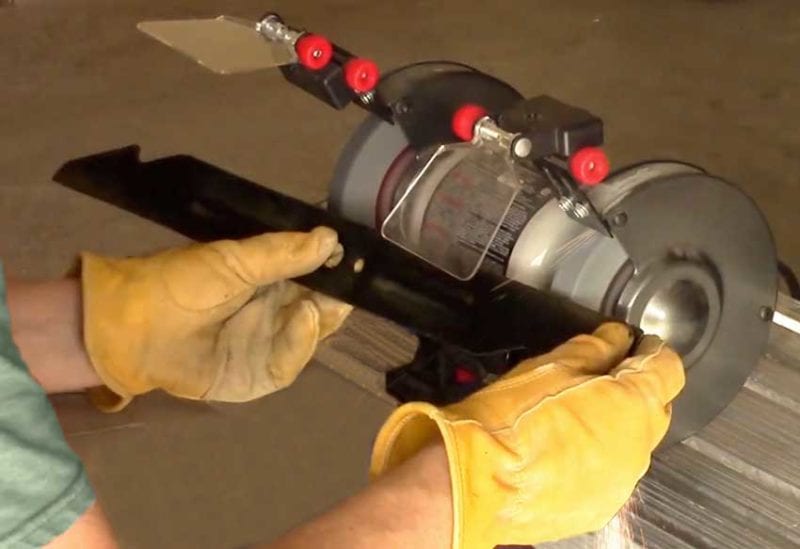
If your mower feels like it’s just not cutting as well as it used to, chances are you just need to sharpen the blade. Over time, the cutting edge dulls even though it’s just cutting grass. If you hit sticks or have sandy soil, the edge can dull more quickly, and small rocks or other hard objects can chip the edge.
A bench grinder is the tool we prefer to use for blade sharpening. Be sure not to let the edge get too hot, though. That can make it brittle and more prone to chipping.
You can also use an angle grinder, but it’s more challenging to keep the sharpening angle consistent.
If you don’t have either of those tools, check with your local lawn care service center. Many offer sharpening services for much less than the cost of a new blade.
READ
Best Angle Grinders for Metal, Concrete, Wood, and More
Tip #2: Slow Down
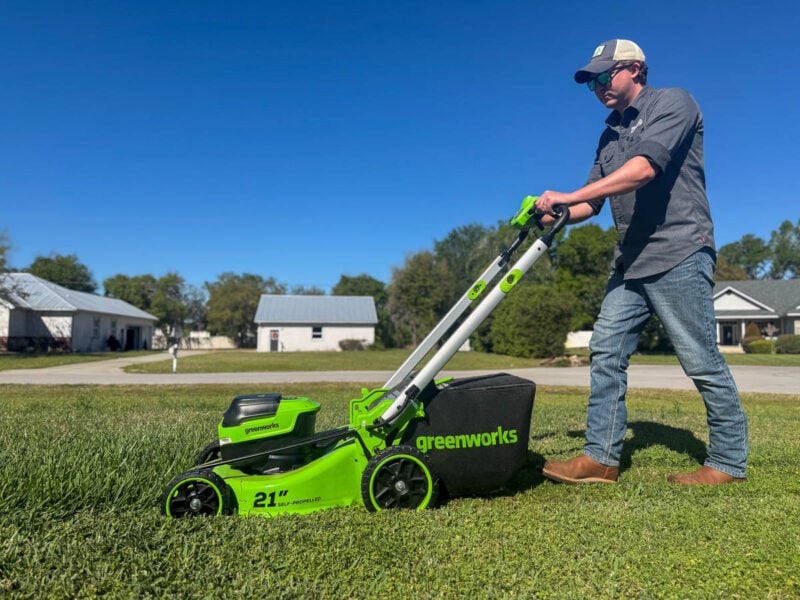
If you have a sharp blade and you’re not getting the results you want, try slowing down.
When you cut too fast for the grass conditions, it’s more likely to leave your lawn looking like it got a $5 haircut from a guy in your college dorm room: uneven and patchy.
By slowing down, you give the grass more time under the deck to get drawn up and cut. Not only will it stand up straight, but it will also allow the blade RPMs to remain higher and for clippings to be mulched/bagged/discharged more effectively.
This can be a seasonal issue. When it’s drier and cooler, grass doesn’t grow as thick or hold as much moisture in the blades. In those conditions, you can cut faster and still get a quality cut. But during peak growing season, slowing down can make all the difference.
READ
Greenworks 60V 21-inch Self-Propelled Lawn Mower Review
Tip #3: Cut Twice
When you see professional lawn crews flying around a property, you may have a little jealousy growing as they quickly get the job done and move on. In my old neighborhood with its small lots, crews would have my neighbors’ lawns cut, trimmed, edged, and blown in less than 15 minutes.
But they have a little secret when it comes to getting the perfect cut on high-end properties: they mow twice.
The way it normally works is to make two perpendicular cuts. If the first cut is east to west, the second will be north to south. If the first in on one diagonal, the second will be on the opposite.
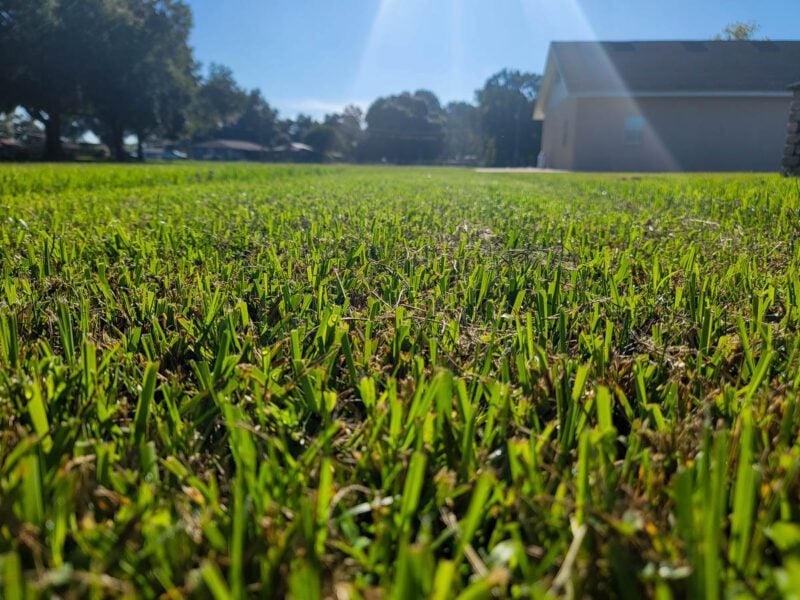
When they make the first cut, especially during peak growing season, it can look like a perfectly acceptable homeowner-level cut. But with the second cut, almost all the grass is very close to the target height, so the grass draws up more easily and the cut is more precise. Plus, it gives discharged clipping a second run through the deck, cutting them into smaller pieces that can settle deeper in the lawn.
If you want that ultra-precise Pro look, take the time to cut twice.
Tip #4: Cut More Frequently
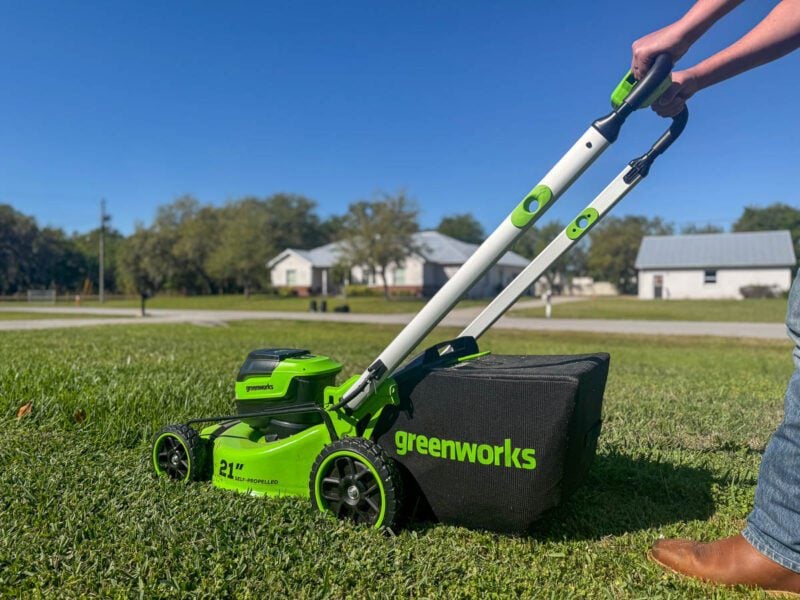
Most of us settle into a habit of mowing once a week during the growing season. That predictability tends to be easier on our schedules. If you have a fast-growing grass species, you may need to accelerate that.
For example, my central Florida lawn is St. Augustine. When it gets plenty of rain and sunshine, I have sections that can grow 4+ inches in a week.
The tried-and-true recommendation is to cut no more than 1/3 of the grass height to maintain a healthy lawn. I cut my lawn to 4 inches, so waiting a week is too long. To abide by the 1/3 rule, I need to mow when the grass reaches 6 inches, which is every three to four days.
Tip #5: Swap Blades
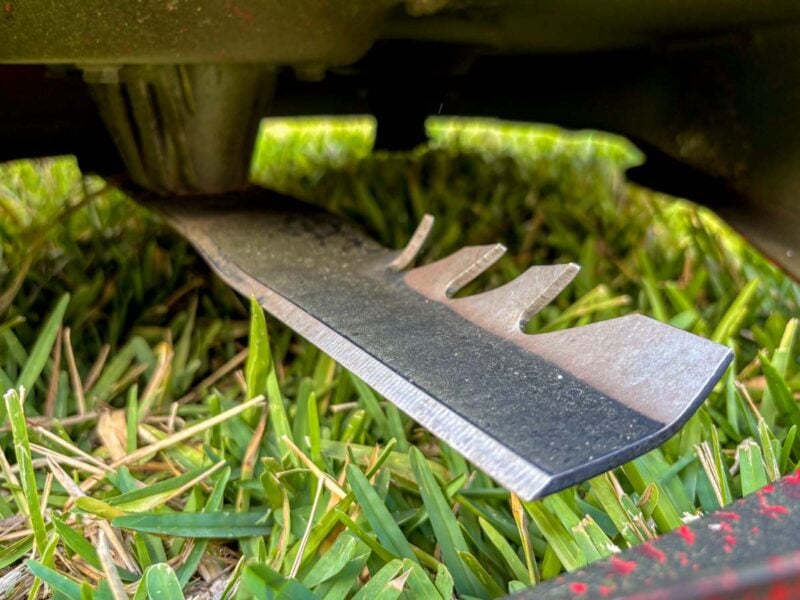
If cutting twice or more frequently is a hard pass for you, and sharpening your blade and slowing down didn’t work, it’s time to try a new blade.
My top recommendation is switching to a high-lift blade. These are specifically designed to increase the amount of airflow under the deck. The grass stands up straighter, and the clippings are discharged or bagged more forcefully.
If you’re a mulcher like I am, look for a mulching-specific blade. I’ve been using Snapper’s T42 lawn tractor for my lawn, and I’ve been very impressed with the cut quality its Oregon Gator blades have delivered.
If you use a battery-powered lawn mower, there are a couple of caveats. First, the brushless motor has been tuned to use a lower-mass blade than gas, and there are some subtle differences between brands. Look for the high-lift or mulching blade made by the same manufacturer for their battery mowers for the best results.
The second is that both high-lift and mulching blades will reduce your overall runtime. Most stock blades are designed to optimize runtime while offering an acceptable cut. The difference in aerodynamics and/or mass of the upgraded blades draws more energy to maintain high blade speed.
Tip #6: Feed Your Lawn
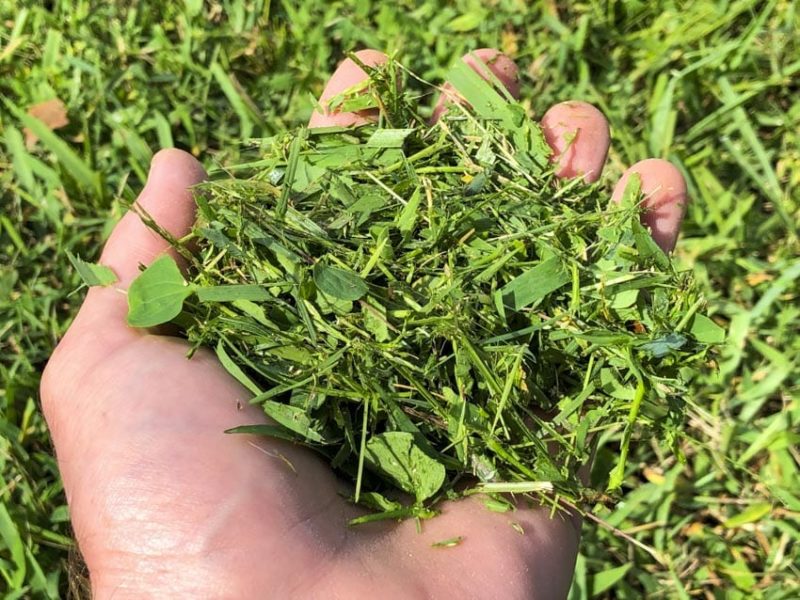
A patchy lawn is never going to look perfectly manicured, even when it receives a precise cut. Get into a fertilizer routine to help make it thicker and fill in better.
While each grass species and region has different requirements, fertilizing is almost never a one-a-year thing. For my St. Augustine lawn, I hit it with a weed-and-feed in the spring, a slow-release with iron in early and late summer, and then a final application to strengthen up the roots for the dry season around October.
Setting up your mower for mulching can also help by returning nutrients from your grass clippings to the soil.
While you’ll notice greener, thicker grass in the first year of fertilizing regularly, it can take a couple of years to fill in the patches well. Be patient, and stick to the plan.
If they don’t start filling in, you may have another problem. I start by filling in patches with quality topsoil. If the grass still doesn’t want to fill in, it’s more likely a pest issue than a nutrient one.