
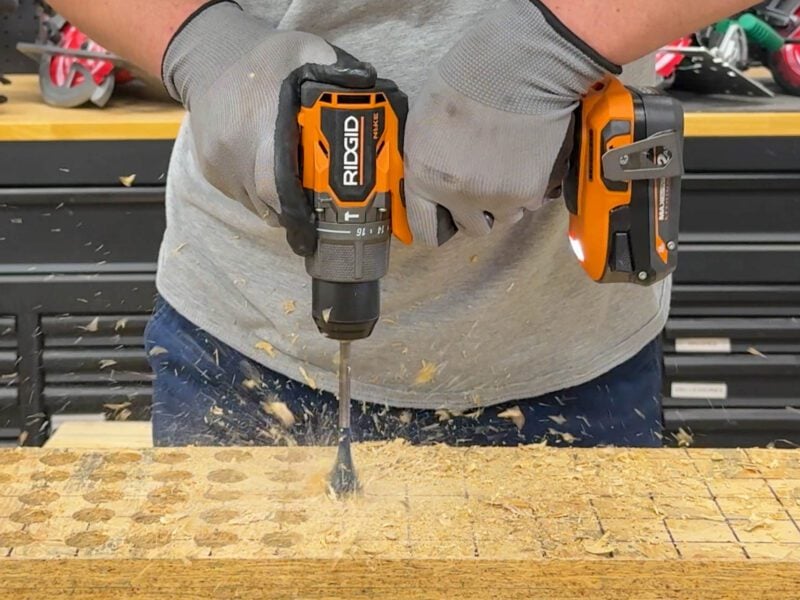
Ridgid has spent the last several years refining its 18V platform, but the new Nuke SubCompact series represents a more focused effort to balance performance with a lighter, more compact package. The Ridgid 18V Nuke SubCompact Hammer Drill (model RNKSHM01) is designed for Pros who need a tool that can squeeze into tight spaces without giving up the power required for demanding drilling and fastening applications.
On first inspection, the numbers are impressive. Ridgid claims more torque, more speed, and a design that’s ready to hit the ground running. That sounds like a winning formula, but specifications only tell part of the story. Let’s take a closer look at what this hammer drill brings to the table.
Pros
- Improved drilling and driving power
- Compact profile
- Ergonomic design
- Lightweight
Cons
- No significant drawbacks
READ
Best Cordless Drills Head-to-Head Review
Ridgid Nuke SubCompact Hammer Drill Performance
Speed and Power
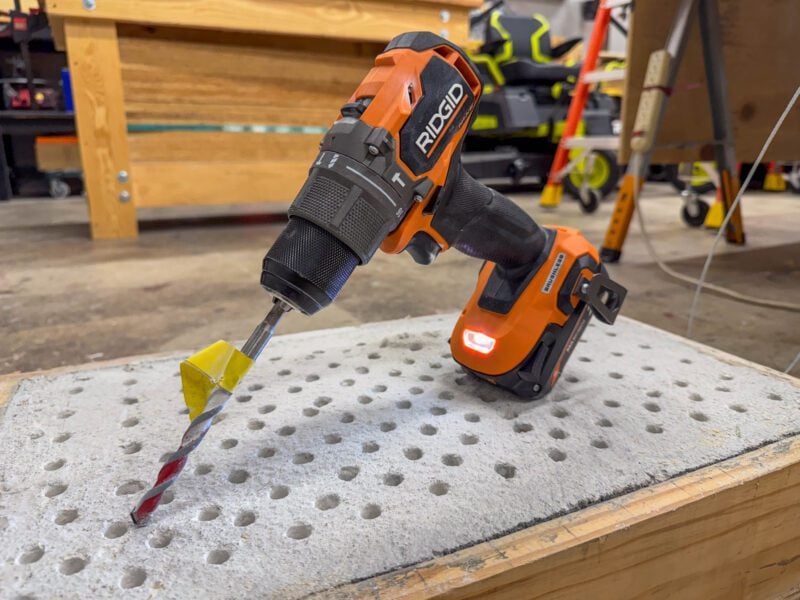
At its heart, the RNKSHM01 houses a brushless motor that delivers up to 750 in-lbs of torque and a top speed of 2,000 RPM through a two-speed gearbox. Those are impressive numbers for a compact drill, especially considering the lightweight design. This is also a notable improvement over the previous SubCompact model, but we’ll dive deeper into that later in our discussion.
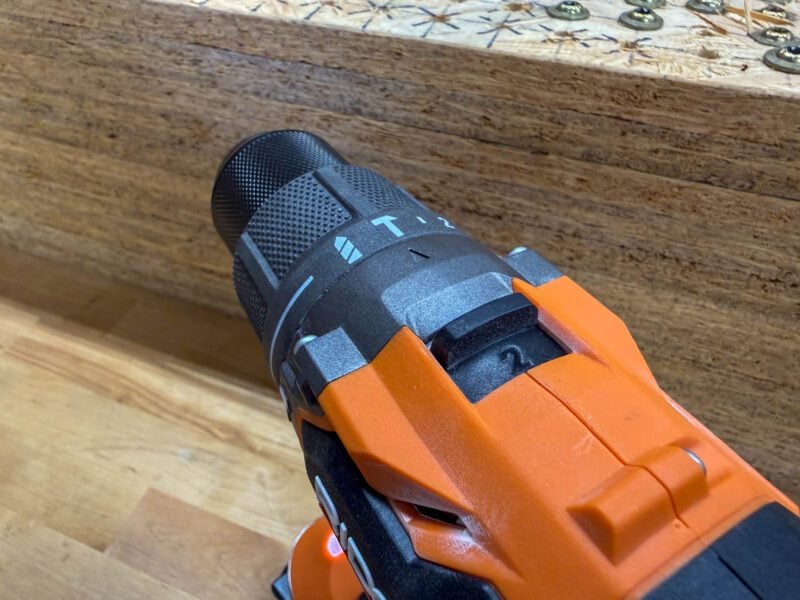
Additionally, the 16-position clutch gives you plenty of adjustment for fastening applications, allowing you to dial in the right amount of torque without constantly feathering the trigger to fix overdriven or underdriven fasteners.
In practical terms, this puts the Nuke in the upper tier of compact hammer drills. In fact, if we were having this same conversation 6 or 7 years ago, the RNKSHM01 would have hit the top of the leaderboard among its full-sized counterparts. It has enough muscle for most common construction and remodeling tasks, including spade bits, hole saws, structural fasteners, and masonry drilling when you engage hammer mode.
What stands out most is the balance between power and size. Rather than chasing flagship-level torque numbers, Ridgid appears to have focused on delivering enough performance for everyday work, even medium-duty Pro tasks. All this while maintaining the maneuverability that makes compact drills so appealing.
Hammer Drilling
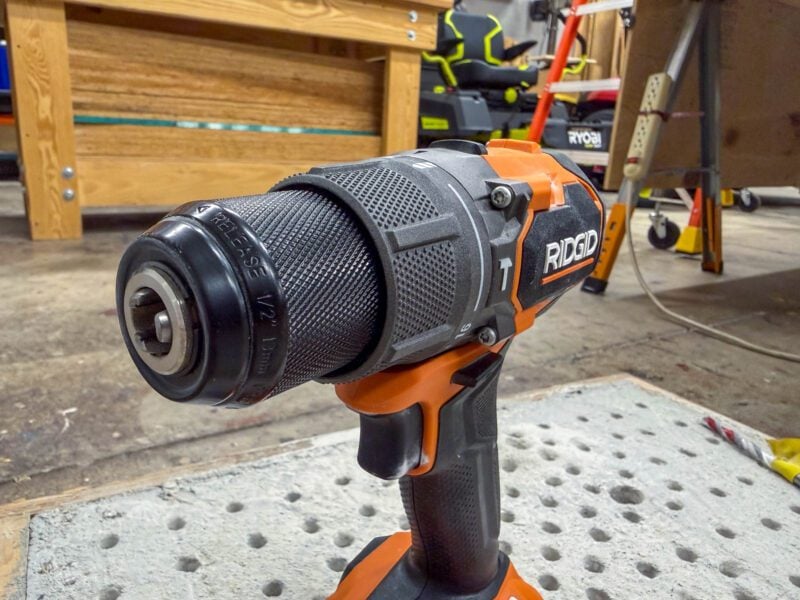
The RNKSHM01 has a max hammer rate of 32,000 BPM. Even though most people don’t use the hammer mode in low gear, it does drop to 9,600 BPM when you drop down.
Adding a hammer mode significantly expands this drill’s overall versatility. Whether you’re installing Tapcons, drilling into block walls, or handling occasional concrete anchors, the RNKSHM01 gives you the flexibility to tackle those applications without carrying a separate tool.
While it won’t replace a dedicated rotary hammer for heavy concrete work, it offers more than enough capability for the type of masonry drilling most tradespeople encounter throughout the day.
Hands-On Testing
To get a feel for this drill’s capabilities, I ran it through a few of our standard hammer drill tests to see how it measures up against the best of the best. For comparison, I’m also going to include testing data from Ridgid’s flagship hammer drill, the R861152. Once I finished testing, I averaged the tested times to get our final result.
Of course, we expect Ridgid’s flagship hammer drill to be the clear winner if you’re thinking about a straight-up head-to-head comparison. But the question I want an answer to is… how much performance are you giving up to use a drill that’s so much smaller and lighter?
I started my testing by driving three 8-inch GRK RSS screws into our stacked and glued OSB test block. This provides a solid demonstration of a drill’s soft torque endurance when driving larger fasteners.
Next, I chucked up a 1-inch spade bit and drilled a series of three holes in another one of our OSB test blocks at high speed. This block is about 4 inches thick, so it’s a good workout for a compact drill.
For my third test, I turned to our 4000 PSI concrete test block. I drilled three 3-inch holes with a 1/4-inch and a 3/8-inch masonry bit to gauge how well the Nuke could withstand the pressure.
Here’s a look at the results:
| 18V Nuke SubCompact RNKSHM01 | 18V Brushless R861152 | |
|---|---|---|
| RSS Screw | 6.34 sec. | 2.72 sec. |
| Spade Bit | 4.24 sec. | 3.08 sec. |
| Masonry Bit | 1/4-inch: 6.03 sec. 3/8-inch: 10.46 sec. | 1/4-inch: N/A 3/8-inch: 7.71 sec. |
Unsurprisingly, the flagship R861152 dominated in these tests—that’s exactly what we expected. Takeaway number one is that the Nuke SubCompact got through these tests without issue. So for that, we definitely have to give the product team some major kudos.
Looking more closely at the data, the difference in driving efficiency with the RSS screw is notable. I’d stick with Ridgid’s larger hammer drill for those.
However, it only lost a little over 1 second in the spade bit test. Considering that it’s a bit often used for rough-in, remodeling, and niche applications, I like having the smaller tool for easier access.
Concrete is a toss-up. The Nuke is close enough that tradesmen who tend to go for smaller drills, such as plumbers, electricians, and HVAC techs, will have an easier time making controlled, precise starts with the smaller drill. On the other hand, if concrete drilling is a more common task for you, the larger drill may be a better bet. At that point, though, it may actually be a rotary hammer with dedicated dust collection that you really need.
The unfortunate part of the story is that we no longer have the second-generation SubCompact hammer drill here at our shop to give you those direct comparisons. That said, just looking at the specs helps paint a pretty clear picture. Ridgid is clearly boosting performance gains with this new lineup. Yes, the Nuke is a little heavier and longer, but it boasts a clear advantage in terms of speed and power.
| 18V SubCompact R87112 | 18V Nuke SubCompact RNKSHM01 | |
|---|---|---|
| No-Load Speed | 0-450 / 1,750 RPM | 0-600 / 2,000 RPM |
| Max Hammer Rate | 26,000 BPM | 32,000 BPM |
| Max Torque | 500 in-lbs | 750 in-lbs |
| Head Length | 6.5 in. | 6.1 in. |
| Bare Weight | 2.2 lbs | 2.6 lbs |
| Working Weight | 3.1 lbs (with 2.0Ah battery) | 3.56 lbs (with 2.0Ah battery) |
Ridgid Nuke SubCompact Hammer Drill Design Notes
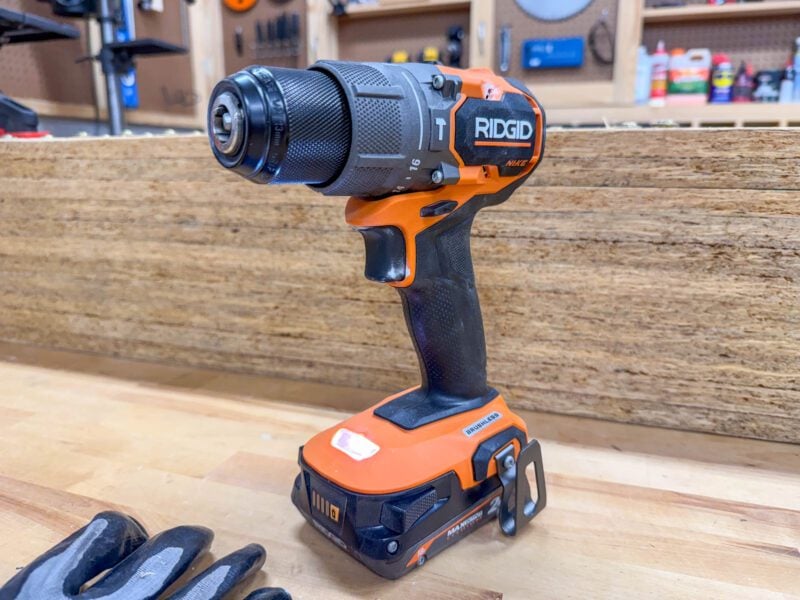
Size and Weight
Compact drills often require compromises somewhere, but at first glance, Ridgid has done a nice job balancing size, weight, and capability.
One of the biggest selling points of the Nuke lineup is its compact size, and the RNKSHM01 certainly delivers in this department. In fact, with a 6.1-inch head length, Ridgid tells us this drill is 30% more compact than previous designs and weighs just 2.6 pounds as a bare tool.
That lightweight design pays dividends when you’re working overhead, crawling through attics, or spending long days on the jobsite. Pair it with the included 2.0Ah battery, and you end up with a package that’s only 3.56 pounds, very easy to carry, and even easier to control.
Ergonomics
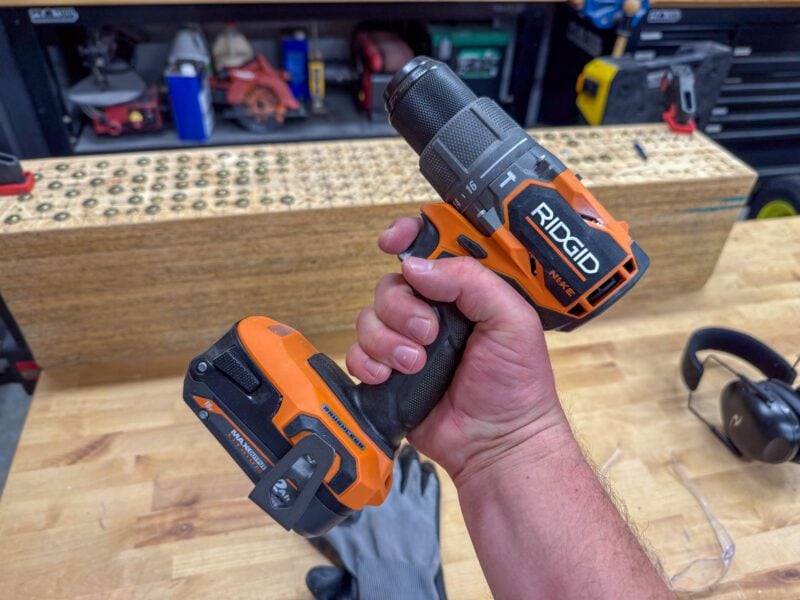
The grip design follows Ridgid’s familiar ergonomic theme, with generous rubber overmolding across the grip and tool body, and well-positioned controls. As I mentioned earlier, this drill is very well-balanced. The compact profile is easy to maneuver, and the lightweight design makes this drill an easy go-to option for those smaller jobs where a flagship tool is frankly overkill.
Should You Buy It?
The Ridgid RNKSHM01 succeeds because it understands its role. It isn’t trying to be the biggest, most powerful hammer drill on the market. Instead, it focuses on delivering the performance most folks actually need. It’s easier to carry, easier to maneuver in tight spaces, and more comfortable to use throughout the course of the day.
With that said, if you’re regularly drilling large holes through concrete or pushing massive hole saws through engineered lumber, you’ll still want a larger high-torque model on hand. However, for electricians, HVAC technicians, remodelers, and maintenance crews looking for an everyday drill that balances power, size, and comfort, the Nuke SubCompact Hammer Drill is a great fit.
Based on its performance and design, this looks like one of Ridgid’s most compelling compact drill offerings to date.
The 18V Nuke SubCompact line launches in July 2026, so keep your eyes open at Home Depot for the hammer drill and others. The drill driver version will be $139 as a kit with a 2.0Ah Max Output battery or $219 with the new Nuke SubCompact impact driver. We’re still waiting to hear about the hammer drill price, but you can get it paired with the new 4-mode Nuke SubCompact impact driver for $269.
Specs
- Model: Ridgid RNKSHM01
- Power Source: Ridgid 18V battery
- No-Load Speed: 0-600 / 2,000 RPM
- Max Torque: 750 in-lbs
- Hammer Rate: 9,600 / 32,000 BPM
- Clutch Settings: 16
- Chuck Size: 1/2 in.
- Head Length: 6.1 in.
- Bare Weight: 2.6 lbs
- Working Weight: 3.56 lbs (with 2.0Ah Max Output battery)