
There are a lot of types of home water filter systems. Each can be a simple and effective way to improve the quality of the water that your family uses. Let’s face it—some areas have really hard water. When the quality of water falls below the level you want, a whole-home water filtration system can save the day. We also find these filter systems much more cost-effective than purchasing bottled water for drinking.
Charcoal Water Filter System
There are a few major purification methods used with water filters or filtration systems. The first is point-of-use purification that involves passing water through a porous substance. Charcoal filters use this method. Charcoal filtering can remove unwanted taste and odors from drinking water as well as chlorine, fluorine, or even radon. That method also gets used, in part, by some water treatment plants.
Charcoal filters cost less than many other methods of filtering. They show up in water pitchers, coffee machine filters, and the filters you find in refrigerators.

Reverse Osmosis Water Filter
Another common type of home water filter system uses reverse osmosis. This involves reversing the natural flow of water through a membrane. Most reverse osmosis systems also utilize pre- and post-filters in addition to the membrane itself. We checked out the AO Smith reverse osmosis filter system and found it to provide a lot of value.
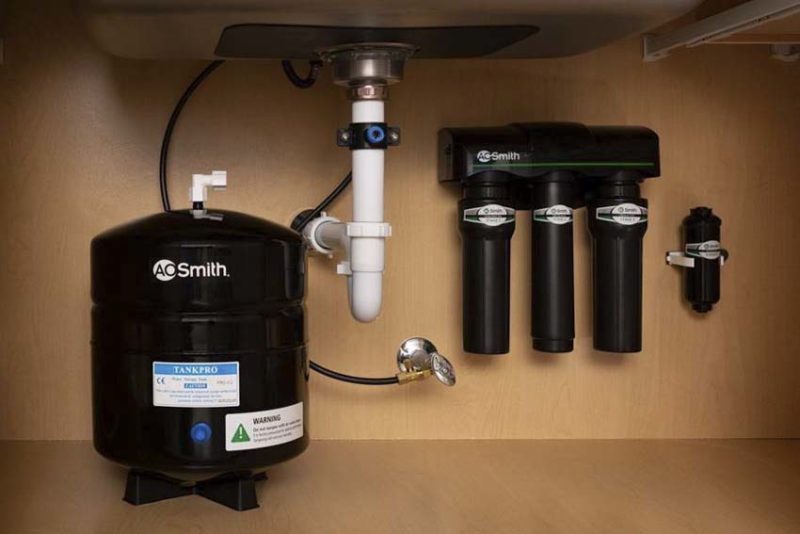
Reverse osmosis gets a lot of use in industrial water treatment plants to produce potable (drinkable) water. The chief reason has to do with its ability to remove many types of dissolved and suspended chemical species, as well as biological ones. That means it can get rid of harmful bacteria from the water supply.
Distillation
The last method we will look at is distillation. Distillation may be the oldest method of water purification. Distilling systems heat water until it boils and then collect the vapor as it condenses. This leaves many contaminants behind, particularly minerals and heavy metals such as iron. Some contaminants, however, convert into gases, and they may be carried over as vapor.
Of course, boiling water takes energy. That means the cost of operation for a home distillation unit generally exceeds carbon, R.O., or other types of home water filter systems. Additionally, the resulting heat from distillation may be an advantage in winter, but is less welcome in the summer months. For these reasons, distillation doesn’t make for a great home water filtration system. Too many great alternatives exist to choose from.
Choosing from the Many Types of Water Filtration Systems
Your choice among the types of home water filter systems available might begin with examining the contaminants in your water that you want to remove. Get a home water test kit—you can easily run your own test to see what’s in your water. Each type of home water filter system has certain advantages over what it removes. Some prioritize particulates and odor removal (charcoal). Others handle bacteria (RO systems). Of course, cost also plays a role.
Whole Home vs Point-of-Use
If you want to provide your entire home with filtered water, then chances are that you are interested in a point-of-entry system. This type of system provides your entire home with filtered water. It intercepts the water at the point it enters the home—typically near your water heater.

This type of home water filter also costs more for several reasons. First, it’s larger and normally requires more maintenance due to the quantity of water that it has to filter. Second, when you do replace the consumables, you have more to replace. The filters range in size but generally dwarf the smaller filters you see under sinks or in your refrigerator.
Most of us have used point-of-use systems. This is also the easiest type of system to add. These types of water filter systems include everything from filtered water pitchers and bottles to units that get plumbed in under the sink. These practical water filtration systems work well for most users since they filter the water that you either drink or cook with.
Even with these types of systems, you still need to pay for filter maintenance. That includes filter replacement, cleaning, etc. In some cases, you may even have to completely replace the point-of-use system when the filter becomes ineffective.
Wrapping It Up
At the end of the day, your budget and your scope of how much water you want to filter ultimately determine what you do. Hopefully, we helped you understand the choices and advantages of each type of home water filter system so you can make a choice that works for your needs. You can buy most of these water filtration systems at your local home improvement center or online. If you are not inclined to install one yourself, many companies specialize in water purification and can help you.