
Oscillating multi-tools have become one of the most versatile tools on the jobsite. Whether you’re making plunge cuts in drywall, trimming door jambs, removing grout, or sanding in tight spaces, they’re often the first tool you reach for when a traditional saw won’t fit. The Skil 20V brushless oscillating multi-tool targets DIYers and value-conscious buyers who want brushless performance without paying premium-tool prices…but did they strike a successful balance?
On paper, the specs look promising, but the real question is whether the OS5920B delivers the performance needed to stand out in a crowded field. I spent some time using it to see how well it performs in some of our standard tests, so you can decide if it’s the right tool for you.
Pros
- Lightweight design
- Confident cutting power
- Ergonomic profile
- Slide-switch activation
- Tool-free accessory changes
- Excellent value
Cons
- Higher vibration level
- Accessory changes are a little clunky
READ
Best Oscillating Multi-Tool Reviews 2026
Skil 20V Oscillating Multi-Tool Performance
Speed and Cutting Power
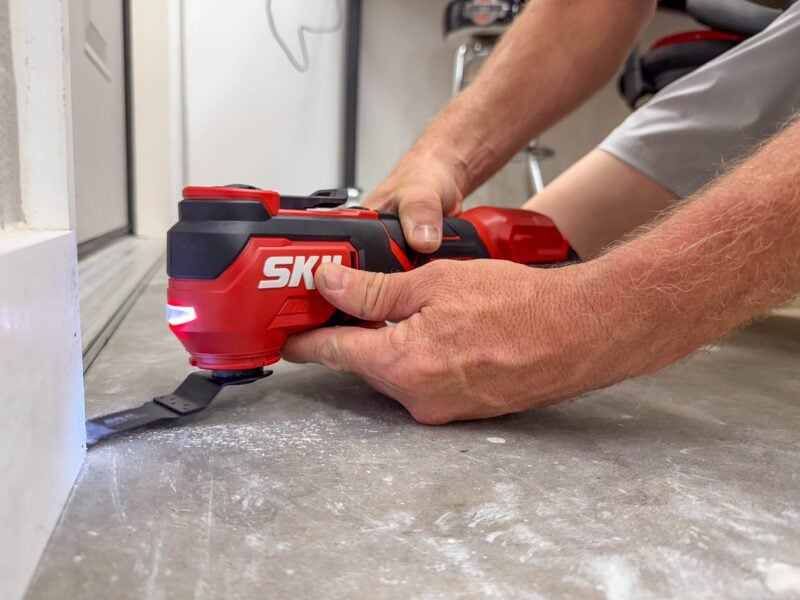
At its heart, the Skil OS5920B houses a brushless motor that produces up to 17,000 OPM. That’s a little lower than some of the other models I’ve tested, which usually top out around 20,000 OPM. However, it’s a relevant performance level for cordless oscillating multi-tool and still provides plenty of speed for cutting, sanding, scraping, and grout removal. As long as the motor has the muscle to keep those OPM rates high, it should do just fine.
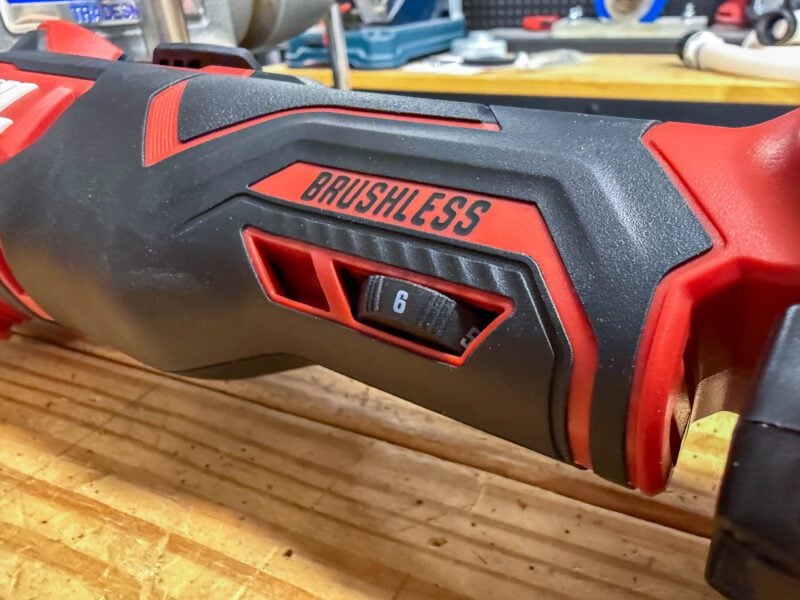
The variable-speed dial lets you tailor performance to the material you’re working with. Higher speeds are ideal for aggressive cutting and sanding tasks, while lower settings offer better control when working with delicate materials or making precision cuts. In this case, you have six speeds to choose from.
During our hands-on testing, the OS5920 felt confident and responsive, albeit it doesn’t have the brute-force feel of some premium Pro-level models. With that said, it never felt underpowered during common remodeling and repair tasks, such as cutting trim, PVC, and even EMT. Even while making plunge cuts in drywall or cleaning up rough edges with the included sanding pad, it’s clear that the OS5920 has enough muscle to get the job done efficiently.
Vibration Level
Vibration control is often one of the biggest differentiators between oscillating multi-tools we prefer to use and those we leave collecting dust.
Skil does a respectable job here. You can certainly feel the tool working, especially during aggressive cutting applications, but the vibration level never becomes uncomfortable. It’s not quite as refined as some of the top-tier Pro models from Milwaukee, Bosch, or Fein, but it’s noticeably better than many budget-focused competitors.
For occasional DIY projects and weekend renovation work, most people will find the vibration levels perfectly acceptable.
Skil 20V Oscillating Multi-Tool Design Notes
Size and Weight
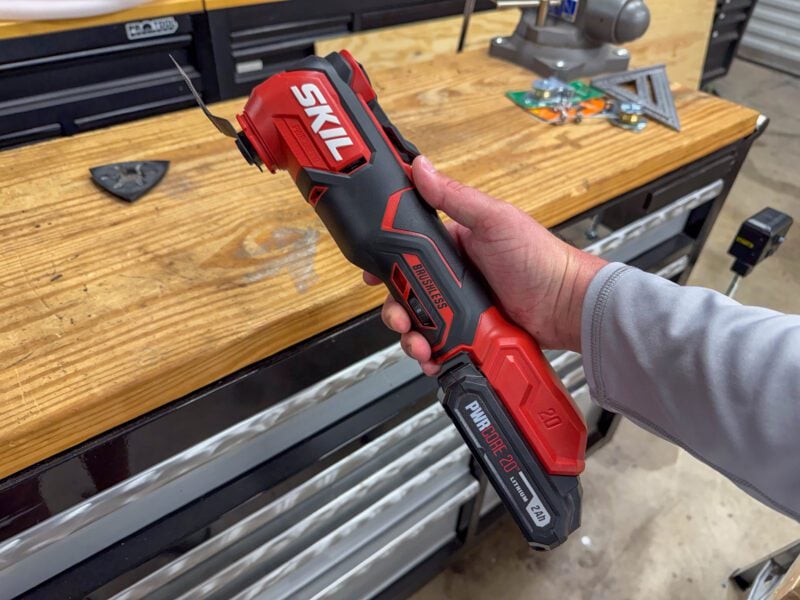
The Skil OS5920 weighs 1.75 pounds as a bare tool, 2.56 lbs with the kitted 2.0Ah battery, and measures 12.5 inches from tip to tail. The length is pretty standard for this type of tool, but what really stood out to us is the weight…or lack thereof!
This is, by far, the lightest OMT I’ve ever tested. For comparison, the Ridgid R86242 weighs 3.1 pounds, and the Ryobi PBLMT51 weighs 2.9 pounds—both with 2.0Ah batteries. This lightweight design is especially helpful during longer projects, and the length makes it easy to maneuver in tight spaces.
Ergonomics
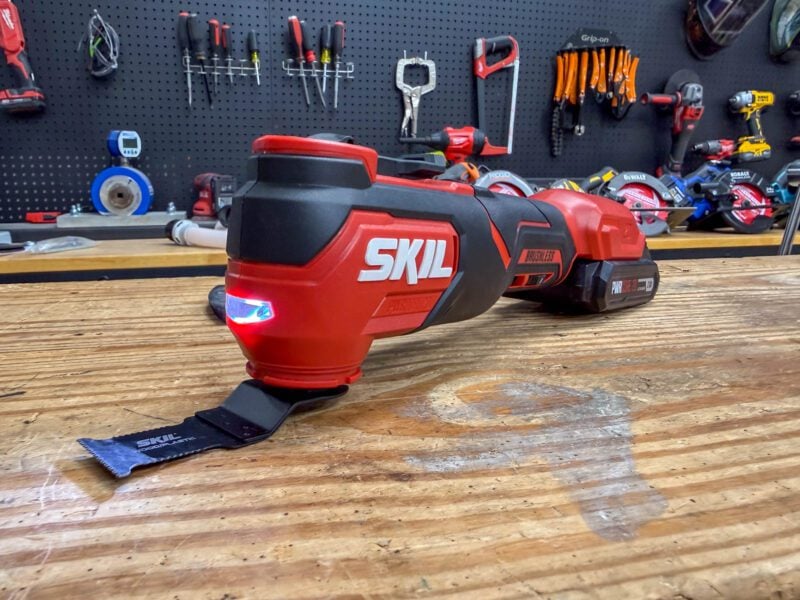
Skil kept the control layout straightforward.
The variable-speed dial is easy to access, and the slide-switch power button is positioned so you can operate it without changing your grip. That might seem like a small detail, but it’s something you’ll appreciate when frequently transitioning between cuts.
Overall, the ergonomics are very good, particularly for a tool in this price category.
Accessory Changes
Skil utilizes a 12-pin OIS interface, which is pretty common across the industry. However, they changed up the design from the last model; the basic mechanics are similar, but the process is a little more complicated.
Start by lifting the black plastic release lever up 90 degrees, rotating it slightly to the left, and then pushing it forward until it’s lying flat. Next, rotate the lever counterclockwise. The threaded pin will begin to advance outward until you can eventually remove it entirely.
All you need to do now is align your accessory on the 12-pin interface, replace the pin, and reverse the process. While OIS is a time-tested design, it’s definitely a bit slower and less convenient than something like Starlock. However, given that this is designed to hit a lower price point, it’s a trade-off worth making.
Quick Model Comparison
What’s interesting about this new model is that, on paper, it’s nearly identical to the previous one (OS5937). Here’s a quick side-by-side comparison:
| OS5920 (new) | OS5937 (old) | |
|---|---|---|
| No-Load Speed | 11,000 – 17,000 OPM | 11,000 – 17,000 OPM |
| Oscillating Arc | 3.6° | 3.6° |
| Motor Type | Brushless | Brushless |
| LED Lights | 1 | 2 |
| Speed Settings | 6 | 6 |
| Blade Interface | 12-pin OIS | 12-pin OIS |
| Working Weight | 2.6 lbs (with 2.0Ah battery) | 3.4 pounds (with 2.0Ah battery) |
| Kit Price | $109 | $149 |
As you can see, these tools are pretty evenly matched on performance, but the clear differences are weight and price. So why spend more money if you get the same performance?
For me, this comes down to vibration level. The older OS5937 featured a much more refined vibration-control system thanks to its floating-head design. This setup helps to isolate your hands from any felt vibration, and while it’s similar to the OS5920, those few extra dollars make a difference in the end.
Additional Features
- LED Worklight: Easily illuminate dark workspaces
- Battery Compatibility: Compatible with all Skil 20V batteries
Skil 20V Oscillating Multi-Tool Price
The Skil OS5920 retails for $109 as a kit and includes a 2.0Ah battery, and Skil backs it with a 5-year limited warranty. This is a very reasonable kit price, especially for the DIY market.
The Bottom Line
If you’re looking for a brushless oscillating multi-tool that delivers solid performance without stretching your budget, the Skil OS5920B deserves a serious look.
It offers the features most folks actually care about, and the actual cutting performance was spot-on for what we expect in the brushless DIY class. While it doesn’t reach into the Pro sector’s top performance and refinement, it doesn’t need to.
The price tag is very attractive, but Pros who spend all day with an oscillating tool in hand will still prefer the refinement and vibration control offered by premium models. However, for homeowners, the OS5920B strikes an excellent balance between performance, convenience, and value.
At the end of the day, Skil didn’t try to reinvent the oscillating multi-tool. Instead, they focused on delivering the features that matter most in a lightweight, affordable package. That’s exactly what makes this tool such an appealing option.
Specs
- Model: Skil OS5920
- Power Source: Skil 20V battery
- No-Load Speed: 11,000 – 17,000 OPM
- Oscillating Arc: 3.6°
- Speed Settings: 6
- Connection Type: 12-pin OIS
- Weight: 1.75 in. (bare tool), 2.56 lbs (with 2.0Ah battery)
- Tool Length: 12.5 in.