
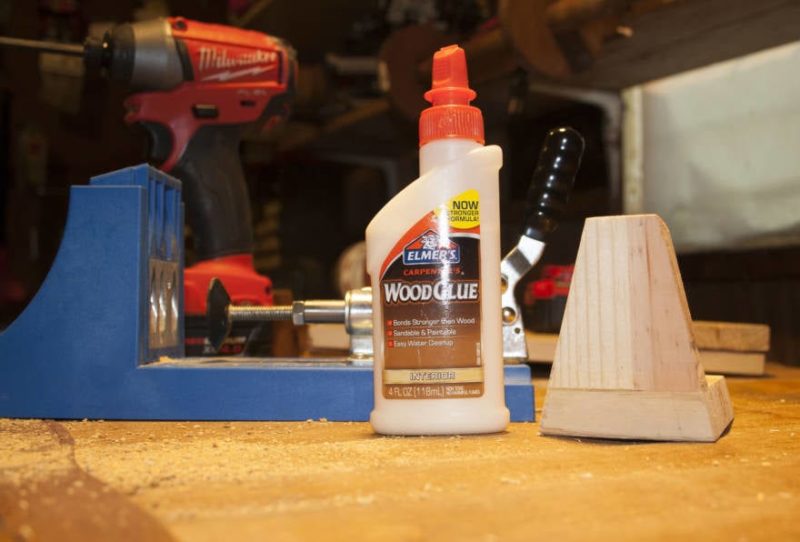
When determining the right types of adhesives for a project or repair you need to understand how each reacts with various materials. Manufacturers design adhesives for nearly every kind of application. We will cover some general classifications of adhesives as well as specific recommendations for each. Hopefully, this gives you an idea of where to begin.
Chances are, you have already used some of these types of adhesives. You can find most of them at your favorite home improvement store. If you really get stuck (get it!) on what glue to use, all you have to do is read the packaging of the adhesives to find the one that lists what you are trying to do.
Table of Contents
White Glue
Think “Elmer’s Glue”. This non-waterproof adhesive doesn’t have much holding strength. You might use it on indoor carpentry jobs to hold something in place temporally that you will then permanently fasten together later. My kids and wife use this type of glue for crafts and school projects all the time. It’s great because it only needs water to clean up.
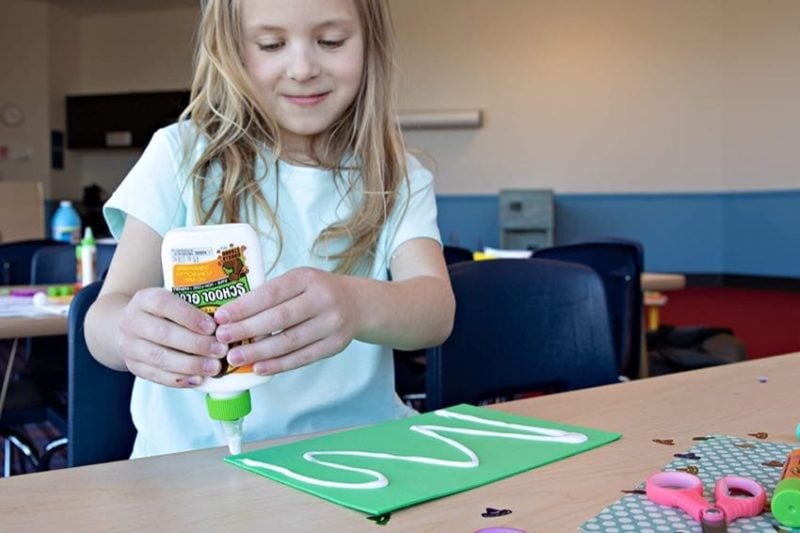
While white glue technically does a decent job holding wood together, it lacks the structural integrity of an actual woodworker’s glue. That appears next on our list.
- Set time: 30-60 minutes
- Cure time: 24 hours
Shop White glue at Amazon.
Woodworkers’ Glue – Our Favorite Type of Adhesive
As the name implies, this glue works really well when bonding wood. Carpenter’s glue comes in both waterproof and regular formulas. It can also be sanded, stained, and painted in much the same way as wood. Manufacturers produce these types of adhesive glues in a variety of levels of holding power. Make sure you check the bottle to find out if you’ll need additional fastening for your particular project.
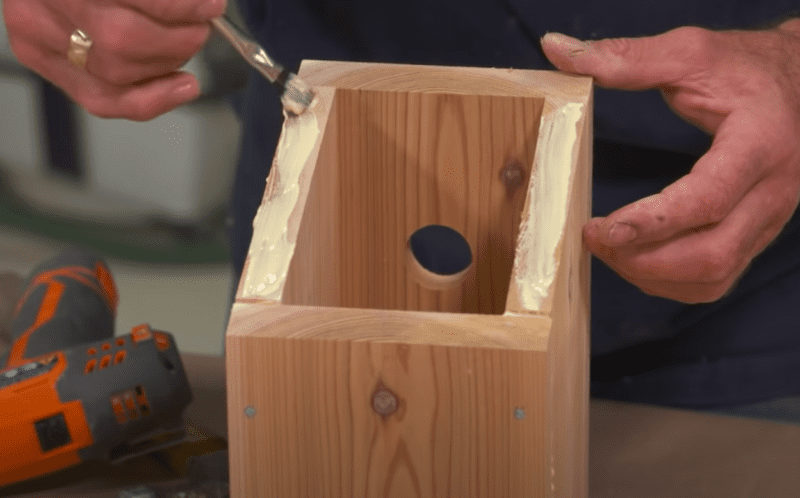
Our favorite? Tightbond 2 wood glue. We used that to bond together ash for the two-piece round table we use in our office and shop.
- Set time: 30-60 minutes
- Cure time: 24 hours
Shop Tightbond 2 wood glue at Amazon.
Super-Glue
Super Glue works as an instant setting adhesive. It has the strength to withstand most shock and strain, but it gets brittle over time. It comes in a liquid and gel form and is suitable for a wide variety of jobs.
Use Super Glue with caution and follow the directions. Another thing we observe is that you have only a few days to use Super Glue once you open the bottle. Some containers may give you up to a few weeks. Typically, we just recommend you buy as much as you need for the project.
Superglue also serves as a good example of “less is more”. In most cases, you only need a small amount to provide incredible holding power. One advanced use of superglue involves using its quick-adhesive properties to serve as a “clamp between two pieces of wood that you bond using Tightbond 2 or similar wood glue.
- Set time: 5-60 seconds
- Cure time: 24 hours
Shop Super Glue at Amazon.
Epoxy
I love epoxy. It may be my favorite type of adhesive simply because it produces the strongest bond that we have. Epoxy works like an industrial-strength adhesive. It comes in two parts that you mix together before applying it to both sides of the workpiece. Epoxy can withstand shock, chemicals, and you can even use it underwater.
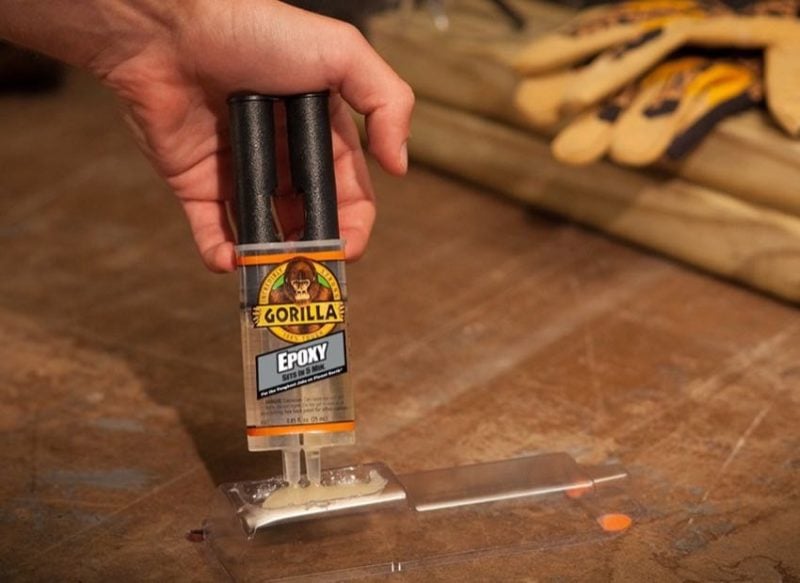
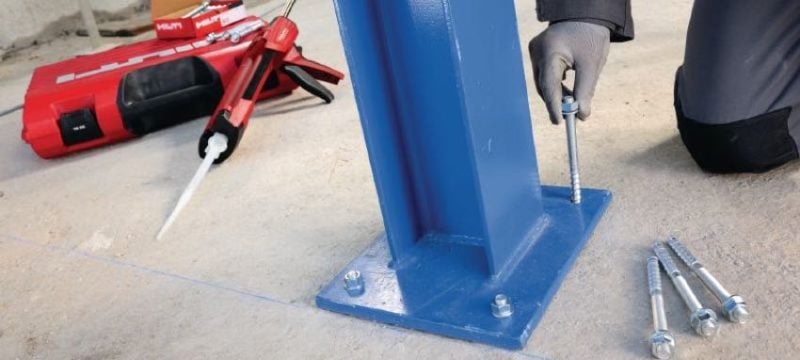
Epoxy also works to hold anchors in concrete when drilling and inserting threaded bolts for industrial and commercial building applications. For these applications, just be sure to use something like a hollow drill bit or vacuum out the hole before inserting the epoxy adhesive.
- Set time: 12 hours
- Cure time: 3–5 days
Shop Epoxy adhesives at Amazon.
Polyurethane Glue
Polyurethane glue comes in one part, so you don’t have to worry about mixing it. It offers a comparable strength to epoxy. Gorilla Glue makes a good polyurethane glue adhesive. It works really well as an all-around catch-all adhesive glue.
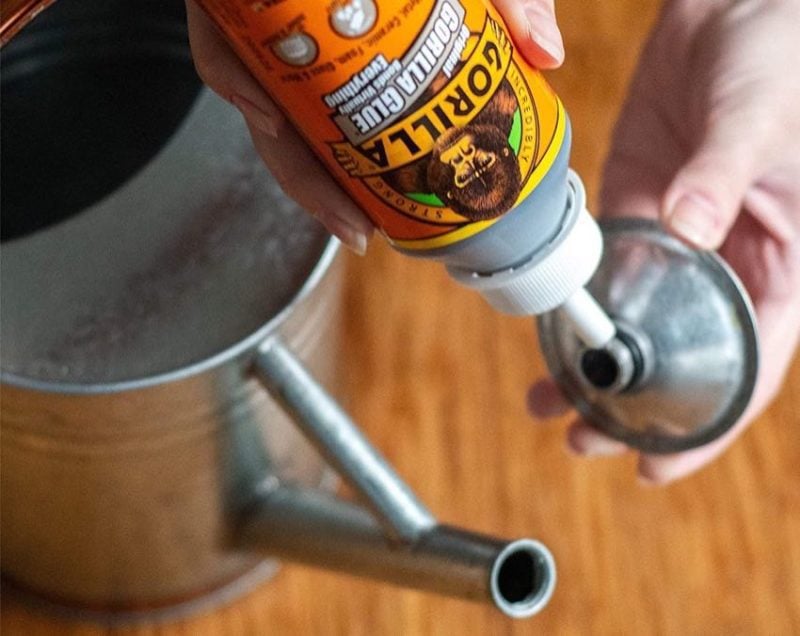
Whether you plan to repair broken furniture, ceramics, metal, or plastic, poly glue might just do the trick. We’ve even seen people use it on stone and masonry!
- Set time: 1-2 hours
- Cure time: 24 hours
Shop polyurethane glue at Amazon.
Contact Cement
The instant adhesion on contact offered by this adhesive is both a benefit and a drawback. This type of adhesive is often used for applying laminate countertop material to the base wood. What makes this type of adhesive difficult is that if you are not used to working with it, it can be tricky to get your workpieces to line up correctly. You really only have one shot at it before it all sticks together!
You also want to coat both sides of the materials to be cemented together. Then—and this is unintuitive—wait. That’s right—giving both sides around 5–15 minutes to get “tacky” actually helps them bond together more securely.
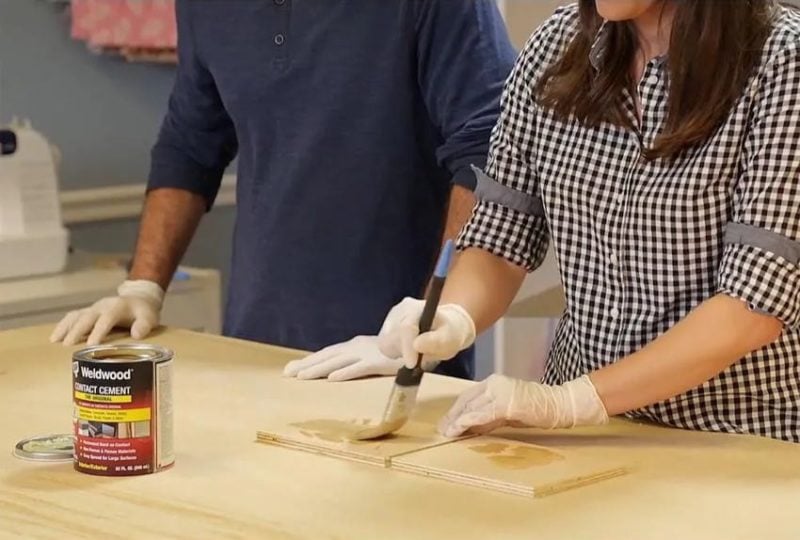
Contact cement works really well on things like small wood trim pieces or securing two large flat surfaces together. We’ve seen people use it for fixing rubber outer soles on work boots and sneakers. The innate flexibility of contact cement helps it absorb shocks, so it retains a bit of its flexibility over time.
Silicon doesn’t shrink or crack, so it works really well for many household applications and automotive uses. We also see it used to fix aquariums (glass) as well as providing temporary repairs on windows, doorframes—even camera lens housings.
- Set time: 30 minutes
- Cures time: 3-7 days
Shop contact cement at Home Depot.
Silicone Rubber Adhesives
Silicone rubber adhesive is an excellent adhesive for awkward joints. It offers a number of characteristics that simply aren’t matched by most other adhesives. It is waterproof, sticks to most surfaces, is chemical resistant, and remains flexible over time.
- Set time: 60 minutes
- Cure time: 24 hours
Shop silicone rubber adhesive at Amazon.
Plastic Resin Glue
Carpenters and remodelers often use plastic resin glues for putting down laminate and raw veneers. You can use it for edge work as well. DAP has a type called Weldwood that’s water-activated and features a nice long working time. A thin coat lets you secure thin materials like veneers to an underlayment.
Plastic resin glue provides a waterproof and heat-resistant adhesion for any number of construction adhesives. If there’s any downside, it’s that it requires a long set time and cure period.
- Set time: 3-6 hours
- Cure time: 24 hours
Shop plastic resin glue at Amazon.
Construction Adhesives
This type of adhesive is used in construction as the name implies. It can effectively reduce the number of screws required for some materials. It also helps prevent squeaks in sub-flooring. This type of adhesive is usually polyurethane-based but other types exist for use with foams and plastics.
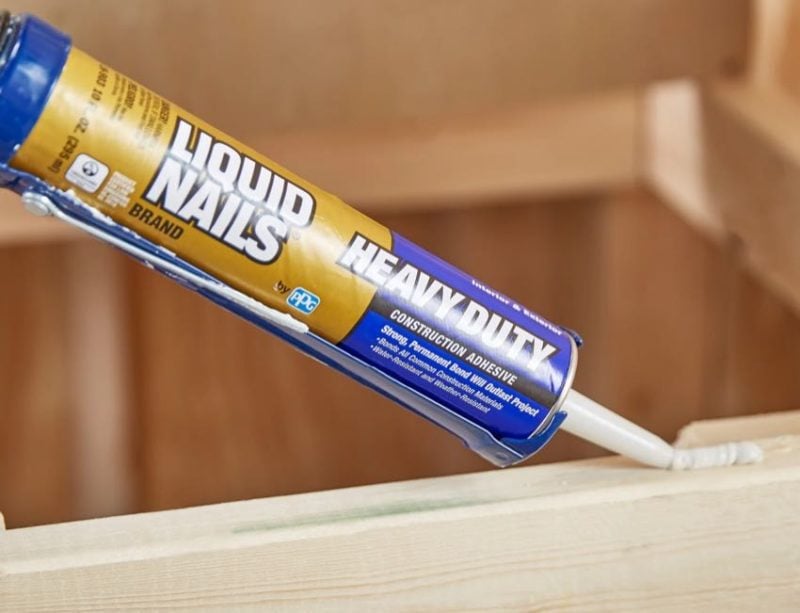
Construction adhesives have become rather sophisticated over the past decade or so. You can now find products geared specifically for bathroom (wet) applications, marble, sub-floors, drywall, and paneling. Some companies provide advanced grip and heavy-duty types of construction adhesives that deliver even stronger bonds when fully cured.
- Set time: 30 minutes
- Cure time: 7 days
Shop liquid nails at Home Depot.
Final Thoughts on Types of Adhesives
Keep in mind that the most important aspects of how to choose the right type of adhesive are where they are intended to be used and the intended use. Some of the characteristics advisable to keep an eye out for are the toxicity of the product, especially if you are repairing or improving anything that is involved in food prep or consumption. You also want to know whether the adhesive can handle exposure to water. Lastly, some adhesives are flammable or the vapors are flammable so try to keep that in mind as well.
If you have any additions or recommendations for this article, please leave them in the comments below.