
Streamlining electrical installation is critical on today’s jobsite where there’s more work than workers. By making your crews more productive, your business is more profitable. As an added bonus, using today’s more efficient tools makes the job easier on your individual electricians and that can help you attract more quality electricians as your business grows.
We teamed up with Milwaukee Tool to take a look at some of the common problems electricians note during the electrical installation phase. Their extensive field research drives their tool designs to address pain points like these.
Table of contents
Electrical Installation Tools – Knockouts
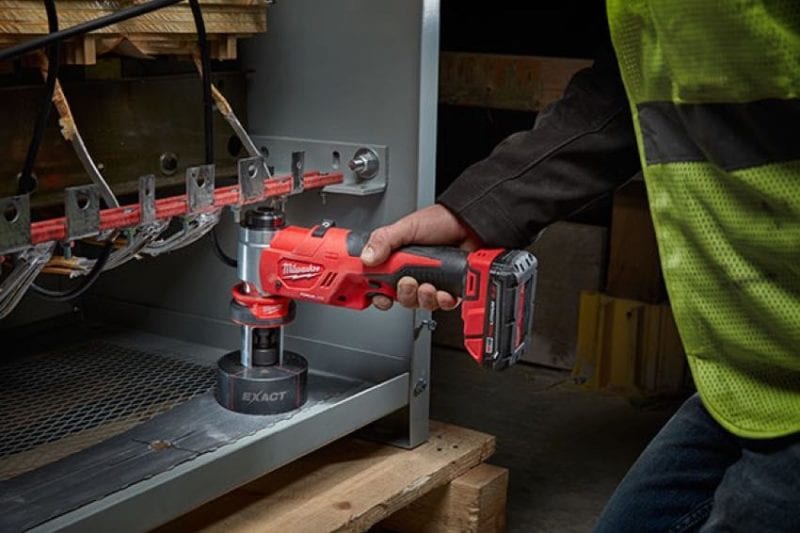
There are 3 main areas that electricians commonly cite as areas for improvement with knockouts. One, the knockout tools are bulky and difficult to use, so it slows them down. Two, the dies are challenging to line up, again, costing time to get it right. Three, the entire setup process is made worse because you have to bear the weight of the tool during the process.
Here are a few ways you can use new technology to make it easier:
- Check out the Milwaukee cordless knockout tool that offers simple, one-handed operation with a smaller footprint and lower weight.
- Milwaukee punches and dies on the market include markings that give you a visual guide to speed up setup.
- There are knockout systems available that give you the ability to set up your punch and die without having to connect it to the tool first.
Electrical Wire Pulling Tools
Ask for wire pulling volunteers on your next electrical installation and you might find the room quickly clears. Feeding wire is a slow, manual process that takes a lot of time. Traditionally, you have to use a steel tape or fiberglass if you’re in a non-conductive application.
But fiberglass is prone to cracking and doesn’t have the high tensile strength that steel tapes do. Every time you have to stop for a cracked or broken tape, or you have to really work the tape through the last couple of bends, it slows you down.
It’s also a 2-man job and those two electricians aren’t always as conscientious as you’d like them to be. It’s not unusual to find a pile of fish tape waiting to be reeled back in instead of as they pulled, leaving the tape at risk of someone stepping on it and kinking, breaking, or worse, tripping over it.
Make your life easier with a couple of new ideas:
- There are alternative designs, like the Milwaukee polyester fish tape, that give you low friction and the flexibility of fiberglass without the kinking. They’re faster and easier to use than others.
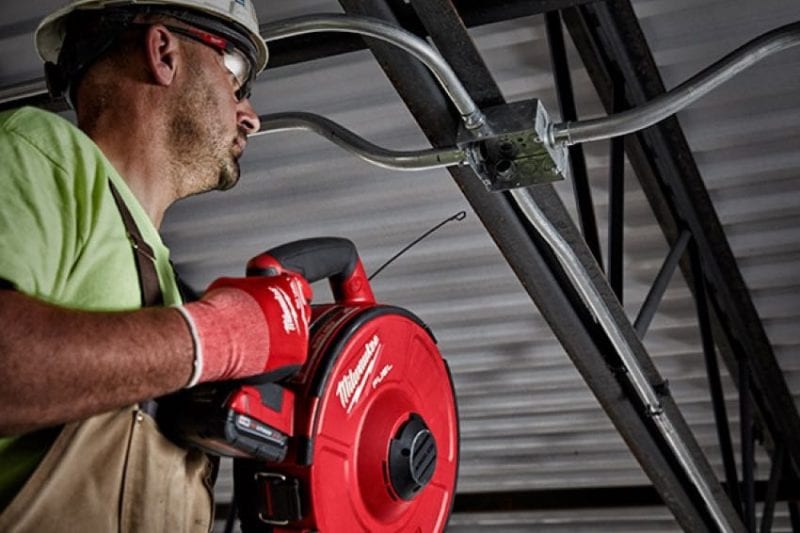
- There’s now a battery-powered fish tape puller available that power-feeds and retracts for runs up to 240′ and 360º of bends. It has the potential to make that 2-man job a 1-man job and a lot easier for the electrician tasked with it.
Cable Cutting Electrical Tools
Cutting cable is all about speed and cut quality. Cordless cable cutters are more widespread today than ever, but there are still plenty of manual and hydraulic cutters still running around.
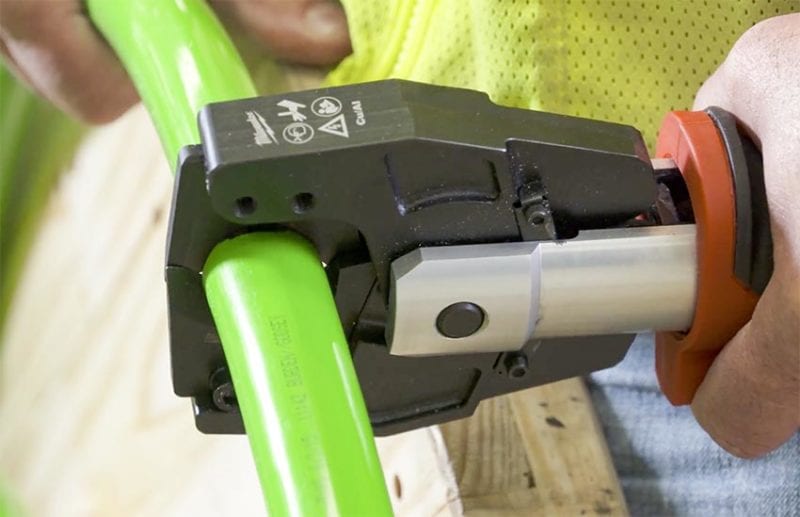
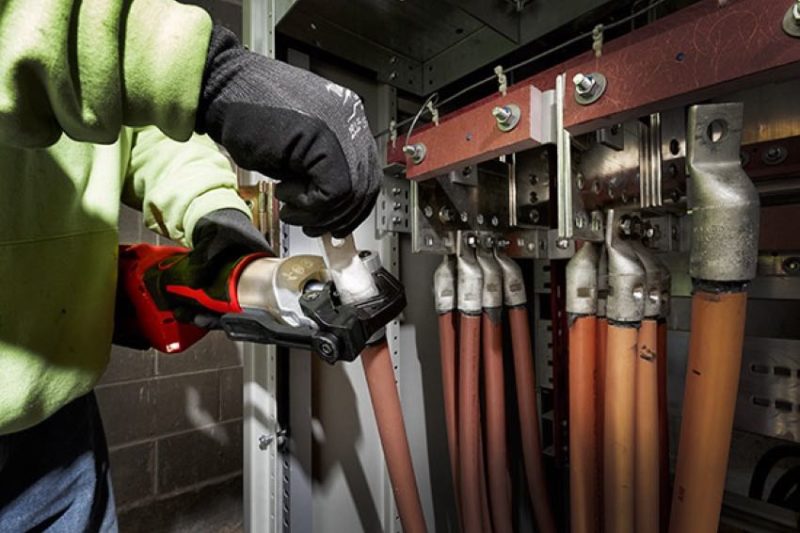
A newer concept is a Milwaukee cordless cutter that’s capable of doing the hard work of crimping and cutting with just a change of jaws. Since you’re going to have to crimp that connection anyway, swapping out jaws beats going back and forth to the truck or buying two dedicated tools for each crew.
Tools for Cable Stripping
A knife is still one of the most popular ways to strip cable. It’s a process that has some inherent risk thanks to an exposed blade—some 50% of all jobsite injuries involve a knife. It’s also a task that takes longer than it should, especially when you have multiple cables to strip.
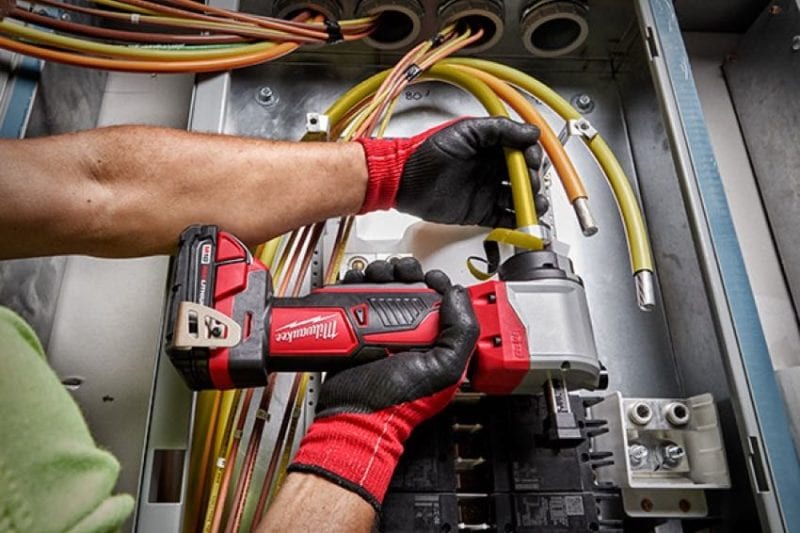
Cordless cable strippers reduce a lot of the risk and make the process much faster. While the original cordless strippers are great to have, newer models are less cumbersome to use and get you into tighter access areas with more consistent results.
Electrical Cable Crimping Tools
Manual hydraulics or hydraulic heads are so last decade. But hey, they still get the job done. Manual crimpers don’t work well with heavier gauge cable and hydraulic models are often heavy and make it challenging to reach inside tight panels. Plus there’s all that pumping and the crimps can come out with a significant lack of uniformity, especially when you’re working with a range as wide as #6–750 MCM.
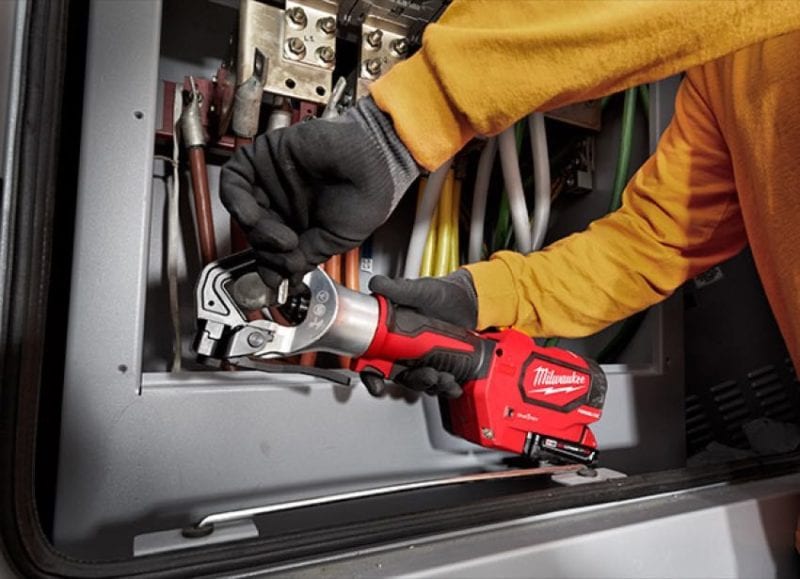
Cordless crimpers are definitely the way to go and now there are dieless cable crimpers available that make life even easier for electrical installation. You get all the benefits of a cordless crimper and don’t need to swap out dies along the way.
Dealing with Torque-Sensitive Lugs
Depending on your personal philosophy to torquing lugs, there are a couple of common methods to get the job done. One way is with a torque wrench—just keep ratcheting until you hit your target torque. We’ll wait until you get there…
Seriously, though, it’s a controlled way to get the right torque the first time, but it’s a slow process.
The second method involved using two tools. You start by running the bolt down with a power tool, then switch over to a manual torque wrench. It’s definitely faster but runs the risk of over-torquing the bolt and forces you to carry an extra tool.
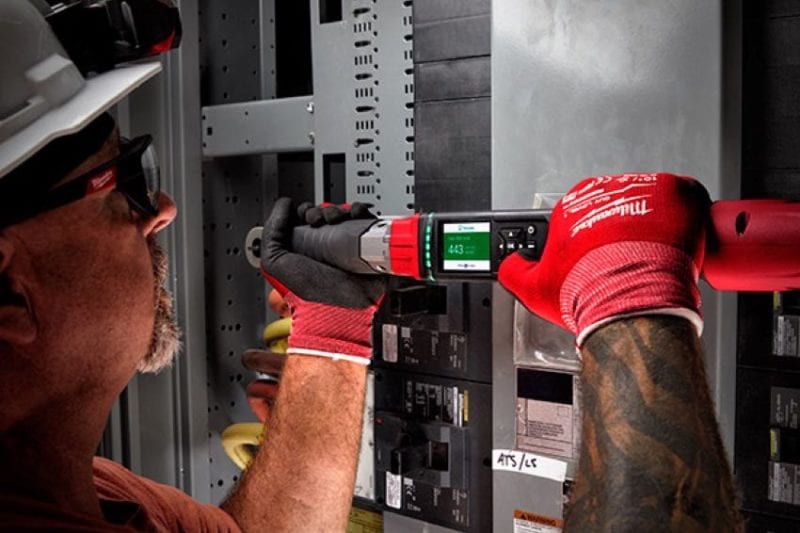
One of the newest ways we’ve seen is using a battery-powered ratcheting digital torque wrench. It uses its motor to fasten the bolt short of the target torque, letting you finish with controlled turning and without the need for a second tool. We’ve had a little trigger time with that tool and it impressed us.
Investing in Cordless Solutions
We’ve been talking a lot about how cordless tools help for electrical installation and there’s no doubt it’s an investment. Cost is (or should be) a consideration anytime you look at making sweeping changes to the way you get the job done.
As you’re considering tools to cover these areas and others, ask yourself a few questions:
- Does the tool genuinely make you and your crew more productive?
- Are you going to use the tool day in and day out or just once in a while?
- Does the cordless platform you’re considering cover all the tools you need?
Final Thoughts
These are a handful of tools that can make your next electrical installation more productive and with more efficient use of the human resources, you have available. We’d love to hear what tools, tips, or tricks you’re using to maximize your working hours—feel free to comment below!
Many thanks to Milwaukee Tool for giving us access to their knowledge base and field research to write this article. If you want more information about any of the products we talked about, click on the links in each section, head over to Milwaukee’s website, or to Acme Tools if you’d like to shop.