
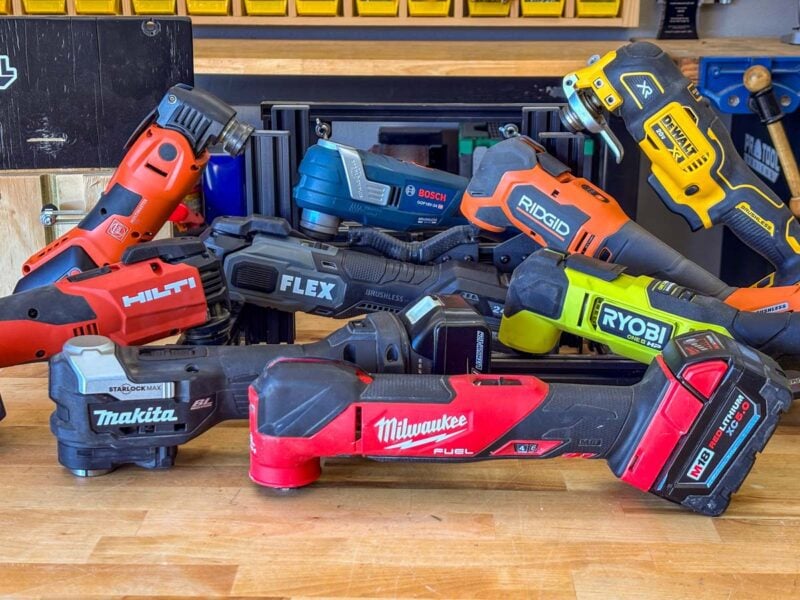
We used to be able to narrow down the best oscillating multi-tool to just a couple of brands. Not anymore. Advancements in battery, motor, and vibration control technologies offer more legitimately excellent options than ever. The oscillating multi-tools we use today feature advanced vibration control and accessory interfaces, plus they benefit from carbide tooth blades and innovative problem-solving accessories.
A quick note: our crew is unanimously in favor of cordless OMTs. Corded models are still relevant, though. They’re less expensive, and there are some outstanding options available. However, battery power is far more convenient, and the best ones have all the features and performance of their corded counterparts.
Scoring
Note that the scoring is different from our normal rating system. The scores are based on how each oscillating multi-tool performed and compared in this specific group and this set of tests only. Our typical rating system offers a comparison of the tool to the entire range of what is available. Here’s how to interpret the scores from this test:
- 90 – 100: Outstanding. You’ll love using this multi-tool.
- 80 – 89: Excellent. There may be minor tradeoffs.
- 70 – 79: Very good, but there are more significant tradeoffs.
- 60 – 69: Good. Notable tradeoffs, but still earns our recommendation.
- < 60: Not recommended for Professional use, but good for DIYers.
Top Scoring Oscillating Multi-Tools
Best Oscillating Multi-Tool Overall
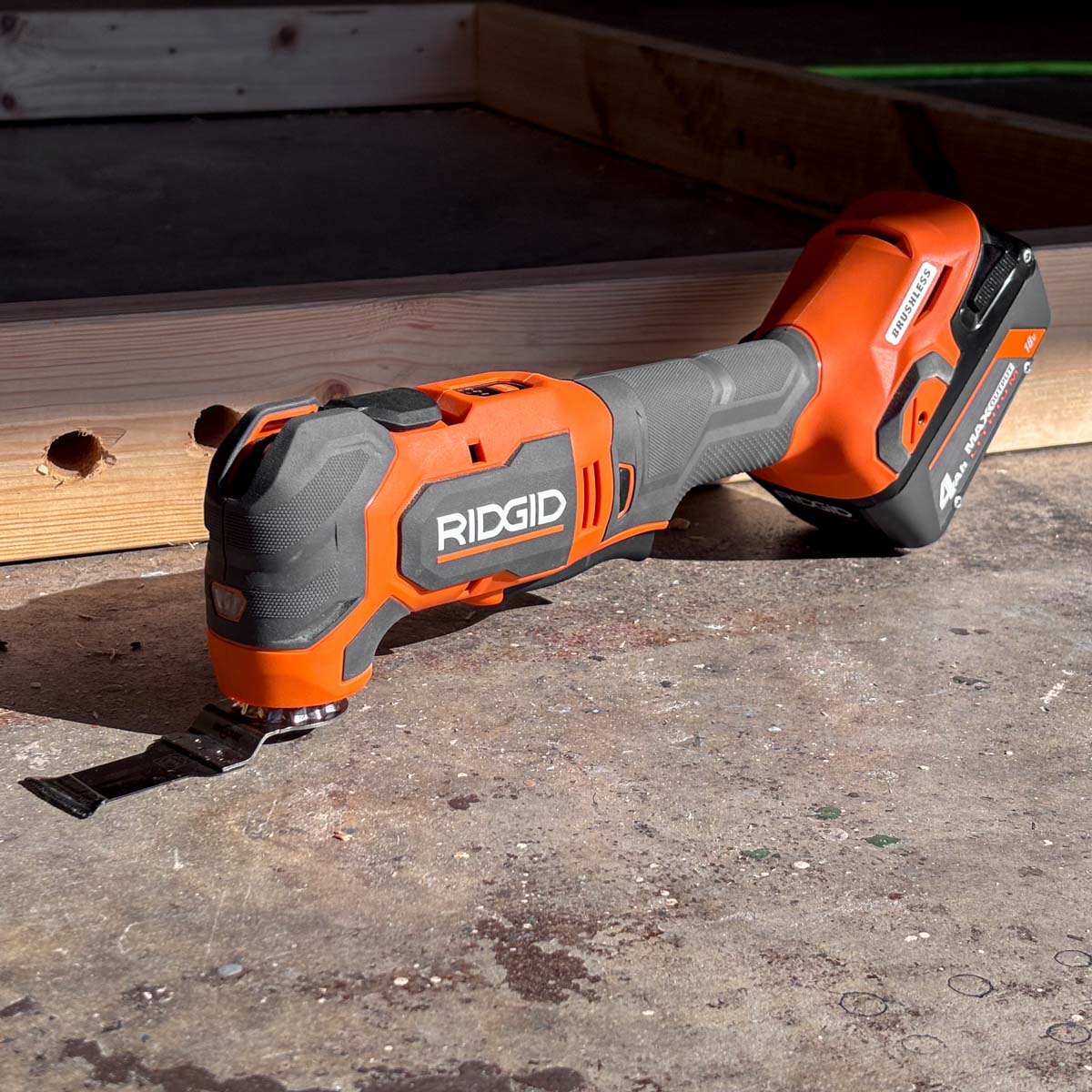
Ridgid 18V Brushless R86242
Score: 96 points
- Oscillating Angle: 4°
- Speed: 10,000 – 20,000 OPM
- Interface: OIS
- Bare Weight: 2.4 lbs
- Length w/Battery: 14.3 inches
- Bare Tool Price: $149
- Kit Price: No kit options available
Test Results
| Test | Result |
|---|---|
| Yellow Pine | 3.30 seconds (3rd place) |
| Red Oak | 4.49 seconds (1st place) |
| Nail-Embedded Pine | 2.99 seconds (1st place) |
| CPVC | 1.10 seconds (3rd place) |
| Copper Pipe | 8.18 seconds (1st place) |
| EMT Conduit | 6.36 seconds (1st place) |
| Threaded Rod | 31 seconds (1st place) |
| Vibration | 4 out of 5 (7th place, tie) |
Pros
- Best performance in our tests
- Professional quality build
- Slim handle is comfortable
- Good value
- Lifetime service agreement with registration
Cons
- No kit option
- 18V system isn’t as extensive as top brands
Highlighted Features
- Electronic Speed Selection: Choose from three preset speeds to match your application
- Variable Speed Trigger with Lock-on: Feather the trigger for additional speed control or lock it on
Ridgid wasn’t a pre-test favorite, but it proved the design team did some serious work under the hood, as it consistently finished at or near the top. While the physical design didn’t change much from the previous model, it didn’t need to. Ergonomically, it’s excellent, and the tool-free interface makes for easy accessory changes (though not as quick or easy as Starlock).
Note that this model has a variable-speed paddle trigger rather than a slide switch. Its lock-on button bridges the gap between the two styles, and there are three speed modes to work with.
The tool’s vibration control didn’t challenge the leaders in the category. However, it’s not far off and it’s an impressive improvement from previous models that earned a thumbs up from our team.
Ridgid’s 18V system still isn’t as expansive as the top Pro brands. However, it is steadily growing, and the development team regularly updates core tools to keep improvements rolling. Plus, a lifetime service agreement covers your tools and batteries.
Best Oscillating Multi-Tool Runner Up

Milwaukee M18 Fuel 2836
Score: 92 points
- Oscillating Angle: 4.2°
- Speed: 10,000 – 20,000 OPM
- Interface: OIS
- Bare Weight: 2.6 lbs
- Length w/Battery: 14.5 inches
- Bare Tool Price: $249
- Kit Price: $349 w/a 5.0Ah battery
Test Results
| Test | Result |
|---|---|
| Yellow Pine | 2.96 seconds (2nd place) |
| Red Oak | 8.26 seconds (7th place) |
| Nail-Embedded Pine | 5.55 seconds (7th place) |
| CPVC | 1.11 seconds (4th place) |
| Copper Pipe | 9.85 seconds (2nd place) |
| EMT Conduit | 7.48 seconds (3rd place) |
| Threaded Rod | 36 seconds (2nd place) |
| Vibration | 3 out of 5 (3rd place, tie) |
Pros
- Excellent performance
- Very good vibration control
- Professional quality build
- Extensive range of compatible tools
Cons
- No significant drawbacks
Highlighted Features
- Variable Speed Dial: Precisely dial in the speed to match the applications
- Auto Load: Starts slow until the tool senses the load increase and then ramps up to full speed for precision starts
- Slide Switch: Powers the tool on or off with no need to hold down a trigger
Milwaukee made huge improvements from its previous oscillating multi-tool efforts when it launched its brushless models. The M18 Fuel model has excellent performance and finished third overall in our latest round of testing. Its vibration control is also noteworthy, though its M12 Fuel counterpart is even better in that category.
From a design standpoint, there isn’t much to dock it for unless you’re dead-set on a Starlock accessory interface. The one thing is that Milwaukee uses a threaded pin to secure accessories. Even though it’s tool-free, it’s not as convenient as other interfaces.
As we expect from a premium professional brand, this model is more expensive than most. However, Milwaukee’s M18 battery system is massive and enjoys constant expansions and upgrades with many tools that push boundaries or open up new battery-powered possibilities.
Third Place Oscillating Multi-Tool

Flex 24V Brushless FX4111
Score: 90 points
- Oscillating Angle: 4°
- Speed: 10,000 – 20,000 OPM
- Interface: Starlock Max
- Bare Weight: 2.8 lbs
- Length w/Battery: 13.1 inches
- Bare Tool Price: $169
- Kit Price: $219 w/2.5Ah battery
Test Results
| Test | Result |
|---|---|
| Yellow Pine | 2.95 seconds (1st place) |
| Red Oak | 4.74 seconds (3rd place) |
| Nail-Embedded Pine | 3.12 seconds (2nd place) |
| CPVC | 1.04 seconds (1st place) |
| Copper Pipe | 12.07 seconds (3rd place) |
| EMT Conduit | 6.68 seconds (2nd place) |
| Threaded Rod | 60 seconds (4th place) |
| Vibration | 4 out of 5 (7th place, tie) |
Pros
- Top-tier performance
- Very good vibration control
- Starlock accessory changes
- Professional quality build
- Outstanding value
Cons
- 24V system isn’t as extensive as top brands
Highlighted Features
- Starlock Max Interface: Quickly swap accessories without having to touch hot blades
- Isolated Head Design: Reduces the amount of vibration you feel
- Electronic Speed Selection: Choose from five preset speeds to match your application
- Slide Switch: Powers the tool on or off with no need to hold down a trigger
If you’re looking for an excellent all-around oscillating multi-tool, I highly recommend you take a close look at the Flex FX4111. In our testing, it had the second-best overall performance and is built for the rigors of professional use, yet it costs less than its premium competitors. Plus, it has a Starlock Max interface that makes accessory changes easy.
As far as the tool goes, there’s not much to complain about unless you’re dead-set on having a variable speed trigger instead of a power switch.
Even though it earned a vibration control rating in the bottom half of the pack, the isolated head design does an excellent job of dampening vibration as you cut. Flex is one of the eight OMTs we tested with an advanced vibration control system we consider highly effective.
As a system, Flex doesn’t have as many tools on its 24V battery platform as brands like Milwaukee or DeWalt. However, it’s been expanding steadily and is becoming much more comprehensive.
More Oscillating Multi-Tools We Tested
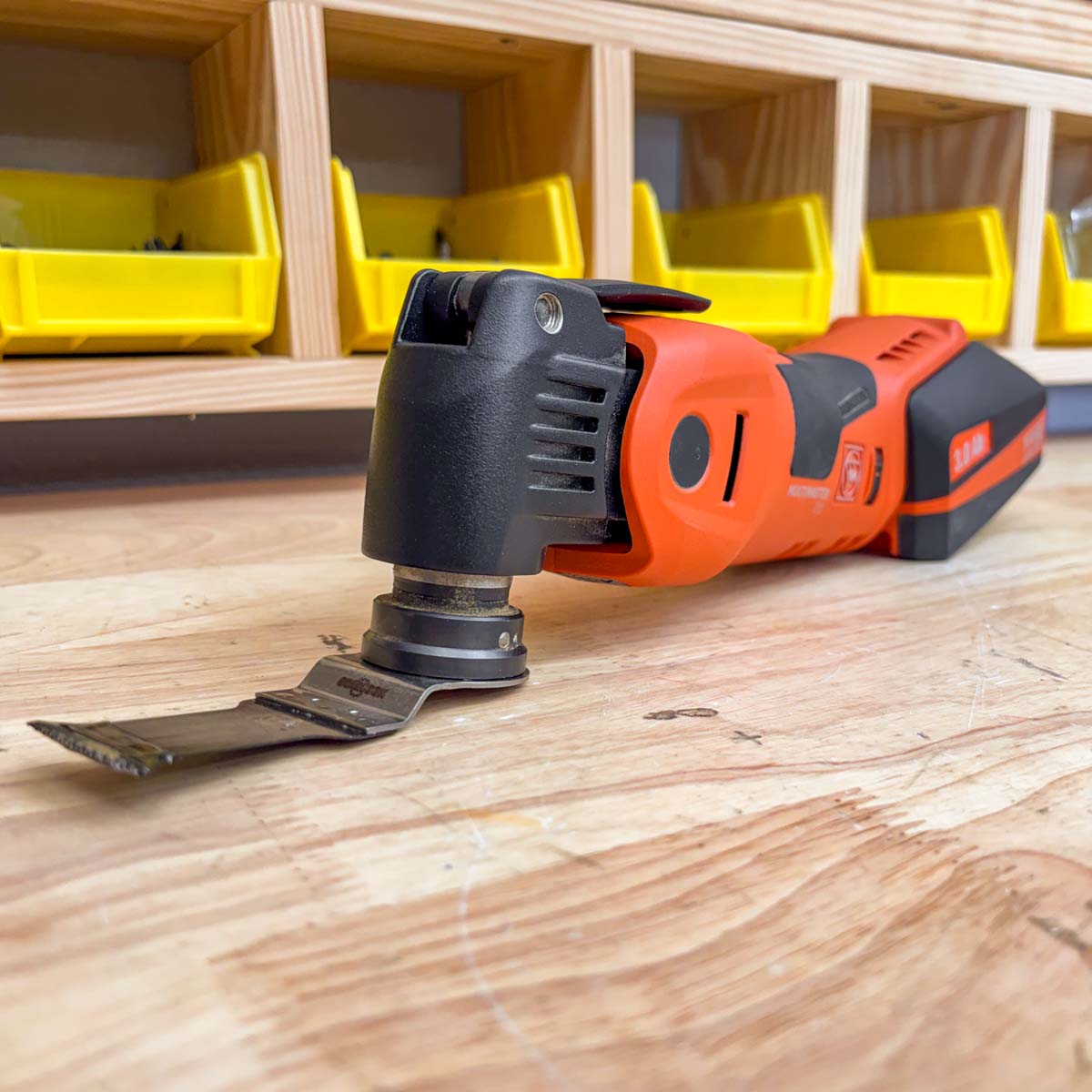
Fein 18V Multimaster 700 AMM700
Score: 87 points
- Oscillating Angle: 4°
- Speed: 10,000 – 19,500 OPM
- Interface: Starlock Max
- Bare Weight: 2.4 lbs
- Length w/Battery: 12.5 inches
- Bare Tool Price: $370
- Kit Price: $600 w/two 4.0Ah batteries
*Note: This model has been upgraded to be compatible with the AMPShare battery system. We are still using the previous model, which operates on the previous Fein 18V batteries.
Test Results
| Test | Result |
|---|---|
| Yellow Pine | 6.77 seconds (7th place) |
| Red Oak | 6.88 seconds (5th place) |
| Nail-Embedded Pine | 5.28 seconds (5th place) |
| CPVC | 1.06 seconds (2nd place) |
| Copper Pipe | 15.76 seconds (6th place) |
| EMT Conduit | 9.03 seconds (5th place) |
| Threaded Rod | 72 seconds (7th place) |
| Vibration | 3 out of 5 (3rd place, tie) |
Pros
- Very good vibration control
- Starlock accessory changes
- Professional quality build
- Part of the AMPShare battery system
Cons
- 18V system isn’t as extensive as top brands
- Users with small hands may not like the large diameter handle
- Expensive
Highlighted Features
- Starlock Max Interface: Quickly swap accessories without having to touch hot blades
- Variable Speed Dial: Precisely dial in the speed to match the applications
- Slide Switch: Powers the tool on or off with no need to hold down a trigger
- AMPShare Compatibility: Use Fein or Bosch 18V batteries
In addition to developing Starlock alongside Bosch, Fein previously developed one of the best vibration control systems, and it dominated for years. It has more competition in that category than previously but it is still in the top tier among all models.
Based on our tests, this model’s performance is mid-range. Of course, mid-range among the best oscillating multi-tools is still excellent compared to the overall landscape.
For ergonomics, this is another model that has a large handle diameter. If your hands are on the small side, you might want to look for something a little slimmer.
As far as the 18V battery system is concerned, Fein more limited than most premium brands. However, it’s part of the AMPShare system, a group of more than 30 brands with cordless tools that work on the same batteries, including Bosch’s 18V batteries.
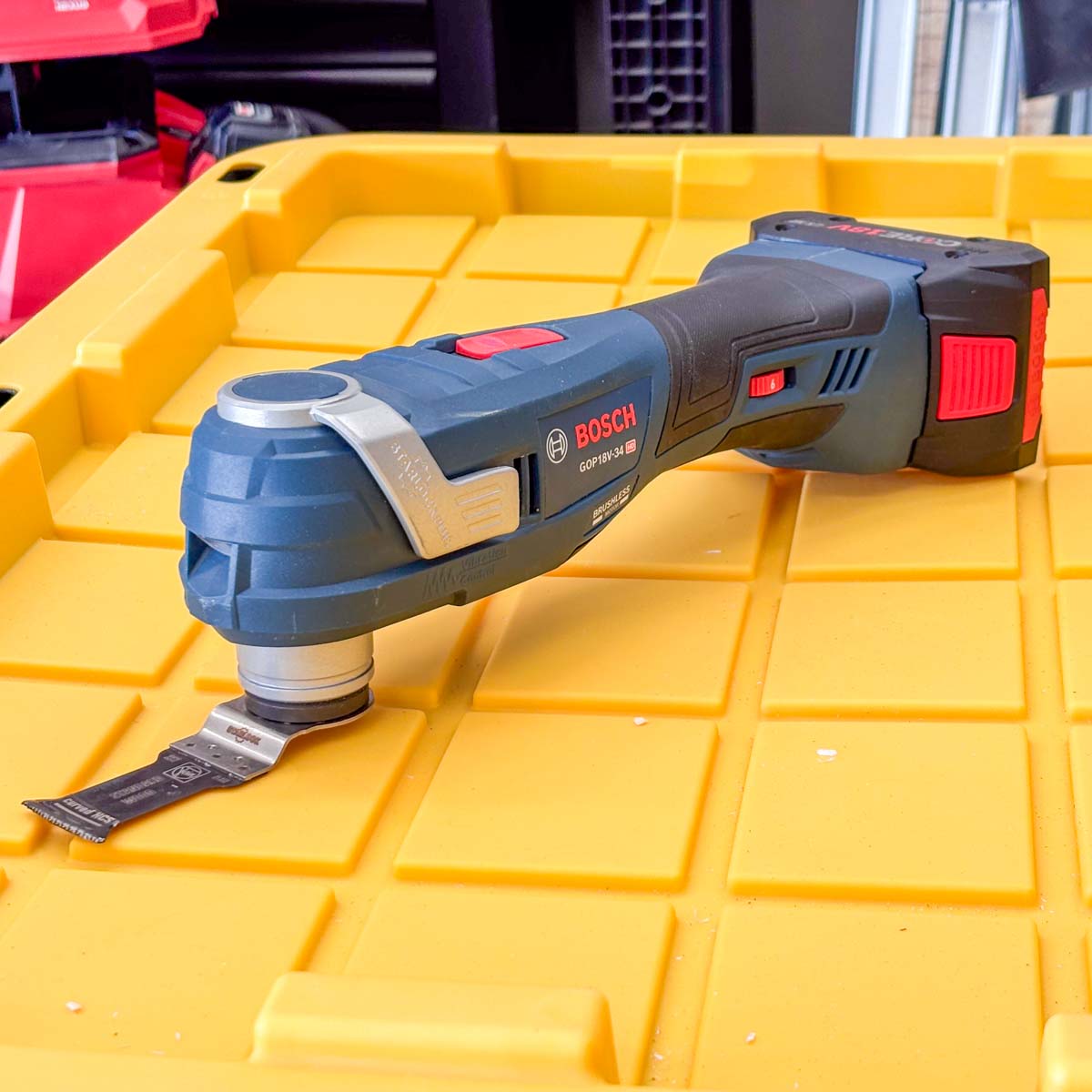
Bosch 18V Brushless GOP18V-34N
Score: 87 points
- Oscillating Angle: 3.4°
- Speed: 10,000 – 20,000 OPM
- Interface: Starlock Plus
- Bare Weight: 2.7 lbs
- Length w/Battery: 13.1 inches
- Bare Tool Price: $179
- Kit Price: $279 w/a 4.0Ah Core18V battery
Test Results
| Test | Result |
|---|---|
| Yellow Pine | 7.72 seconds (8th place) |
| Red Oak | 12.75 seconds (9th place) |
| Nail-Embedded Pine | 5.28 seconds (4th place) |
| CPVC | 1.56 seconds (7th place) |
| Copper Pipe | 22.72 seconds (8th place) |
| EMT Conduit | 9.52 seconds (6th place) |
| Threaded Rod | 65 seconds (5th place) |
| Vibration | 2 out of 5 (2nd place) |
Pros
- Excellent vibration control
- Starlock accessory changes
- Professional quality build
- Part of the AMPShare battery system
Cons
- Slower performance than competing models
- Users with small hands may not like the large diameter handle
Highlighted Features
- Starlock Plus Interface: Quickly swap accessories without having to touch hot blades
- Variable Speed Dial: Precisely dial in the speed to match the applications
- Slide Switch: Powers the tool on or off with no need to hold down a trigger
- Rotated Battery Position: Gets the battery out of the way for easier flush cutting
Bosch partnered with Fein to develop the Starlock interface system, so they certainly deserve a tip of the hat for that. While their latest oscillating multi-tool lags behind a bit in performance, its vibration control is excellent. In general, Bosch’s cordless tools are well-built for professional use, and the GOP18V-34N is no exception.
Ergonomically, this model has a wider handle that may challenge users with small hands to find a comfortable grip.
Bosch’s 18V battery platform isn’t as extensive as brands like Milwaukee and DeWalt, but it’s not as limited as smaller brands. The system covers almost anything a general contractor needs plus some trade-specific tools, and Its ProFactor line continues to push the limits of what an 18V battery can do.
However, Bosch has an advantage over competing brands: AMPShare. You can use your Bosch 18V batteries to power cordless tools from more than 30 brands, greatly expanding the system’s capabilities.

Makita 18V LXT Brushless XMT04
Score: 86 points
- Oscillating Angle: 3.6°
- Speed: 10,000 – 20,000 OPM
- Interface: Starlock Max
- Bare Weight: 3.0 lbs
- Length w/Battery: 12.6 inches
- Bare Tool Price: $269
- Kit Price: $429 w/a 2.0Ah battery
Test Results
| Test | Result |
|---|---|
| Yellow Pine | 6.01 seconds (6th place) |
| Red Oak | 11.23 seconds (8th place) |
| Nail-Embedded Pine | 9.93 seconds (8th place) |
| CPVC | 1.97 seconds (9th place) |
| Copper Pipe | 16.23 seconds (7th place) |
| EMT Conduit | 12.10 seconds (7th place) |
| Threaded Rod | 69 seconds (6th place) |
| Vibration | 1 out of 5 (1st place) |
Pros
- Best vibration control
- Starlock accessory changes
- Professional quality build
- Extensive system of compatible 18V LXT tools
Cons
- Slower performance than competing models
- Expensive
Highlighted Features
- Starlock Max Interface: Quickly swap accessories without having to touch hot blades
- Anti-Vibration Technology (AVT): Greatly reduces how much vibration you feel
- Variable Speed Dial: Precisely dial in the speed to match the applications
- Slide Switch: Powers the tool on or off with no need to hold down a trigger
Sporting a somewhat odd look compared to other models, Makita’s XMT04 proved to be the leader in vibration control in our tests. Whatever dampening magic the design team has going on inside that bulbous head is incredibly effective.
This model includes a Starlock interface as part of the design. It’s different from others in that it has a tool-free pin that adds a step in accessory changes, so it’s not quite as fast as other Starlock models, even though it’s still highly convenient.
While its performance was in the bottom half among competitors, it is significantly better than Makita’s previous model. With such low vibration, many Pros will be happy to take a little more time on cuts to gain the higher comfort that comes with it.
Makita’s 18V LXT battery system is one of the largest available. From core contractor tools to trade-specific solutions, it includes an extensive array of tools.

Hilti Nuron 22V Brushless SMT 6-22
Score: 81 points
- Oscillating Angle: 4°
- Speed: 10,000 – 20,000 OPM
- Interface: Starlock Max
- Bare Weight: 2.5 lbs
- Length w/Battery: 13.8 inches
- Bare Tool Price: $229
- Kit Price: Based on custom build
Test Results
| Test | Result |
|---|---|
| Yellow Pine | 5.52 seconds (5th place) |
| Red Oak | 6.77 seconds (4th place) |
| Nail-Embedded Pine | 14.88 seconds (9th place) |
| CPVC | 1.17 seconds (5th place) |
| Copper Pipe | 14.16 seconds (5th place) |
| EMT Conduit | 8.21 seconds (4th place) |
| Threaded Rod | DNF (8th place, tie) |
| Vibration | 3 out of 5 (3rd place, tie) |
Pros
- Very good vibration control
- Starlock accessory changes
- Professional quality build
- 20-year warranty
Cons
- 22V Nuron system isn’t as extensive as top brands
- Expensive
Highlighted Features
- Starlock Max Interface: Quickly swap accessories without having to touch hot blades
- Active Vibration Reduction (AVR): Greatly reduces the vibration you feel
- Electronic Speed Selection: Choose from six preset speeds to match your application
- Slide Switch: Powers the tool on or off with no need to hold down a trigger
Since the launch of the Nuron battery system, Hilti has been steadily expanding into more general construction and remodeling tools. Its first-generation oscillating multi-tool is a success with solid mid-range performance and vibration control to go with a Starlock Max accessory interface.
The downside is that it’s more expensive than other brands you might be considering. Hilti tends to cater to larger construction firms, though, and its fleet pricing structure may be better for your business.
As I said, while the 22V Nuron system is steadily expanding, it’s more limited than the big brands. The 20-year warranty and excellent service after the sale can help eliminate a lot of headaches for your crib manager, though.

Ryobi 18V One+ HP Brushless PBLMT51
Score: 74 points
- Oscillating Angle: 3.8°
- Speed: 10,000 – 20,000 OPM
- Interface: OIS
- Bare Weight: 2.0 lbs
- Length w/Battery: 14.0 inches
- Bare Tool Price: $129
- Kit Price: $189 w/a 2.0Ah battery
| Test | Time |
|---|---|
| Yellow Pine | 4.27 seconds (4th place) |
| Red Oak | 7.49 seconds (6th place) |
| Nail-Embedded Pine | 5.46 seconds (6th place) |
| CPVC | 1.59 seconds (8th place) |
| Copper Pipe | 14.05 seconds (4th place) |
| EMT Conduit | DNF (9th place) |
| Threaded Rod | 42 seconds (3rd place) |
| Vibration | 5 out of 5 (9th place) |
Pros
- Slim handle is comfortable
- More affordable than premium brands
- Extensive range of compatible tools
Cons
- More vibration than other models we tested
Highlighted Features
- Variable Speed Dial: Precisely dial in the speed to match the applications
- Trigger with Lock-on: Hold down the trigger or lock it on
Ryobi’s oscillating multi-tool upgrade to the HP Brushless part of the 18V One+ line came with a jump in performance. In our tests, it finished mid-pack overall, a result we wouldn’t have expected from previous models.
The slim handle makes for a comfortable grip, but vibration control is an area this model struggles with. It’s fine under light loads, but kicks up when it’s working hard. Don’t let that scare you away, though. We’ve used a ton of multi-tools, including many that rate far worse.
However, the vibration proved a problem for Ryobi in our tests. On our rig, it wasn’t able to complete the EMT cuts because it couldn’t get a good start. By hand, we can cut it just fine, but we couldn’t verify a time in the same way we tested the other models.
Unsurprisingly, this is the most affordable of the models we tested. Plus, the 18V One+ battery system now has more than 300 power tools and lifestyle products that all work on the same batteries.

DeWalt 20V Max XR Brushless DCS356
Score: 62 points
- Oscillating Angle: 3.2°
- Speed: 10,000 – 20,000 OPM
- Interface: OIS
- Bare Weight: 2.6 lbs
- Length w/Battery: 12.8 inches
- Bare Tool Price: $199
- Kit Price: $249 w/a 2.0Ah battery
Test Results
| Test | Result |
|---|---|
| Yellow Pine | 8.13 seconds (9th place) |
| Red Oak | 4.50 seconds (2nd place) |
| Nail-Embedded Pine | 4.44 seconds (3rd place) |
| CPVC | 1.55 seconds (6th place) |
| Copper Pipe | 46.05 seconds (9th place) |
| EMT Conduit | 17.32 seconds (8th place) |
| Threaded Rod | DNF (8th place, tie) |
| Vibration | 3 out of 5 (3rd place, tie) |
Pros
- Very good vibration control
- Professional quality build
- Quick accessory changes
- Slim handle is comfortable
- Good value
- Extensive range of compatible tools
Cons
- Slower performance than competing models
- Interface requires accessories with a rear cutout or universal adapter (included)
Highlighted Features
- Electronic Speed Selection: Choose from three preset speeds to match your application
- Variable Speed Trigger with Lock-on: Feather the trigger for additional speed control or lock it on
- Clamping Accessory Interface: Makes accessory changes extremely fast (requires accessories with a rear cutout)
- Guide System: Allows for depth and height control when plunge cutting
DeWalt’s DCS356 is a bit of a mixed bag in our tests. While its overall performance was near the bottom overall, it’s a significant improvement from previous models. Interestingly, it was the metal cutting tests that proved the biggest obstacle. In wood and PVC cutting, it held its own, but the gap to the rest of the group widened significantly when cutting copper and EMT.
This model keeps the form factor DeWalt has used for several generations, including a comfortable, slim, contoured handle that most other brands haven’t embraced yet.
Its clamping interface style was one of the first quick-change designs and works well. However, you either need accessories with a rear cut-out or you have to use the universal adapter that comes with the tool.
DeWalt’s price is a bit less than most other professional-grade cordless oscillating multi-tools, making it a good value. Keep your eyes open, too. We’ve seen some stellar deals throughout the year on this model.
From a system standpoint, DeWalt’s 20V Max battery platform is one of the largest and most popular available.
Subjectively, it feels like it deserves a higher score than it earned. However, we went through the test results and scoring system several times and didn’t find any errors. Still, keep in mind that this score only compares to the rest of this test group, and not the entire landscape of everything that’s available.
Best Corded Oscillating Multi-Tool

Fein Multimaster MM 700 Series
- Style: Starlock
- Max OPM: 19,500
- Oscillation Angle: 3.4°–4.0°
- Variable speed: Dial
- Warranty: 3-year limited
- Price: Starting at $280
While I greatly prefer cordless oscillating multi-tools, I certainly acknowledge that corded models still play a huge role in this tool class. If corded is what you’re after, there isn’t a more capable and versatile oscillating multi-tool than the Fein MultiMaster MM 700 series.
Fein set the benchmark for vibration control with the MultiMaster line, and it’s taken many years for anyone to come even close. While there’s certainly competition, MultiMaster OMTs remain outstanding in this category. The line has three key products—the MM 300, 500, and 700 models. The MM 700 line represents the best possible performance for the MultiMaster line.
Fein also offers particular accessories and oscillating angles specifically for construction, caulking/concrete, and automotive applications. That means that, regardless of your desired use, Fein is better equipped than most to offer a solution that better optimizes your tool for the application. While most manufacturers offer a single oscillating multi-tool, Fein offers an entire suite of products for you to choose from.
Best Oscillating Multi-Tool for DIYers

Skil PWRCore 12 Brushless OS592702
- Oscillating Angle: 3.6°
- Speed: 11,000 – 18,000 OPM
- Interface: OIS
- Bare Weight: 2.3 lbs
- Length w/Battery: 14.0 inches
- Bare Tool Price: Not available
- Kit Price: $99 w/a 2.0Ah battery
Pros
- Excellent performance for the 12V class
- Affordable
- Excellent value
- Slim handle is comfortable
- Lighter than most 18V/20V max models
Cons
- PWRCore 12 line isn’t as deep as others
- Not as powerful as 18V/20V max models
Skil’s PWRCore 12 oscillating multi-tool is a solid value if you’re looking for a brushless package on a budget. For just under $100, you get a brushless tool with a 2.0Ah battery, an upgraded PWRJump charger, and a nice blade/sanding set to get you started. Even though it doesn’t have the strength of the PWRCore 20 brushless model, the price is right, and it’s a lighter package than most of the 18V/20V max models.
You can spend more and get a more powerful model with less vibration. However, the Skil OS592702 strikes a nice balance of performance, weight, and price. This is an easy choice for those looking to pick up a tool for repairs and weekend projects.
Best Oscillating Multi-Tool Blade Change System

Starlock (Multiple Brands and Models)
There are no surprises in our blade change evaluation, as Starlock still dominates in speed and ease. Simply pressing the interface into the blade snaps it in place, and you’re ready to go. When it’s time to change it out, the release ejects it from the tool without any additional help.
Bosch and Fein collaborated to create the Starlock interface and use it extensively. We also see it on the Festool Vecturo, Flex 24V oscillating multi-tool, and Makita 18V Sub-Compact multi-tools.
Even though Starlock has a significant advantage, Craftsman and DeWalt have a clamping-style interface that’s also very easy to use with slotted OIS accessories.
Best Oscillating Multi-Tool Blades

Imperial Blades OMT Blades and Accessories
We use several brands of blades and accessories, but if we had to pick just one, it would be Imperial Blades. They carry an extremely wide range of options and cover both OIS and Starlock interfaces. Whether you’re after long-lasting carbide, fast-fast-cutting Japanese tooth, basic bi-metal, or a host of niche problem-solvers, chances are, if you need it, they make it. In our experience, the products are high-quality, high-performance enhancements for your oscillating multi-tool.
Curious about other options? Here are a few other brands we use and recommend:
Testing Methods and Results

To take as much human error as possible out of the equation and ensure our results are repeatable, we built a rig to test oscillating multi-tools.
One end holds the material we’re cutting in place. The tool secures to a sled that’s pulled forward by a weight, applying even pressure for each test. The amount of weight we use varies based on what we’re cutting, but every tool uses the same amount of weight as the others for each test.
The rig is adjustable, and we use a level to ensure that the blade is cutting completely horizontally, no matter what tool we’re using.
Vibration Test (1 – 5)
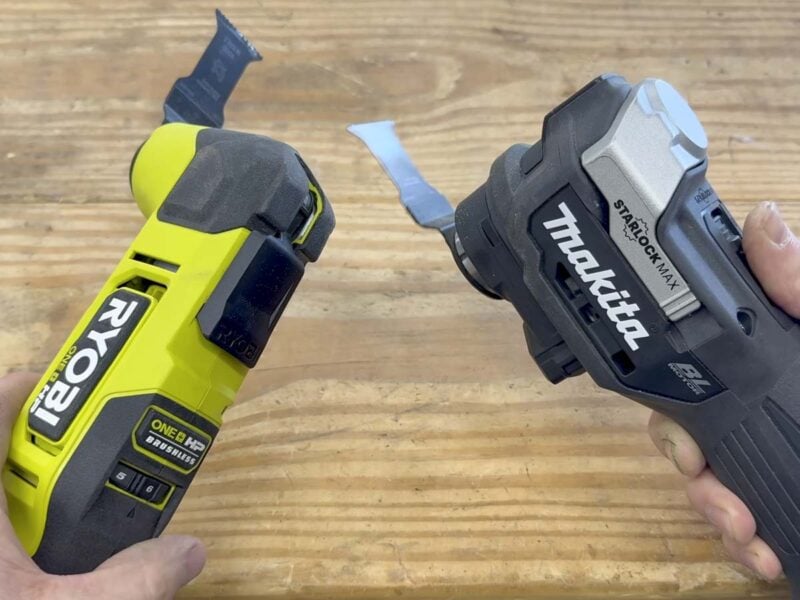
We don’t have a vibration meter, so our vibration assessment is subjective. We use each tool side-by-side with the others and rate it on a scale of 1 – 5, with 1 having the least amount of vibration.
Even though we could distinguish between five rating levels, the top four levels are legitimately low-vibration. Looking back 5 years, Fein would have been the only one that stood out. It’s a big development for this tool class.
| Model | Score |
|---|---|
| Makita XMT04 | 1 |
| Bosch GOP18V-34N | 2 |
| DeWalt DCS356 | 3 |
| Fein AMM700MAX | 3 |
| Hilti SMT 6-22 | 3 |
| Milwaukee 2836 | 3 |
| Flex FX4111 | 4 |
| Ridgid R86242 | 4 |
| Ryobi PBLMT51 | 5 |
Yellow Pine Cutting
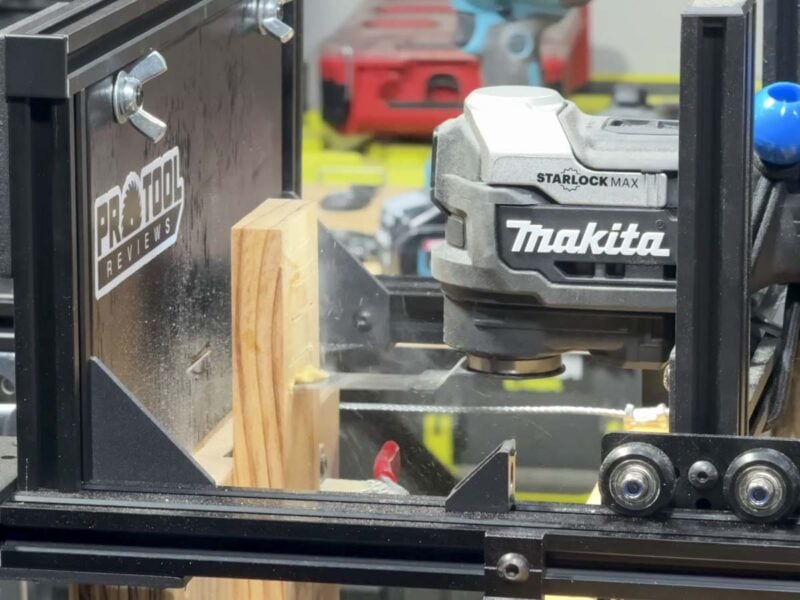
To get things warmed up, we made a single cut through 1x yellow pine on our test rig. Yellow pine is soft, it’s a common material you need to cut through, and every oscillating multi-tool should be able to make this cut easily.
| Model | Time |
|---|---|
| Flex FX4111 | 2.95 seconds |
| Milwaukee 2836 | 2.96 seconds |
| Ridgid R86242 | 3.30 seconds |
| Ryobi PBLMT51 | 4.27 seconds |
| Hilti SMT 6-22 | 5.52 seconds |
| Makita XMT04 | 6.01 seconds |
| Fein AMM700MAX | 6.77 seconds |
| Bosch GOP18V-34N | 7.72 seconds |
| DeWalt DCS356 | 8.13 seconds |
Red Oak Cutting
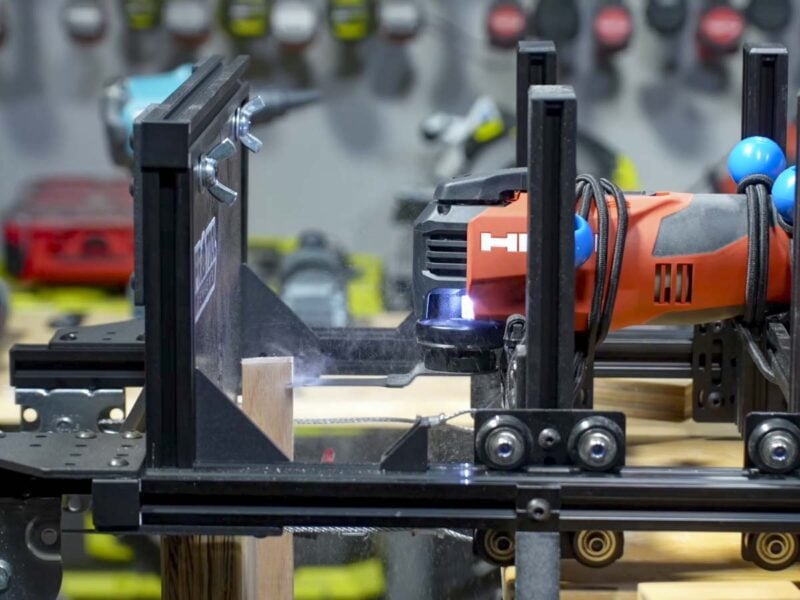
Moving on to the kind of hardwood you might find on high-end trim, we made three cuts through 3/4-inch red oak and averaged the results.
| Model | Average Time |
|---|---|
| Ridgid R86242 | 4.49 seconds |
| DeWalt DCS356 | 4.50 seconds |
| Flex FX4111 | 4.74 seconds |
| Hilti SMT 6-22 | 6.77 seconds |
| Fein AMM700MAX | 6.88 seconds |
| Ryobi PBLMT51 | 7.49 seconds |
| Milwaukee 2836 | 8.26 seconds |
| Makita XMT04 | 11.23 seconds |
| Bosch GOP18V-34N | 12.78 seconds |
Nail-Embedded White Pine (4 x 18-gauge Nails)
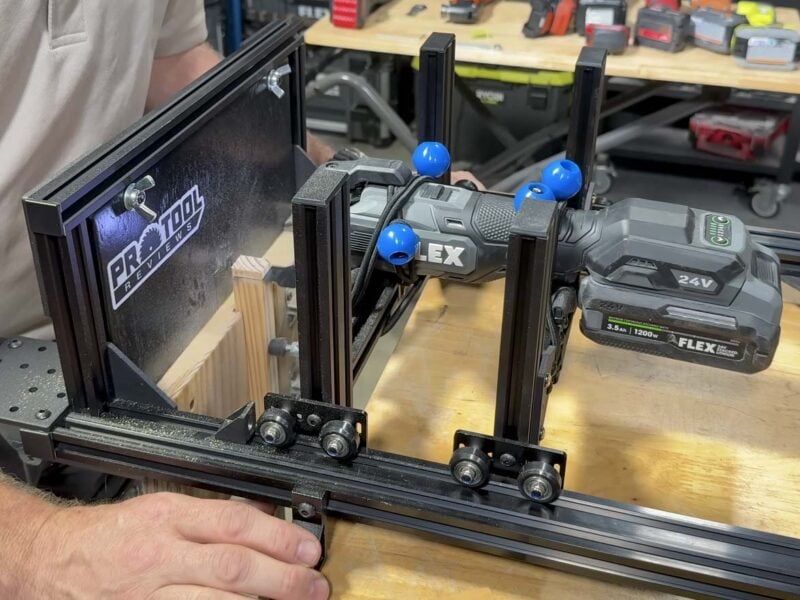
To test how these tools fare when nails are involved, we made three cuts through 3/4-inch white pine with four 18-gauge nails in it. The result is the average of those three runs.
| Model | Average Time |
|---|---|
| Ridgid R86242 | 2.99 seconds |
| Flex FX4111 | 3.12 seconds |
| DeWalt DCS356 | 4.44 seconds |
| Bosch GOP18V-34N | 5.28 seconds |
| Fein AMM700MAX | 5.28 seconds |
| Ryobi PBLMT51 | 5.46 seconds |
| Milwaukee 2836 | 5.55 seconds |
| Makita XMT04 | 9.93 seconds |
| Hilti SMT 6-22 | 14.86 seconds |
1/2-Inch CPVC Pipe Cutting
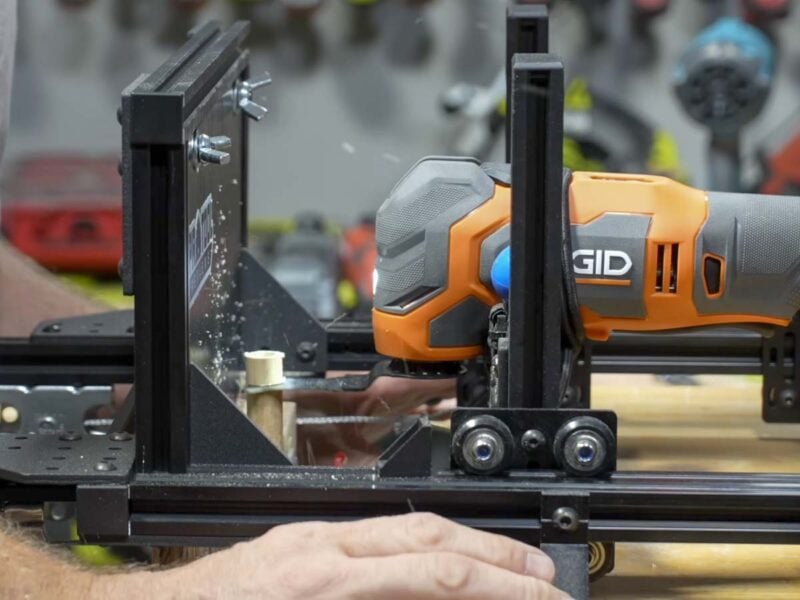
Representing one of the easiest materials oscillating multi-tools are called on to cut, we made three cuts in 1/2-inch CPVC and averaged the results.
| Model | Average Time |
|---|---|
| Flex FX4111 | 1.04 seconds |
| Fein AMM700MAX | 1.06 seconds |
| Ridgid R86242 | 1.10 seconds |
| Milwaukee 2836 | 1.11 seconds |
| Hilti SMT 6-22 | 1.17 seconds |
| DeWalt DCS356 | 1.55 seconds |
| Bosch GOP18V-34N | 1.56 seconds |
| Ryobi PBLMT51 | 1.59 seconds |
| Makita XMT04 | 1.97 seconds |
1/2-Inch Type L Copper Pipe Cutting
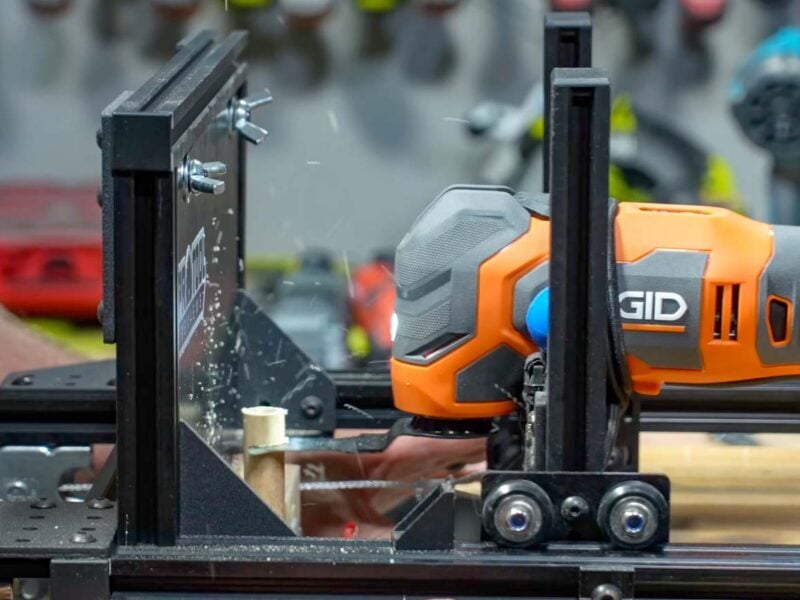
Sometimes you need to cut copper pipe in awkward spaces, so we made three cuts in 1/2-inch Type L copper pipe. The results are the average of those three tests.
| Model | Average Time |
|---|---|
| Ridgid R86242 | 8.18 seconds |
| Milwaukee 2836 | 9.85 seconds |
| Flex FX4111 | 12.07 seconds |
| Ryobi PBLMT51 | 14.05 seconds |
| Hilti SMT 6-22 | 14.16 seconds |
| Fein AMM700MAX | 15.76 seconds |
| Makita XMT04 | 16.23 seconds |
| Bosch GOP18V-34N | 22.72 seconds |
| DeWalt DCS356 | 46.05 seconds |
1/2-Inch EMT Conduit Cutting
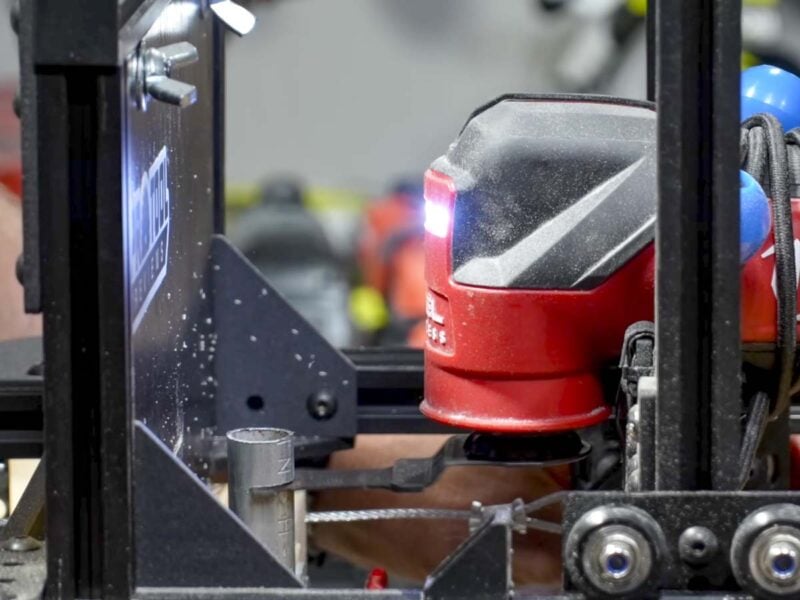
Electricians, we’re thinking about you, too. We averaged three runs cutting through 1/2-inch EMT conduit.
Note: Despite multiple efforts and methods to tightly secure Ryobi’s multi-tool in our rig, its vibration kept fouling up its attempts to cut in this test. It’s capable of making the cut, but we weren’t able to get an objective time using the same method as the other models.
| Model | Average Time |
|---|---|
| Ridgid R86242 | 6.36 seconds |
| Flex FX4111 | 6.68 seconds |
| Milwaukee 2836 | 7.48 seconds |
| Hilti SMT 6-22 | 8.21 seconds |
| Fein AMM700MAX | 9.03 seconds |
| Bosch GOP18V-34N | 9.52 seconds |
| Makita XMT04 | 12.10 seconds |
| DeWalt DCS356 | 17.32 seconds |
| Ryobi PBLMT51 | DNF |
1/2-Inch All Thread Rod Cutting
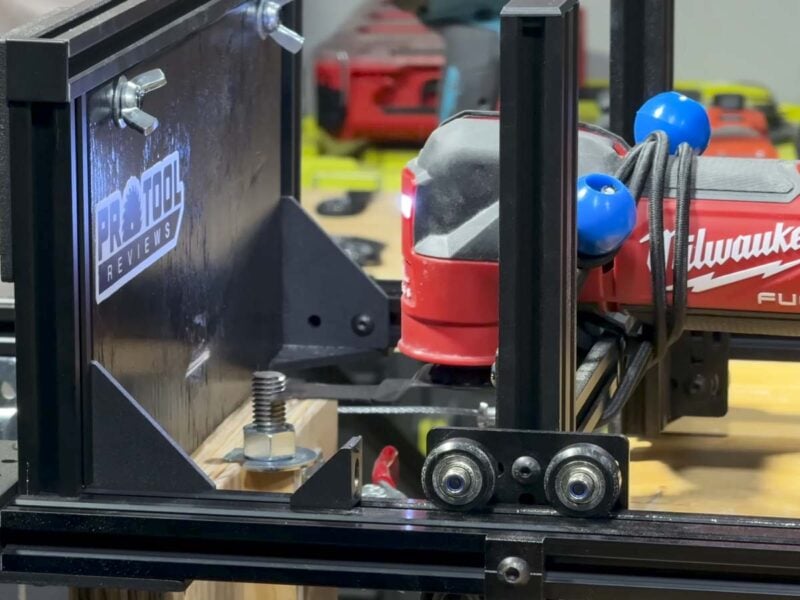
There’s not usually a reason you’d need to cut threaded rod with an oscillating multi-tool. However, we wanted to see which models could prove their mettle by cutting through this tough metal. We didn’t take the results into consideration of overall performance, but they were eye-opening nonetheless.
| Model | Time |
|---|---|
| Ridgid R86242 | 31 seconds |
| Milwaukee 2836 | 36 seconds |
| Ryobi PBLMT51 | 42 seconds |
| Flex FX4111 | 60 seconds |
| Bosch GOP18V-34N | 65 seconds |
| Makita XMT04 | 69 seconds |
| Fein AMM700MAX | 72 seconds |
| DeWalt DCS356 | DNF |
| Hilti SMT 6-22 | DNF |
What to Look When You’re Shopping for an Oscillating Multi-Tool
Everyone has different priorities when searching for the best oscillating multi-tool. Some Pros just want the fastest performance, while others might value vibration control the highest. Regardless, my team and I look for the following characteristics and rate tools accordingly.
Cutting and Sanding Speed: Higher oscillation rates and oscillation angles tend to cut and sand faster. Look for a model with speeds over 18,000 OPM and an arc higher than 3.2° for cutting and sanding that’s faster than average.
Pro Tip: Cordless OMTs with brushless motors tend to keep their oscillation rate up better under load and make more efficient use of your battery.
Vibration Control: The lower the vibration, the easier it is to control your cuts, and you’ll have less hand fatigue at the end of your project.
Blade Changes: While Starlock dominates the fast and easy blade change category, some tool-free systems take just one more step. The only deal-breaker interface for us is one that requires a tool to change blades.
Weight: Since OMTs frequently make awkward cuts in tight places, having less weight makes the tool easier to control. Some people may prefer a 12V tool that cuts slower but has significantly less weight.
Length: If you’re going to be cutting in tight spaces, you may want a more compact tool. Because you can install blades at various angles, this tends not to be as big of a deal as other characteristics.
Handle design: Check the size and shape of the handle. Many OMTs have a large diameter grip that people with smaller hands might not like, while others may be too small for folks with large hands.
Powering the tool: Most OMTs either have an on/off switch or a variable speed trigger. Both styles have a speed control dial or electronic speed modes if it’s a Pro model. One is not necessarily right for everyone—it’s primarily about what you prefer.
Why You Can Trust Pro Tool Reviews
Pro Tool Reviews has been reviewing tools and reporting on industry news in the construction, automotive, and landscaping industries since 2008. Our Pro reviewers work and have extensive experience in the trades and have the skills and knowledge to know whether tools can perform well in the field.
I won’t recommend anything unless I’d use it myself and don’t really care who the primary retailer is. It’s all about giving you a legitimate recommendation and my honest opinion of each product.
Each year, we bring in and review hundreds of tools and accessories. Our team will put our hands on hundreds of additional tools at media events and trade shows throughout the year.
We consult with innovators in the technology and design of tools to gain a broader grasp of where these products fit and how they work. The result is information you can trust because of the editorial, scientific, and real-world professional experience we collectively utilize each and every time we pick up and test a tool.