
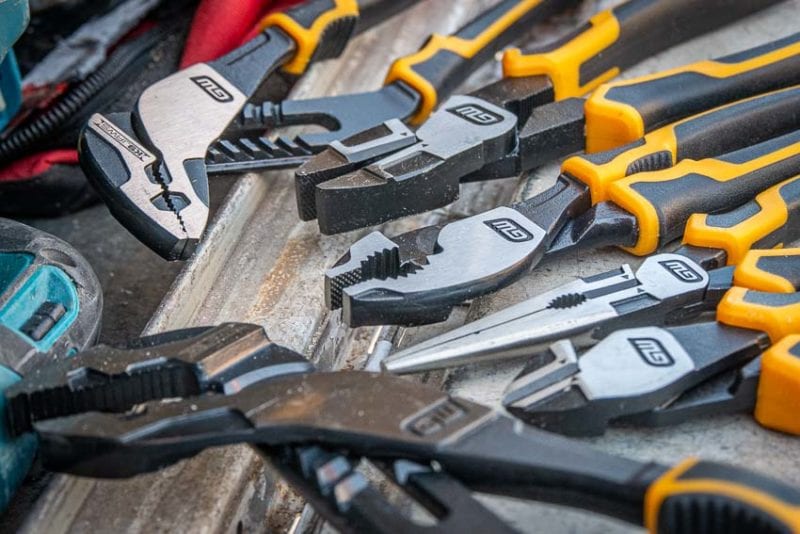
If ever there seemed to be a catch-all phrase in the world of hand tools, “pliers” might fit that bill. When you need to grip, position, twist, cut, tighten or loosen various things, pliers can cover a pretty broad range of applications. Their general design consists of two handles, a pivot, and a head. Consequently, many different types of pliers are tailor-made for particular applications. Although plier variations are near-endless, today we’ll take a look at several types of pliers and the jobs they perform to help train any current or future apprentices.
Table of Contents
Types of Pliers
Slip Joint Pliers
This tool gets its name from, you guessed it, its slip joint. Rather than pivoting from a fixed rivet, these types of pliers feature an adjustable pivot point that allows the two pieces of the plier to shift, extending the range of the jaws. Slip joint pliers can grip materials of varying thicknesses.
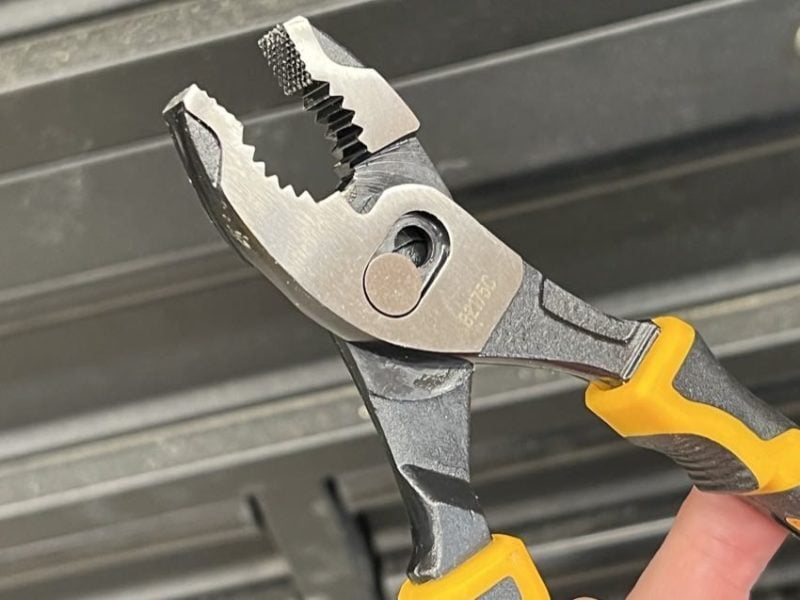
The jaws of the slip joint will generally consist of two parts. At the mouth, the jaws have a flat, serrated texture to help with gripping flat surfaces. Behind those, the jaws typically curve out to grip rounded surfaces, like pipes and rods.
These are some of your more “general purpose” types of pliers and are very common in toolsets. They work well in a variety of gripping applications, but depending on your particular pliers’ features, can find some usefulness in bending and holding, crimping metal, looping wire, and cutting wire and soft nails.
In a pinch, you might use them for loosening and tightening nuts. Ultimately, slip joint pliers are really handy tools to have around.
Water-Pump Pliers (Tongue-and-Groove Pliers)
Water-pump pliers (also known as tongue-and-groove pliers) operate on the same principles as the slip joints. In fact, you might consider them a subset of that category rather than an entirely separate one. Known also as multi-grips, or Channellocks (a proprietary brand name), these types of pliers find the majority of their use in plumbing applications.
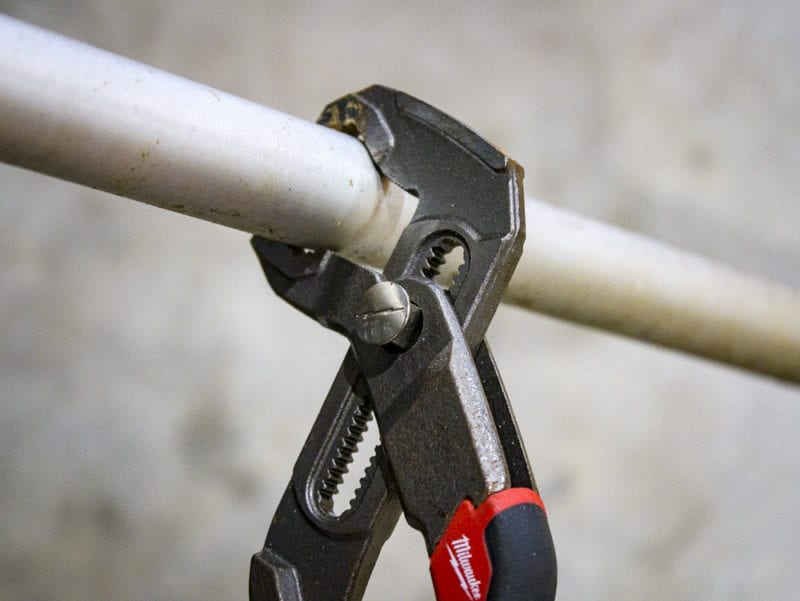
These types of pliers also have an adjustable pivot, although tongue-and-groove will adjust a whole lot more than slip-joint pliers.
Typically, the water-pump pliers have seven different positions, but there can be more or less depending on the size. The jaws stay parallel in any position but can open up much wider. The head is typically angled and the handles are longer to allow access to pipes in tighter spaces.
Like slip joint pliers, the jaws on these typically have a serrated, flat, front end with a serrated curve for gripping onto pipes.
Locking Pliers
Locking pliers work well for clamping down on things, especially during those times when having both hands free is helpful. They have a double-lever action that allows them to act as a hand-held vise – hence the name Vise-Grips (a proprietary name from Irwin Tools) that most people use for them.
The jaws on these types of pliers close like you expect from any set of pliers, but with the added benefit of locking down with much greater pressure. Locking pliers release their hold once a lever on the handle gets triggered. You typically adjust the jaw width by dialing a screw drive at the end of the handle.
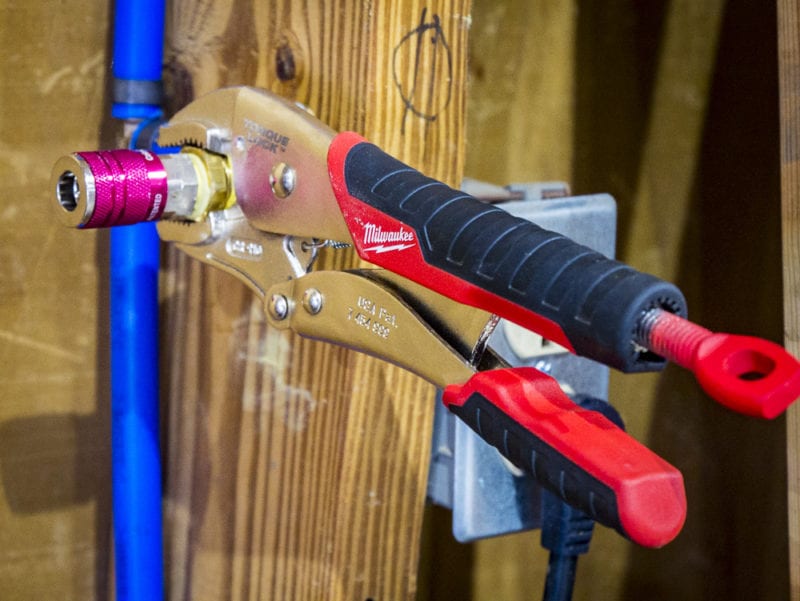
Locking pliers can find action in a multitude of applications, such as those you might typically use pipe wrenches, adjustable wrenches, and clamps. They can be used on reusable fasteners, though you’ll want to be really careful with this type of application; the chances are good that you’ll apply too much force with the clamping action, damaging the fasteners and fittings you’re applying the locking pliers to.
Linesman’s Pliers
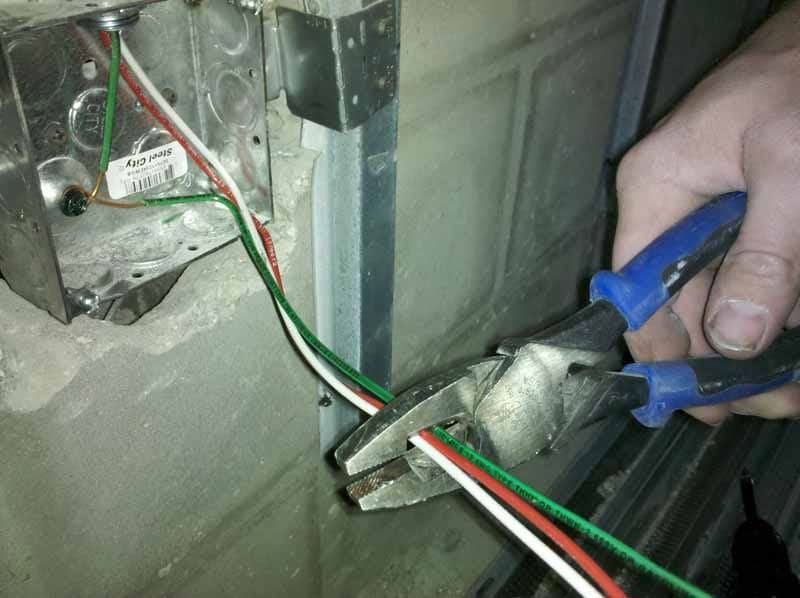
Linesman pliers – aka electrician’s pliers, side-cutting pliers, or “Kleins” hinge at a set pivot point. The jaws have a flat front with shallow serrations for gripping flat objects. This also lets electricians twist wires together.
Right behind the front of the jaws, these types of pliers include side cutters for cutting stiff wire like Romex. Even though they usually have dipped handles, most aren’t insulated. Even with an insulated pair, you shouldn’t use pliers to work on live connections.
Cutting Pliers
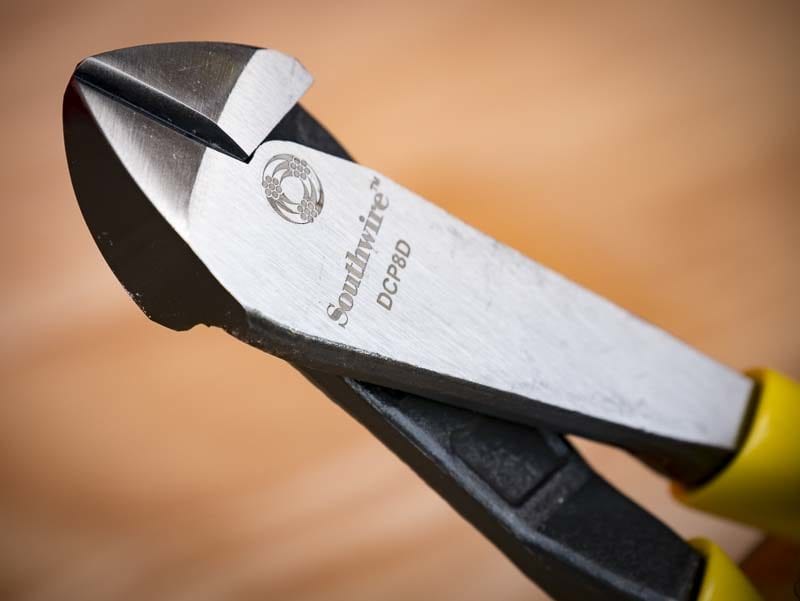
Cutting pliers or diagonal cutting pliers are a staple in electrical tool bags. They feature a relatively short jaw set that angles away from the handles. The cutting knives extend to the tips and give you the ability to accurately snip wires that are in a crowded gang box or even cut small nails and screws. Some feature a longer handle to get additional leverage.
Wire Strippers
No electrician worth his salary will be caught dead without a good set of wire strippers. In its most basic form, these include wire-cutting blades along with a crimping tip. Some also include threaded bolt cutters for 6-32 and 8-32 screws.
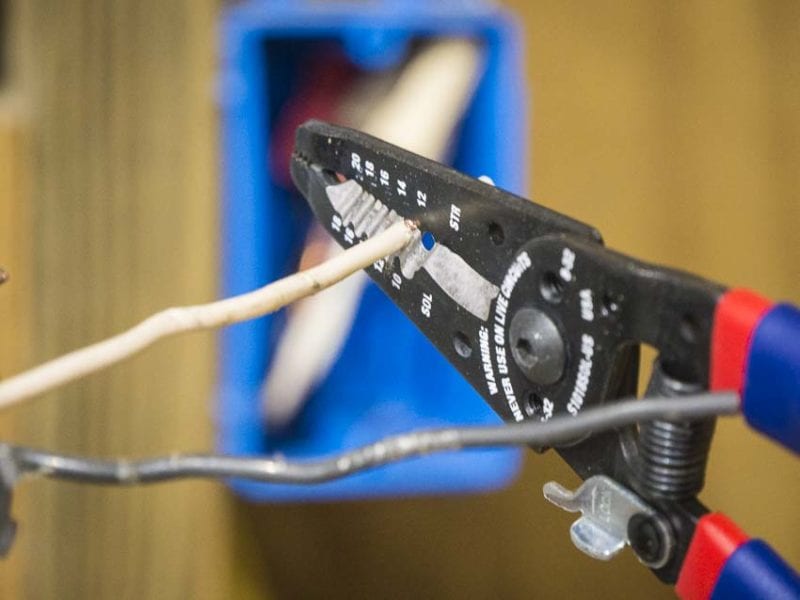
Wire strippers work by giving you cutting edges in a circular or elliptical shape to cut through just the insulation and leave bare wire when you pull the insulation off. Each hole gets a mark with the wire size it corresponds to.
Moving on from the basics, wire strippers and crimpers are the most common candidate as a multi-tool for the electrician. Several companies take the basic flat steel design and work with a more robust design in the form of needle nose pliers. You’ll see additional features come into play like screw shears, moving the crimper between the handles instead of the jaw tip, a blunt tip to grab, twist, and pull wire, and wire benders. These are popular due to the fact that they typically do all of their jobs as well as the individual tools can.
Needle Nose Pliers
Needle nose pliers will have a longer jaw that tapers down to a point. These types of pliers work well for more delicate tasks or jobs that need to be done in smaller spaces. Bending wires, holding fittings, placing fasteners, and even cutting, needle nose pliers do a lot of work that a more heavy-duty plier might not excel at.
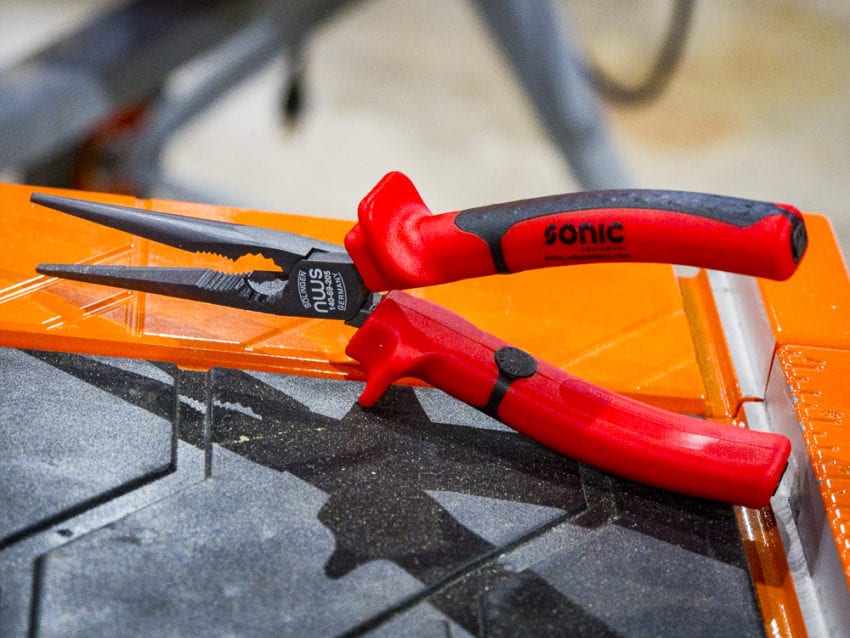
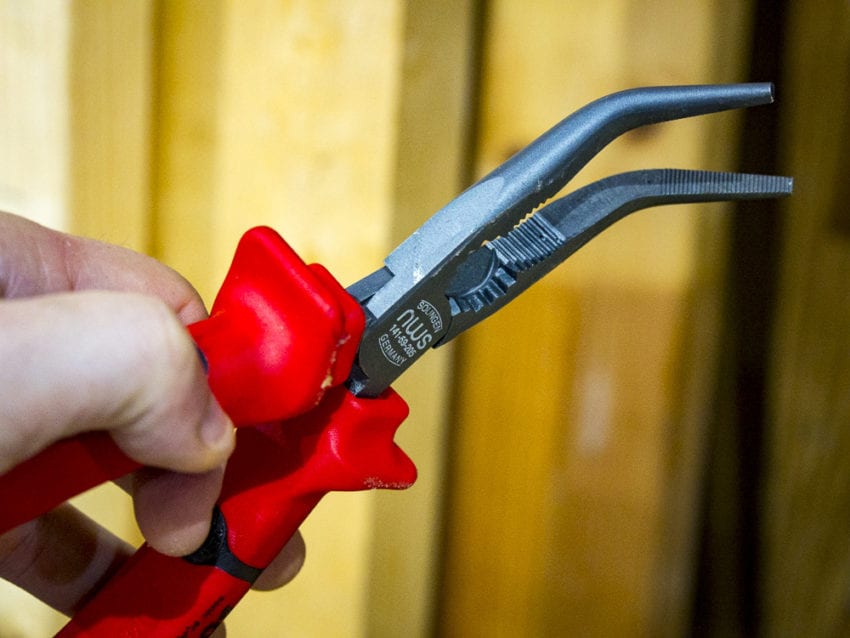
Needle nose pliers also use a set pivot point. The jaws typically have a knurled surface, as well as side cutters. You can also find models that have their tips bent to 45° and 90° if you need access to awkward spaces. Along with having a solid place in most professional tool bags, you’ll find nearly every fisherman also carries at least one.
Other Types of Pliers
Fencing Pliers
When you’re looking at different types of pliers, fencing pliers look like the red-headed stepchild of the group. It’s like someone gave a hammer two thin handles and stuck a pivot point for no particular reason. Realistically, the design is very intentional and it’s another multi-function tool.
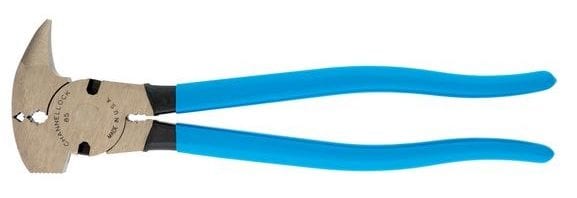
The hammer shape really is for hammering staples into wooden fencing. Moving across to the top, you can grab a staple with the pincers at the top to remove it in case it’s easier than getting the spike on the opposite side to do the job.
Under the pincers, the funky slot shapes give you the ability to grab and twist various wire gauges to connect fencing wire. Often, the inside of the handles just below the jaw has knurling that also allows you to grab and twist wire. Built into the sides are wire cutters.
Ironworker Pliers (Rebar Pliers)
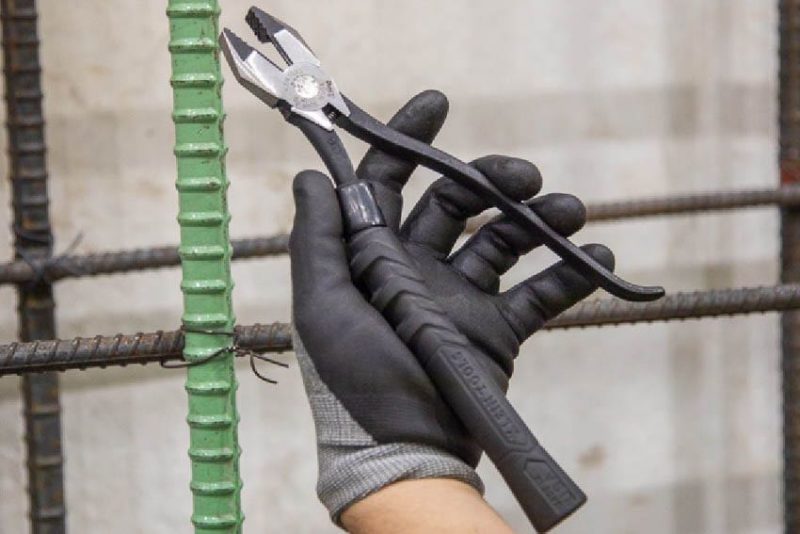
Ironworker Pliers (also known as rebar pliers) look a little like linemens pliers—but with an oddly-configured grip. These types of pliers feature a comfort grip that cushions your hand during the repeated twisting and cutting of soft annealed rebar tie wire.
Professionals use these pliers any time they need to do repeated hardwire cutting. The grip on ironworker pliers typically extends beyond the plier handle. This provides an air pocket that makes the pliers more comfortable to use over time.
Final Thoughts
Before you buy any pair of pliers, make sure to try them out first and check that it fits in your hand well. Like many other smaller hand tools, sometimes buying these in a set is a good way to start out and then you can customize from there. By choosing the right pair of pliers for the job, you will have a much more pleasant experience.