
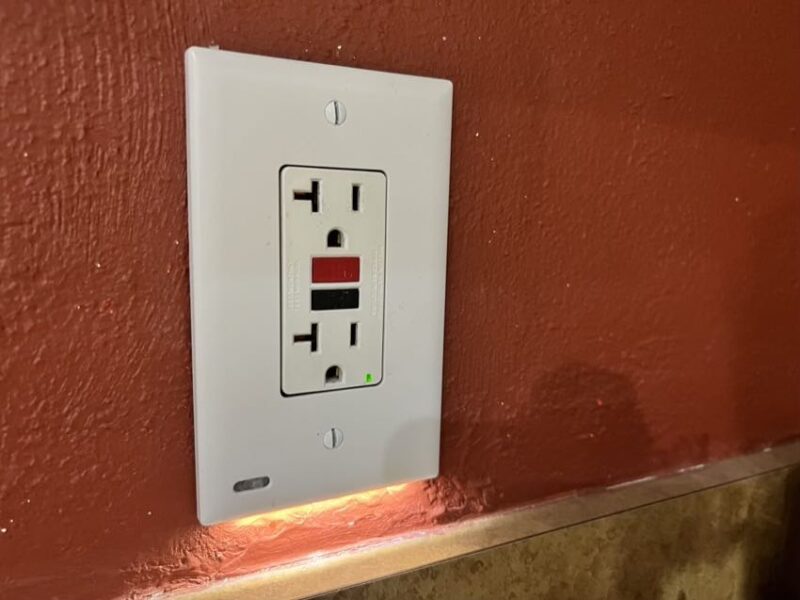
Part of what Pros run into involves answering questions for homeowners. Here’s a question that comes up quite a bit: What is a GFCI outlet, and where do they go? (or why do we need them?) We grabbed a couple of our resident Pros to help answer this question. We also dive into why you need GFCI outlets, breakers, or receptacles in your home.
Table of Contents
The Importance of GFCI Outlets
GFCI stands for Ground Fault Circuit Interrupter. These are also referred to as GFIs, or Ground Fault Interrupters. A GFCI precisely monitors the balance of electrical current moving through a circuit. If the power goes where it shouldn’t, like in a short, the GFCI immediately cuts off the electricity.
A GFCI prevents fatal electrical shocks through the elimination of sustained current draw when a short occurs. This is very different from arc fault circuit breakers or outlets like the Leviton AFCI receptacles. These track down and disable slow electrical “leaks” like those incurred from puncturing a wire in a bedroom wall.
About Ground Faults
In and near the home, ground faults most commonly occur around water or moisture. Water and electricity do not mix, and there are many places in the home and outside where the two exist in close proximity.
All switches, sockets, breakers, and circuits for those rooms and areas of the home should be GFCI-protected for your family’s safety. What is a GFCI outlet? It may be the very thing that keeps your family safe in the event of a tragic electrical mishap.
A ground fault represents any electric path between a source of current and a grounded surface. A ground fault occurs when AC current “leaks” and escapes to the ground. How this occurs is significant. If your body provides a path to the ground for this leakage, you could be injured, burned, severely shocked, or electrocuted. Since water conducts electricity so well, ground faults occur more frequently in areas near water. Water provides a conduit for electricity to “escape” and find an alternate path to the ground.
Types of GFCI Devices
While you may have come here asking what is a GFCI outlet, there are actually three basic types of GFCI devices:
GFCI Receptacles
The most common GFCI in residential homes comes in a GFCI receptacle. This inexpensive device replaces a standard receptacle (outlet). Completely compatible with any standard outlet, it can protect other outlets “downstream” (any outlet receiving power from the GFCI outlet). This also explains the change from GFI to GFCI—to reference the protected “circuits”.
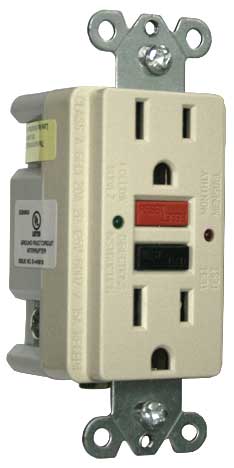
GFCI outlets are typically “fatter” than standard outlets and take up more space in a single-gang or double-gang electrical box. Newer technology, such as the Leviton SmartlockPro Slim GFCI, takes up far less space than ever before. Wiring a GFCI outlet is no big deal, but you need to do it correctly in order for the protection to be effective downstream.
GFCI Circuit Breaker
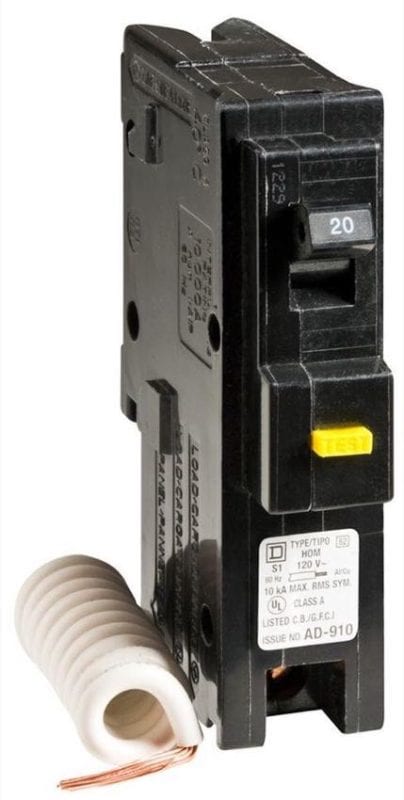
Pros are using GFCI circuit breakers more frequently since they allow builders and electricians to use standard (inexpensive) outlets and simply install a single GFCI circuit breaker in the panel box. GFCI circuit breakers have the advantage of protecting every fixture on the circuit—lights, outlets, fans, etc. They also provide protection against overloads and simple short-circuits.
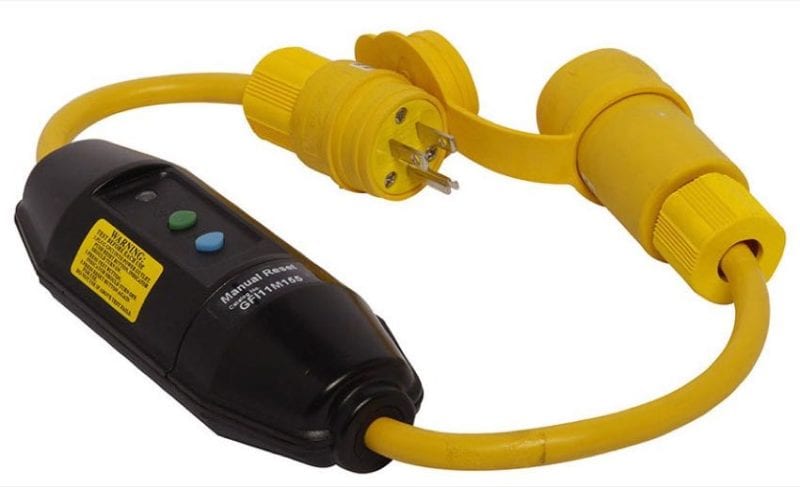
Portable GFCI for Outdoor Use
This is an outlet strip or other device providing GFCI-level protection in a portable unit. If you have a device requiring GFCI protection, but can’t locate a protected outlet, this gives you the same protection.
Where to Install GFCIs
Since around 1973, most outdoor receptacles in homes built to comply with the National Electrical Code require GFCI protection. In 1975, the NEC extended that to include bathroom receptacles. In 1978, garage wall outlets were added. It wasn’t until around 1987 that the code included kitchen receptacles. Many homeowners find themselves redoing their electrical systems to comply with current law. All receptacles in crawl spaces and unfinished basements also require GFCI outlets or breakers (since 1990).
Obviously, newer GFCI circuit breakers make retrofitting a home with GFCI protection much easier than replacing each individual outlet in a system. For homes protected by fuses (seriously consider upgrading your box), stick to GFCI receptacles. For upgrading, we recommend focusing on the most critical areas like bathrooms, kitchens, crawl spaces, and outdoor spaces.
Wiring a GFCI Outlet Receptacle
We have a separate article on wiring a GFCI outlet, but most savvy consumers can do it themselves if they follow the instructions. Just make sure to completely cut power to the breaker before you begin. If you are at all unsure of how to do this, hire a professional.
To test the GFCI receptacle after installation, plug something into the outlet (like a radio or light) and turn it on. Press the “TEST” button on the GFCI to ensure the “RESET” button pops out, and the device turns off. If the “RESET” button pops out, but the light does not go out, the GFCI has been wired improperly. If the “RESET” button does not pop out, the GFCI is defective and should be replaced. Pressing the “RESET” button reactivates your circuit. You can also purchase inexpensive GFCI-compatible circuit testers.
Not Too Difficult, Right?
Ground Fault Circuit Interrupters should exist in any home. When rewiring or updating your house to bring it up to code, pay attention to where to place GFCI outlets or breakers. This inexpensive product can provide an incredibly beneficial level of safety for your family.