
The latest upgrade to LoadOut GoBoxes partially focuses on some new sizes, but there’s also a new accessory: Yeti LoadOut KOR Protective Inserts. They promise to protect your sensitive gear and are endlessly reconfigurable to accommodate any shape. I wanted to know if this is something that mainly suits outdoor enthusiasts, or whether professional tradesmen can benefit, too. In this review, I’ll show what I learned about how well the KOR inserts work with GoBoxes, along with some use cases that make sense for Pros.
Pros
- Purpose-built for each Yeti GoBox size
- Customizable shape
- Durable exterior material
- Easy to set up
Cons
- Expensive
- You have to remember to bring the pump
How Yeti LoadOut KOR Protective Inserts Work
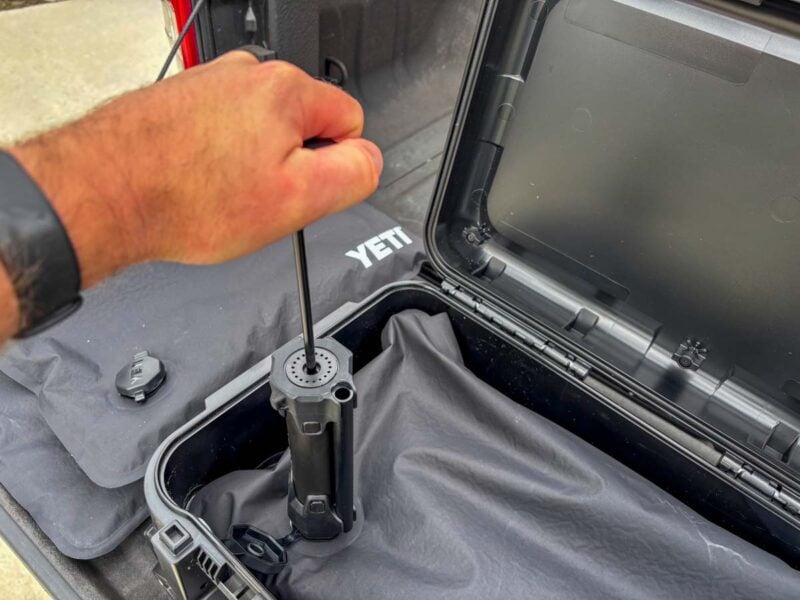
The first thing you need to know is that each set of KOR inserts is specific to a Yeti LoadOut GoBox size. They’re not interchangeable, and they don’t cross over to coolers or other storage.
Their purpose is to conform to the shape of your gear and fill the entire GoBox to prevent items from shifting around. That’s critical to keep in mind. If you have room left in the top, shifting can occur, and you’ll defeat the protective intent.
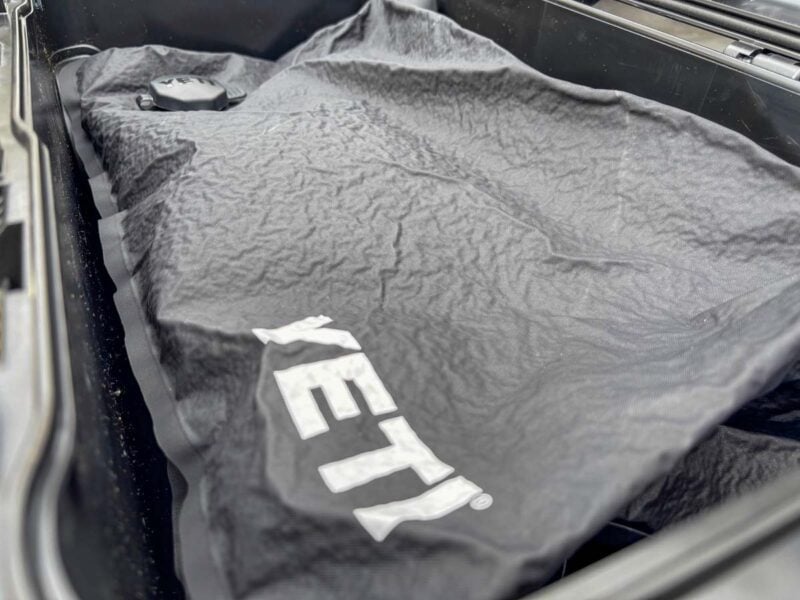
Each insert is made from a durable outer skin and is filled with cushioning beads. Neither Yeti nor KOR specifically says what the beads are made of, but I could feel them give when I squeezed, so they have some real cushioning characteristics.
Here’s the basic process to use them:
- Place the double-layer insert into the bottom of your LoadOut GoBox
- Open the valve with a 1/4-turn counter-clockwise
- Nestle your gear into the bottom layer so the beads conform to its shape
- Flip the top layer over your gear and press it down around the top of your gear
- Close the valve and use the pump to remove air until the KOR feels rigid
When you’re ready to reset, open the valve back up, and air will come back in.
Even though the inserts will feel rigid, remember that the fill beads create cushioning. As I twisted and beat on the inserts, they seemed to absorb vibrations and impacts more effectively than single-piece high-density foam or custom plastic holders.
Protecting Test and Measurement Equipment with KOR Inserts
In one of my first jobs out of college, I worked for an environmental firm. One day, I was on a Central Florida farm, taking water samples and turbidity readings. On the way out of the pasture, I took a different route and didn’t see a small ditch that was covered with overgrowth. I hit it pretty hard, and even though the Tacoma took it well, the turbidity meter launched up off the back seat in what seemed like slow motion and slammed back down to the floor.
I didn’t think anything of it until the next day, when it wouldn’t calibrate properly. It turns out I damaged the potentiometer. I have no idea how much it cost to repair it, but I certainly wasn’t a candidate for employee of the month.
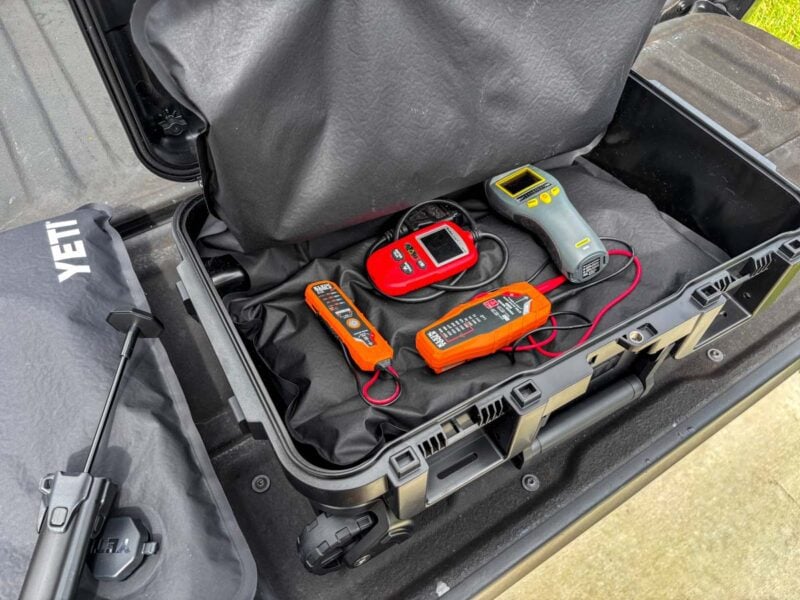
When I saw the KOR inserts for the first time, that was the memory that popped into my head. I wanted to know if they could protect sensitive test and measurement equipment that tradesmen rely on, especially those in the electrical and utility trades. I got my hands on the wheeled GoBox 28 with a set of inserts to see the possibilities for myself.
I tried several different types and sizes of meters, including an NCVT, voltmeters, and a vehicle scanner. I also tried other gear sizes and shapes, like binoculars, a flashlight, and a Bluetooth speaker, just to see how well the KOR inserts would secure them.
None of my gear was damaged from riding around in the back of my truck. So, I decided to up the ante a bit.
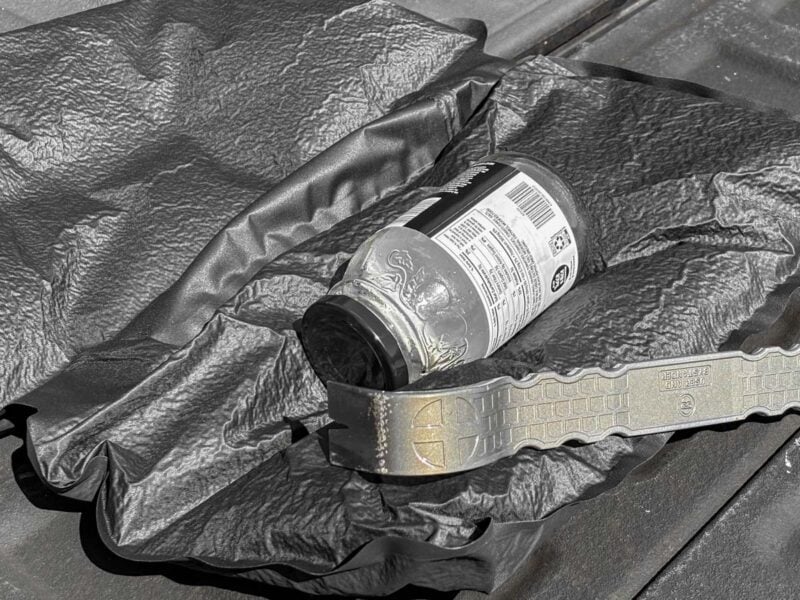
First, I set up an empty glass jar in the inserts and beat on the top with a pry bar. There wasn’t the slightest hint of damage to either the jar or the insert’s exterior material.
Next, I loaded up one of the thinnest glasses we had in the kitchen into the GoBox and carefully set my KOR inserts around it. Then I marched it out to the top of my dock staircase and gave it a kick. Would the inserts be able to absorb enough shock and cushion the glass well enough to survive?
No. But the inserts did avoid being punctured by the shattered glass, and the GoBox suffered no ill effects other than a few marks from the composite boards, so that’s a win.
Realistically, I didn’t expect the glass to make it. I broke one of the others in the set while washing it in the sink a couple of years ago, so at least it’s an even-numbered set now. But the larger point is that KOR inserts don’t protect against abusive levels of impact like that. So, use them to protect against accidents, but assume your gear can still be damaged if it gets knocked around hard enough.
Tips for Use
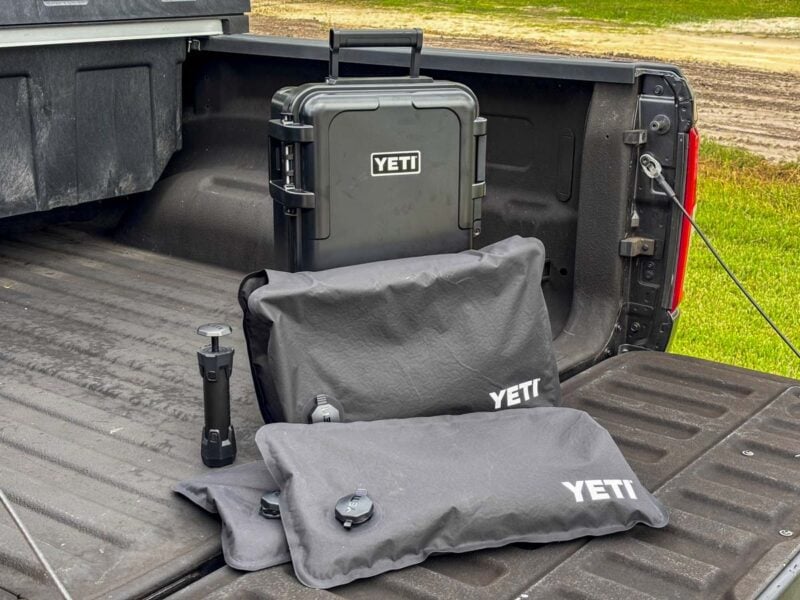
During my tests, I learned a few things worth knowing before you buy.
For starters, KOR says it can take as little as 30 seconds to reset and reshape. I think that’s possible, but I’m more OCD about arranging my gear, so it took me closer to a minute.
Keep your gear away from the GoBox edges. It can leave one side less protected, increasing the risk of damage.
Pretty much any size and shape that fits between the inserts works. Extremely small and thin objects don’t budge, and even items large enough to fill most of the GoBox work.
For packing larger, taller gear, I found it easier to use two single-layer inserts instead of the double. The double’s connective section sometimes wouldn’t allow the top layer to reach far enough across to cover everything. Using two singles may leave an air gap around the sides. Your gear will still be stable and protected as long as the lid puts some pressure on the top insert when you latch it down.
Avoid the temptation to under-pump and leave a little extra air for cushioning. Gear can shift, and items can bang together even if they don’t hit the sides of your GoBox.
The wheel wells for the rolling boxes get in the way of allowing the bottom layer to sit perfectly flat. Don’t worry about it. The filler beads will still conform around them and create a stable base.
A Quick Note About Punctures
While I didn’t experience any punctures or visible damage during my testing, sharp objects can cause a leak. So, don’t put unsheathed fixed-blade knives, saw blades, drill bits, or other sharp objects between the inserts.
That should be obvious, but there may be some things you don’t think about right away. For the types of meters I tried, uncapped multimeter leads were the biggest risk. Just be aware of things like that and make sure you cover them to avoid punctures.
If you do happen to get a leak, Yeti provides a patch kit to help you out.
Additional Highlights
- TSA-Friendly: Feel free to with your GoBox and KOR inserts
- Altitude-Friendly: Inserts hold their shape even as the altitude changes
- Pack Attic-Friendly: You can still use the Pack Attic when you use the inserts
- Easy to Clean: Wipe the inserts down with a soapy cloth and rinse with water as needed
Yeti KOR Insert Price
The price depends on the size you need to match your GoBox. Sizes 8 through 28 include one double-layer insert, two single-layer inserts, a KOR pump, and a patch kit just in case. The larger sets come with one single and two doubles, plus the KOR pump and patch kit. The inserts are backed by a 3-year warranty.
Here are the pricing details:
- GoBox 8 KOR Inserts: $100
- GoBox 10 KOR Inserts: $115
- GoBox 15 KOR Inserts: $125
- GoBox 20 KOR Inserts: $150
- GoBox 28 KOR Inserts: $250
- GoBox 30 KOR Inserts: $250
- GoBox 60 KOR Inserts: $300
- GoBox 68 KOR Inserts: $325
- GoBox 88 KOR Inserts: $350
Should You Buy Them?
So, can adding Yeti KOR Protective Inserts keep your turbidity meter’s potentiometer from needing replacement when you send it flying in the back of your truck cab?
They certainly add stability and cushioning, but I don’t think it’s enough to protect your instruments from outright abuse like that. There’s a big difference between sensitive instrument components and meters designed with a drop rating, though. That means there are some excellent use cases for tradesmen that make them a real asset on today’s jobsites.
KOR inserts basically transform your LoadOut GoBox into a padded Pelican case that’s customizable on the fly without having to swap foam inserts. If you think of it that way, you’ll get the most out of it.
I really like its potential for tradesmen who might need a different set of meters each time they’re called out, but don’t want to take everything in their individual cases. There’s real value in buying just one case and one set of inserts to cover your changing needs.
The downside is that you have to take the time to reset every time you add or remove gear. If you always carry the same set of meters with no variability in your setup, laser-cut foam inserts are likely a better choice for you.
When you’re looking at GoBox options, my recommendation is to order one size larger than you think you need. Your gear needs boundary gaps, and having more space to work with gives you wiggle room if you add more instruments or meters later on. Of course, if you’re already space-constrained in your truck or trailer, you have to go with the space you have, and GoBoxes stack nicely.
What do you think? Do Yeti KOR inserts make LoadOut GoBoxes a more compelling option for the way you work? Let us know how you’d use them in the comments below!